Car Seat Recline Mechanics: How Angle and Safety Interact
By Rafael Ortiz • 17th May
Car seat recline mechanics are not just a comfort feature; they sit right at the intersection of crash physics, airway protection, and real-world vehicle fit. When you understand the basics of recline mechanism engineering, you stop guessing at which setting is safest and start making deliberate, confident choices that work in your actual car.
Most parents are wrestling with the same invisible variables: how steep the vehicle seat is, how much front-seat legroom you can spare, and how to keep a sleeping child from chin-to-chest slumping without compromising safety. The good news is that once you understand how the angles really work, you can turn a confusing dial or lever into a predictable tool. For a deeper dive into why the same seat behaves differently across cars, read our recline and vehicle fit engineering guide.
Why Recline Angle Matters For Safety
1. Airway protection for infants
For newborns and young infants, recline angle is primarily about keeping the airway open.
- Too upright: the heavy head can fall forward, kinking the airway.
- Too reclined: in a crash, the child can ramp up the seat and see higher forces.
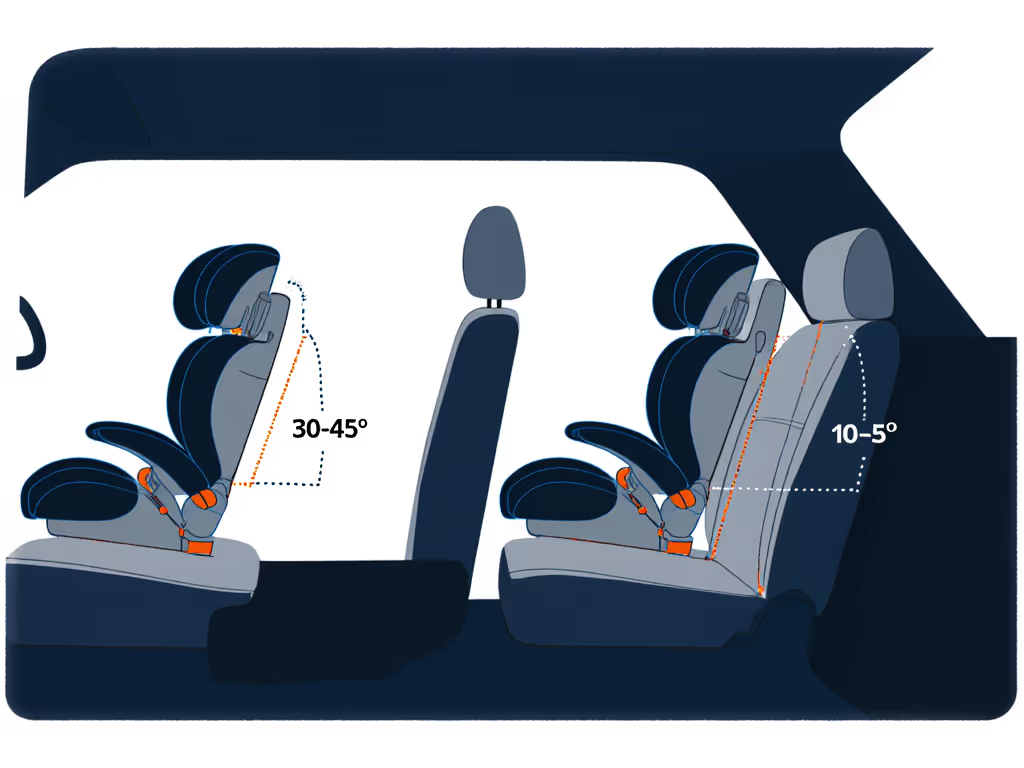
Most rear-facing seats are designed to be installed somewhere around 30–45 degrees from vertical, with a narrower, more reclined band required for brand-new babies. That exact band is defined by the seat's level indicator, not by a generic age rule.
Your job is not to guess that angle. Your job is to:
- Find the rear-facing indicator on the side of the seat (bubble, ball, line, color band).
- Install so the bubble or line stays in the allowed zone when the car is on level ground.
That indicator already bakes in the crash testing and car seat installation physics for that model.
2. Managing crash forces
In a collision, the recline angle affects how forces travel through your child's body and into the seat and vehicle.
- Rear-facing: A slightly more reclined angle spreads forces across the back and shell. Too upright and the head and neck see sharper loads. Too reclined and the child can move more before the harness stops them.
- Forward-facing: The seat generally should be more upright within the manual's range. An overly reclined forward-facing seat can increase head excursion (how far the head moves forward) in a crash.
- Boosters: High-back boosters are usually designed to be used fairly upright, and some seats restrict recline in booster mode to safeguard belt geometry.
The key pattern: younger and rear-facing usually means more reclined (within the allowed band); older and forward- or booster-mode usually means more upright.
3. Comfort, head slump, and motion sickness
Comfort is not separate from safety; an uncomfortable child tends to fight the harness or slide out of position.
- A slightly more reclined rear-facing angle (still in the allowed zone) can reduce head slump in toddlers and improve sleep support.
- Some motion-sensitive kids do better a bit more upright.
Within the green zone your seat allows, you tune for your child and your car.
Inside Car Seat Recline Mechanics
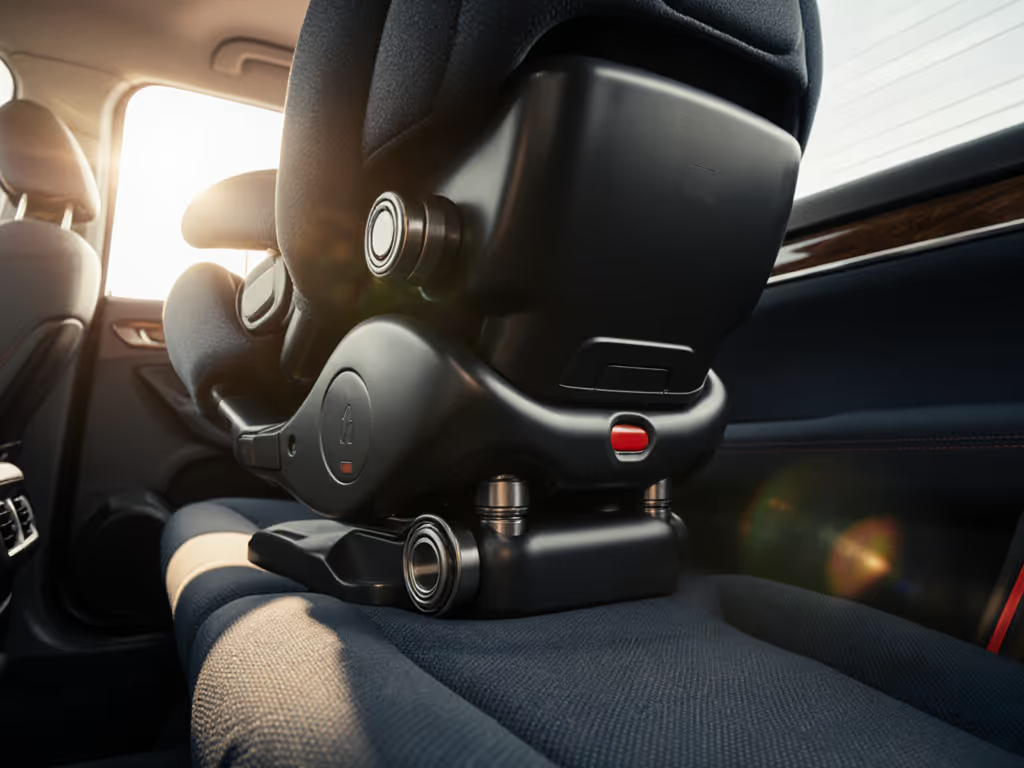
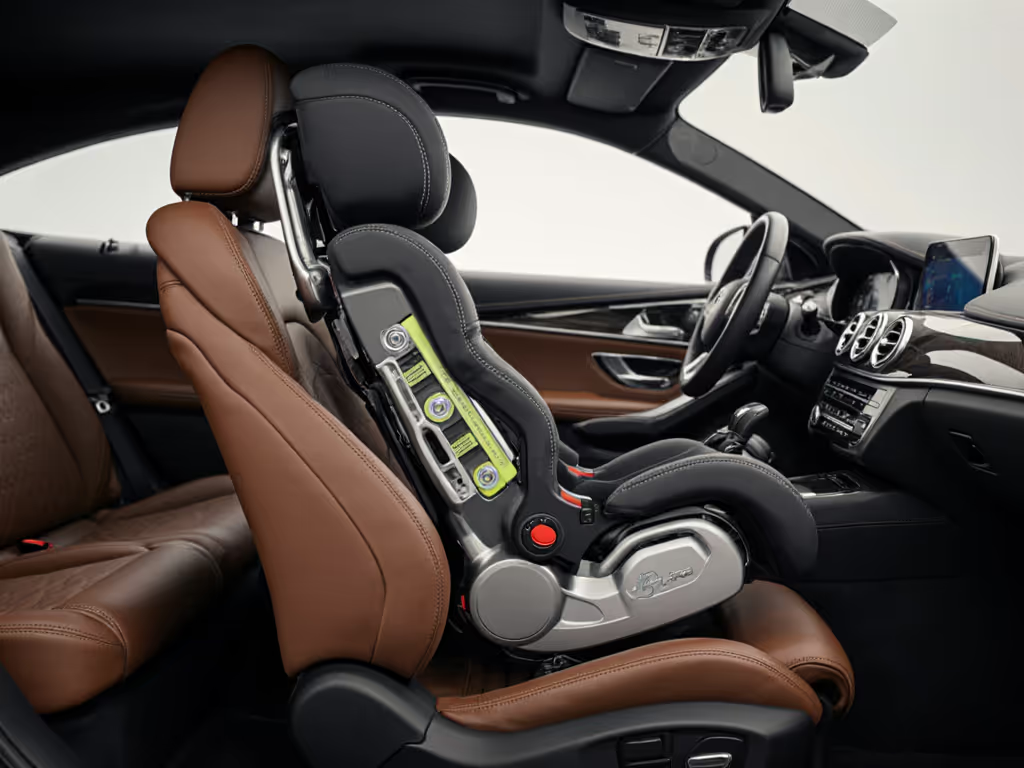
Recline adjustment mechanisms are how the seat lets you move between those safe angles. Understanding the hardware helps you use it correctly instead of treating it as trial and error.
Indexed positions vs. continuous recline
Most modern convertibles and all-in-one seats use indexed positions:
- A lever or button releases a toothed track.
- You hear or feel clicks as you move through numbered positions.
- The manual specifies which numbers are allowed for each mode.
Some seats use a more continuous base slider but still restrict which part of the range is legal. Either way, the labels on the side of the shell are the law.
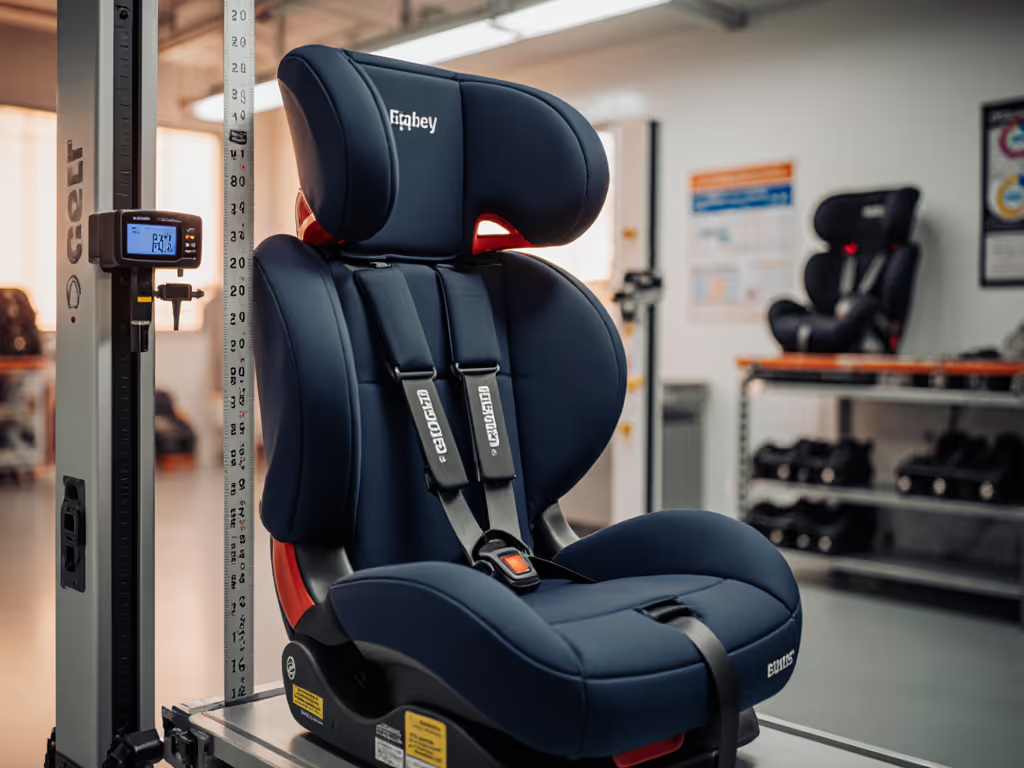
For example, an all-in-one seat like the Britax One4Life Slim provides multiple numbered recline settings operated by gray buttons on the base, plus a specific booster-only setting. Color-coded recline guides and bubbles on the side link those numbers to the allowed angle ranges in each mode, turning a multi-position base into a readable map rather than a guessing game.
Longevity lives in harness height, shell depth, and honest geometry. A well-designed recline system supports that by keeping a safe angle available as your child's spine, head control, and torso length change.
How the mechanism interacts with the vehicle seat
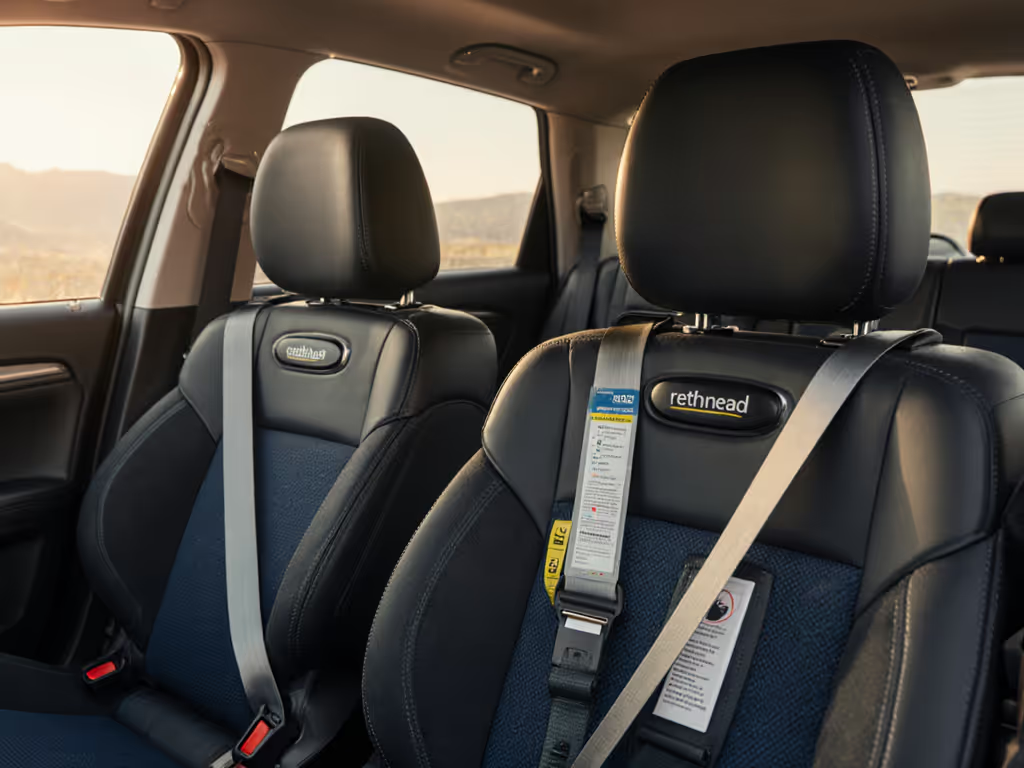
Here is where car seat recline mechanics meet your actual car:
- Vehicle seat cushions are often sloped backward, especially in sedans and some SUVs.
- That slope effectively pre-reclines the car seat before you ever touch the recline lever.
- A seat that is perfect on a flat showroom bench may be far too reclined or too upright once installed in a real vehicle.
This is why two families can install the same model and get completely different bubble readings. The recline mechanism engineering assumes a range of vehicle seat angles, and then the level indicator tells you whether your specific pairing lands in the safe band.
If you cannot get the indicator into the approved range with the built-in recline positions alone, your manual may allow:
- A tightly rolled towel or foam noodle under the front of the base for rear-facing.
- Adjusting the vehicle seatback slightly more upright for forward-facing.
If the manual forbids these tricks and the indicator never enters the zone, that is a compatibility red flag. For step-by-step installs tuned to vehicle seat angles, see our vehicle-tuned installation guide.
Matching Recline To Your Child And Your Car
Think of this as a small decision tree that you revisit as your child grows.
Rear-facing newborns (roughly 0-4 months)
- Use the most reclined position that still keeps the bubble or line within the infant zone.
- Prioritize airway: if you see head flop forward when the car is moving, you are likely too upright.
- Sacrifice some front-seat legroom if needed; this phase is short.
Rear-facing older babies and toddlers
Once your child has strong head and trunk control (often around 6-9 months, but follow your pediatrician and the manual):
- You can move toward a more upright allowed angle, still within the rear-facing band.
- Benefits: more front-seat space, less motion sickness for some kids, and often easier loading in smaller vehicles. For the crash-science behind staying rear-facing longer, see our extended rear-facing safety guide.
A practical threshold: if your toddler sleeps without their head slamming forward and the level indicator is still in the allowed area, your angle is doing its job.
Forward-facing in a harness
Most manuals allow more than one recline number for forward-facing, but also state that the seat must not over-recline.
General patterns:
- Aim for the more upright options that are still allowed; this usually improves crash performance and head containment.
- If your child's head slumps dramatically in sleep, you can choose a slightly more reclined forward-facing position if your manual approves it.
Booster mode
High-back boosters typically must be used in their most upright or a very specific recline setting. On some seats, booster mode is locked into its own lettered position.
Reason: the lap and shoulder belt must cross the hips, chest, and shoulder correctly. Over-recline a booster and the belt geometry degrades.
When you move into booster mode, reset your assumptions; re-read the recline section as if it were a different product.
Features That Genuinely Help With Recline (And How To Use Them)
Some engineering features are not just marketing; they materially improve your odds of a safe, repeatable install.
1. Clear, multi-mode recline guides
Seats that provide:
- Distinct color bands for rear-facing vs. forward-facing vs. booster.
- Easy-to-see bubbles or balls at eye level.
- Numbered positions tied directly to those guides.
make it much easier to get the angle right in multiple vehicles.
An all-in-one seat like the Britax One4Life Slim uses a quick-push recline with multiple positions, paired with simple color-coded guides and a bubble level. That combination supports extended rear-facing, a safer forward-facing posture, and a defined booster setting without leaving you to guess based on age alone.
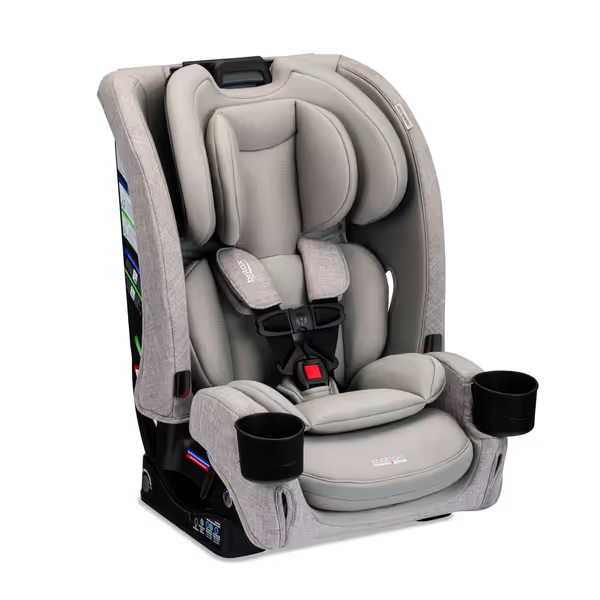
Britax One4Life Slim All in One Car Seat
10 years of reliable safety in a slim, easy-install design.
$359.99
Width17.5 inches (Slim Design)
Width17.5 inches (Slim Design)
Pros
Effortless ClickTight installation, proven secure.
Grows 10 years (5-120 lbs) with extended rear-facing.
Slim design for 3-across potential; easy-clean SafeWash fabrics.
Cons
Slim design doesn't guarantee 3-across in all vehicles.
Customers praise the car seat for its exceptionally easy and secure installation, noting that it does not budge once correctly installed. Many appreciate its slim design, which is ideal for smaller vehicles, and find it comfortable for children.
Customers praise the car seat for its exceptionally easy and secure installation, noting that it does not budge once correctly installed. Many appreciate its slim design, which is ideal for smaller vehicles, and find it comfortable for children.
2. Easy-access recline controls
Side or front-mounted recline levers and buttons are more likely to be used correctly because you can reach them without uninstalling the seat. Rear-mounted controls that require you to tilt or partially remove the seat tend to discourage fine-tuning.
In practice, that means you are more likely to set a newborn-appropriate angle, then gradually move more upright as your child's head control and torso length improve, instead of leaving the seat in a single compromise position for years.
3. Anti-rebound bars and load legs
These components do not set the recline angle, but they interact with it by managing how the seat moves during and after a crash.
- Anti-rebound bars limit the backward rebound of a rear-facing seat after the initial impact.
- Load legs support the base against the vehicle floor, reducing rotation.
When combined with a correctly set recline, they help keep the shell and your child's spine moving as one controlled unit rather than whipping forward and back.
Planning Recline For Years Of Usable Comfort
If I sketched a percentile-aware chart for your child's growth, you would see two curves that matter for recline:
- Head and neck control maturing rapidly in the first year.
- Torso length increasing steadily, changing where the headrest and shell contact the body.
As those curves evolve, your recline strategy should, too.
A simple planning framework:
- Newborn to strong head control: prioritize the most reclined allowed rear-facing angle that keeps the indicator in range.
- Strong head control to rear-facing limit: gradually move more upright within the allowed band to reclaim cabin space and reduce motion sickness while you ride out the extended rear-facing years.
- Forward-facing harness years: keep the seat relatively upright for better head control in a crash, adjusting only enough to prevent severe head slump in sleep.
- Booster years: obey the booster-specific recline rules and keep your focus on belt fit over comfort adjustments.
In multi-vehicle households, I often map this into a simple scenario matrix:
- Compact car with tight front-seat space: use the most upright rear-facing position allowed that still keeps the indicator in range.
- Roomy SUV or minivan: use a slightly more reclined angle (still legal) for long-drive comfort and naps.
- Grandparent's car used occasionally: choose a seat with intuitive recline and clear guides so they can match the primary car's angle without guesswork.
Across all of those cells, the goal is the same: years of usable comfort without creeping toward unsafe angles or rushing a booster because the geometry stopped working.
Where To Go From Here
To turn this from theory into confident daily practice:
- Re-read the recline and installation sections of your manual with fresh eyes, focusing on which positions are allowed in each mode.
- In your main vehicle, take five extra minutes to fine-tune recline within the indicator's allowed zone for your child's current stage.
- In any secondary vehicle, verify the indicator after every install; do not assume the same number setting equals the same angle.
- When your child hits a new milestone (better head control, outgrows rear-facing limits, moves to booster), treat recline as a setting you deliberately re-evaluate, not background noise.
If you want to go deeper, a certified child passenger safety technician can walk you through your specific seat and vehicle combination, checking both tightness and recline. For a quick walkthrough you can do today, follow our rear-facing installation steps to confirm angle and tightness. That small investment of time transforms a confusing lever into a tool you control, aligning safety, comfort, and vehicle geometry for the long haul.
Related Articles