Force Distribution: How Car Seat Physics Saves Tiny Bodies
By Aisha Khan • 30th Jan
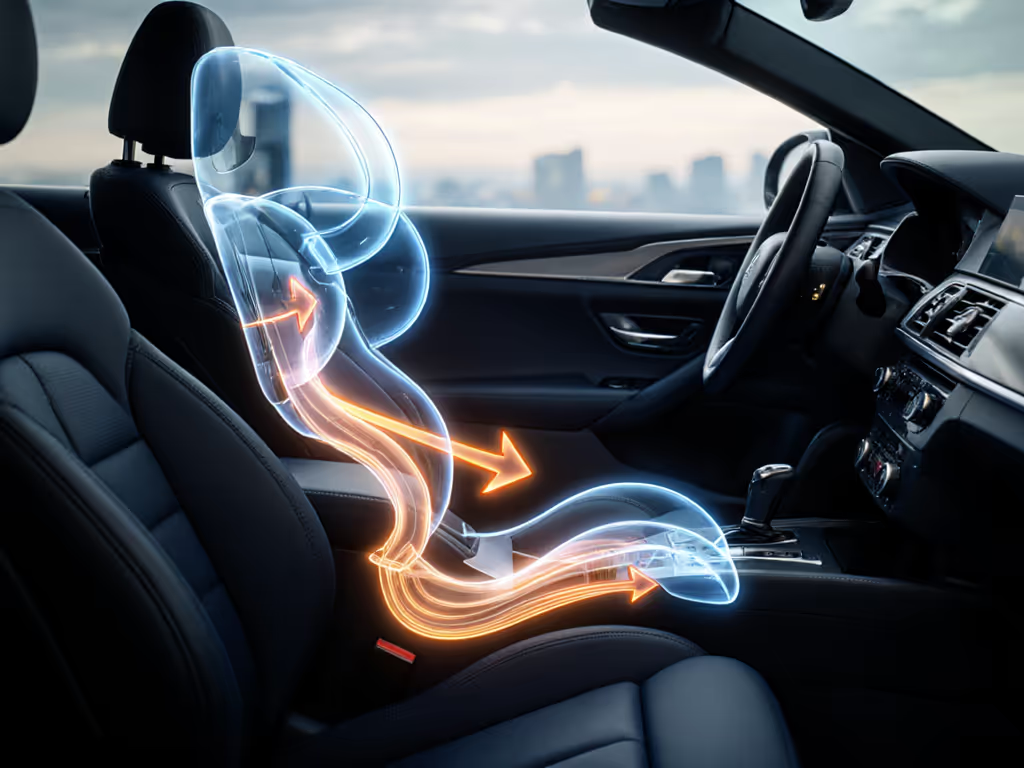
When your child's convertible seat force dynamics work as intended, physics becomes their invisible guardian. Understanding the physics of car seat safety reveals why certain designs outperform others in protecting delicate developing bodies. During a typical frontal collision, crash energy management physics transforms what could be catastrophic into manageable forces, when the system works correctly. For a deeper breakdown of crash types and outcomes, see our frontal vs side test data. Comfort grows from breathable fabrics meeting intelligent engineering, creating a safety ecosystem where every component serves dual roles: protection and peace of mind.
The Problem: Misunderstood Physics Put Tiny Bodies at Risk
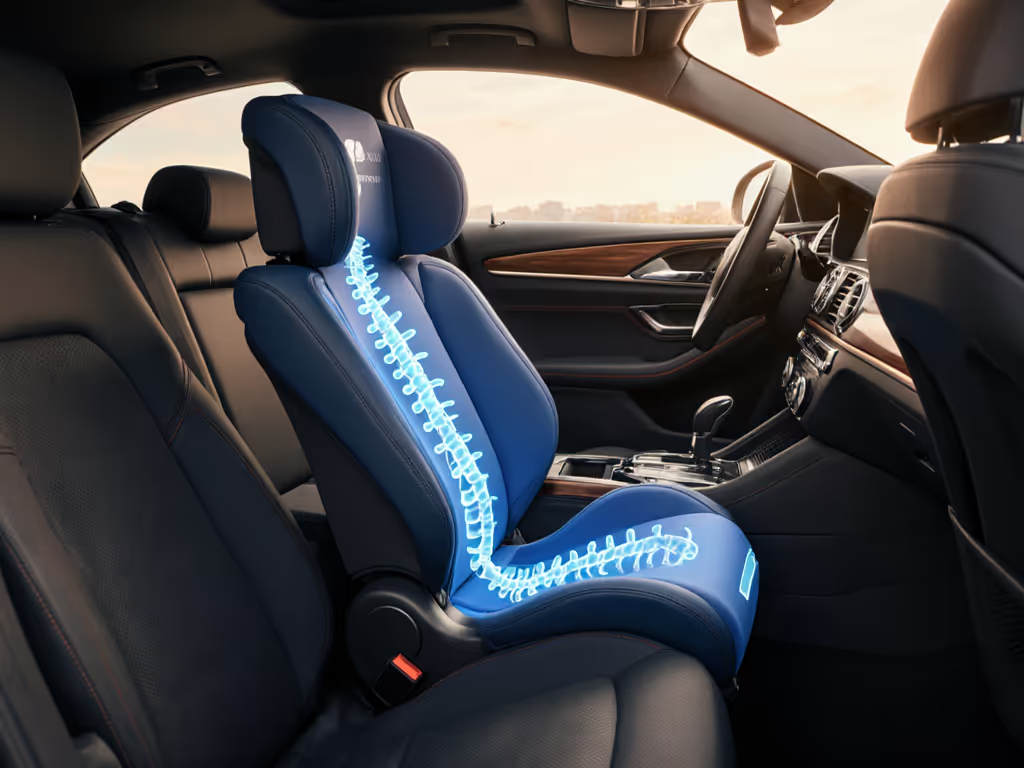
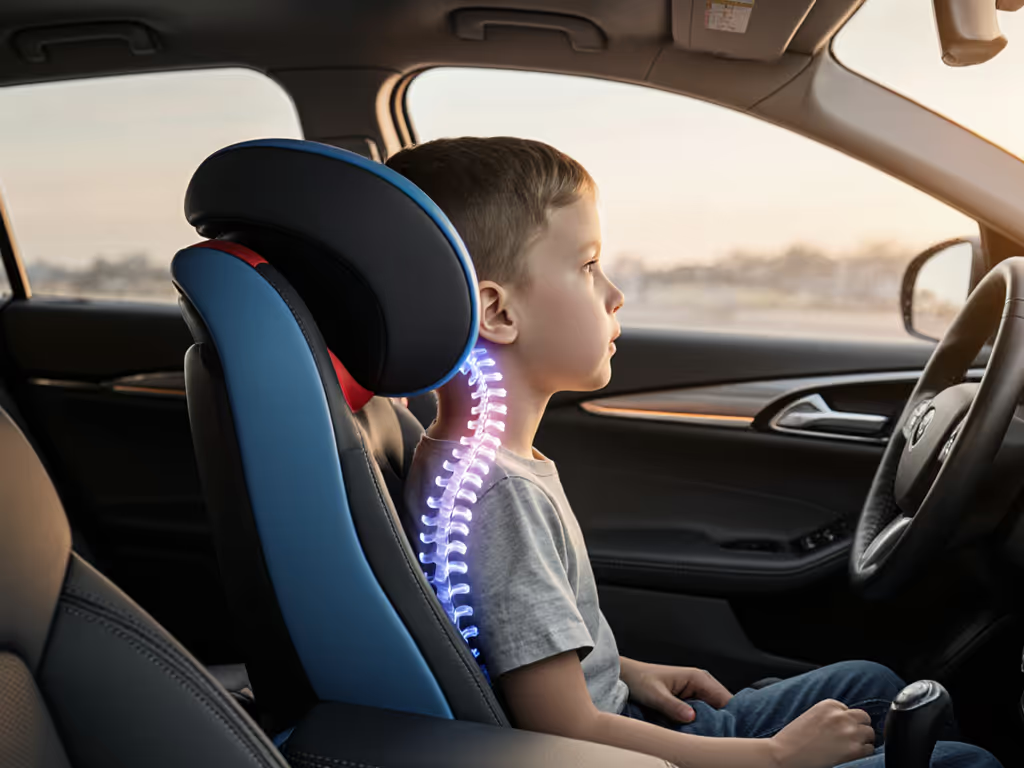
Most parents focus on proper harness tightness while overlooking the fundamental physics principles governing how car seats actually protect children. When a vehicle stops suddenly, the child's body continues moving forward (Newton's first law in action). Without proper force distribution in car seats, this momentum concentrates dangerous energy on the most vulnerable parts: an infant's disproportionately heavy head and developing spine.
Car seat momentum transfer principles dictate that improper installation or misuse shatters the carefully engineered safety net. A seat installed too upright allows excessive rotation during impact, while one too loose creates dangerous rebound movement. These installation errors undermine the very physics meant to protect your child. Even seemingly minor issues like twisted harness straps or incorrect recline angles compromise how the seat distributes crash forces across the child's entire body.
The Agitation: Why Physics Literacy Matters for Survival
Consider what happens during a 30 mph collision, the equivalent of falling from a third-story window. Without a car seat, the child's 20-pound body becomes a 1,600-pound projectile due to momentum transfer principles. This isn't theoretical; researchers at the University of Michigan Medical School documented how infant carriers completely shredded during crash tests, ejecting dummies into dashboards.
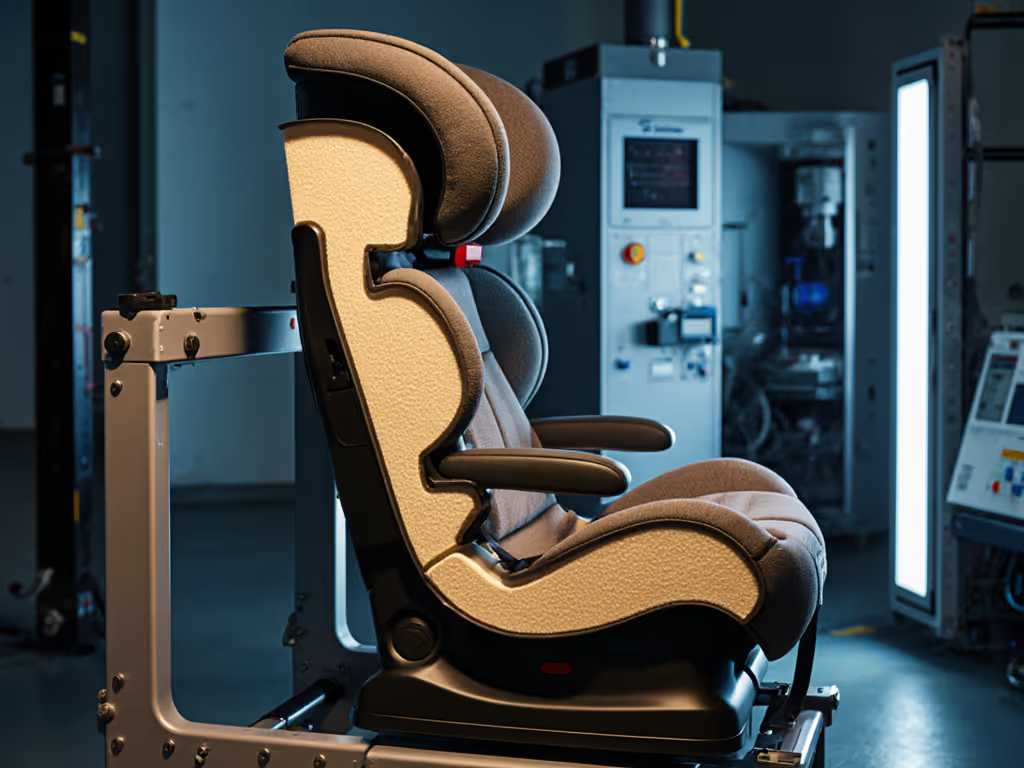
Rear-facing seats distribute this massive force across the child's entire back, head, and neck simultaneously. Forward-facing seats concentrate those same forces on just five points of contact: the harness straps. This distinction explains why Sweden's decades-long practice of rear-facing children until age four correlates with dramatically lower injury rates. The shell of a properly installed rear-facing seat becomes a protective cocoon that manages crash energy through intelligent engineering.
Many parents I've consulted with express shock when learning that a convertible seat's anti-rebound bar or load leg serves as a critical physics translator. These features do not just "feel" safer. They actively reduce the car seat's rotation during impact by up to 40% according to NHTSA testing protocols. Without them, the "equal and opposite reaction" from physics class becomes a dangerous rebound that throws the child toward the vehicle's back seat after the initial front impact.
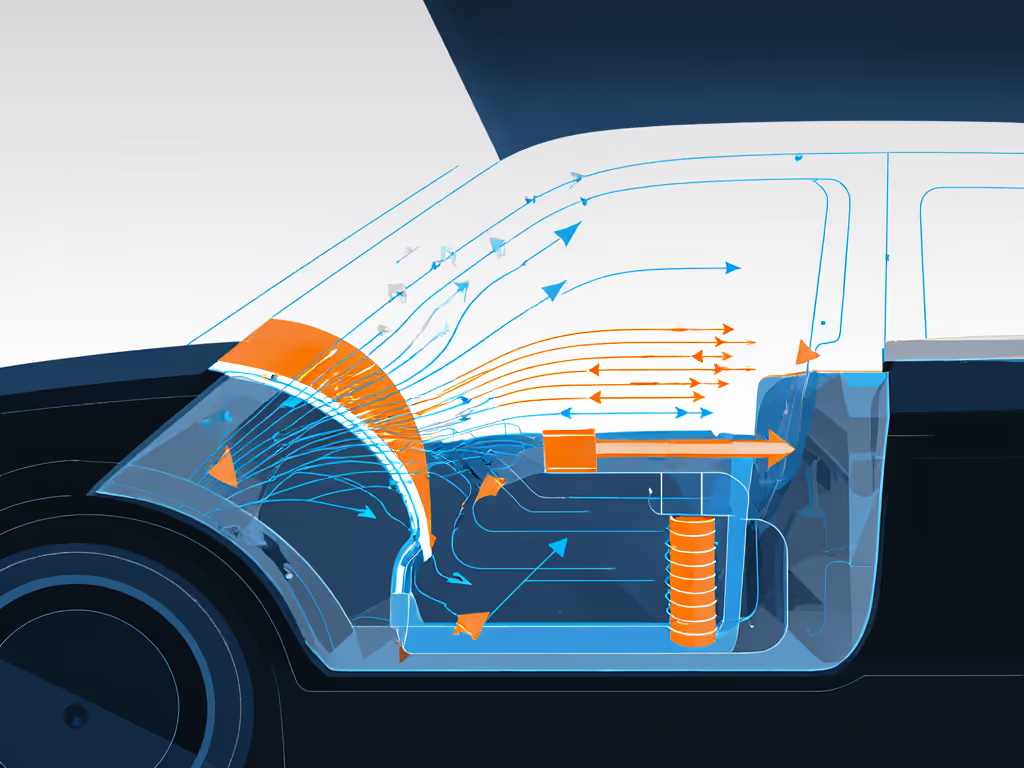
The Solution: Harnessing Physics for Maximum Protection
Optimal Installation: Creating the Perfect Force Distribution System
Proper installation creates a unified safety system where vehicle, car seat, and child work together according to crash energy management physics. For step-by-step setup that aligns with this physics, follow our vehicle-tuned installation guide.
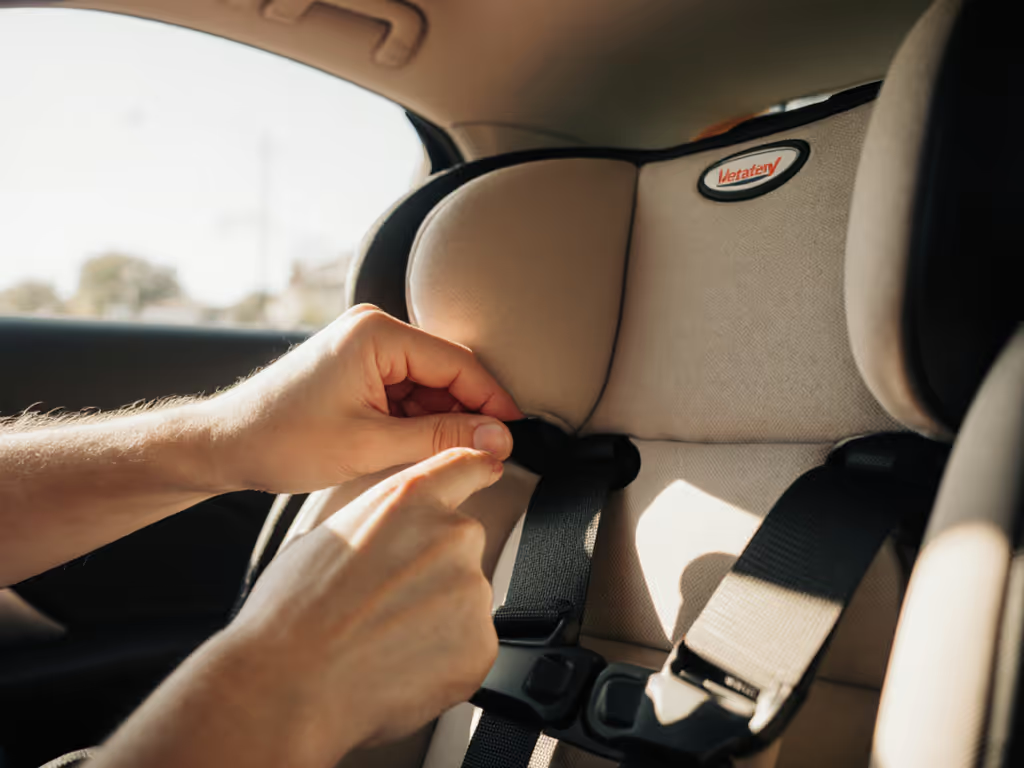
- Tighten installation to 1 inch or less of movement: This creates the "parachute effect" where the entire seat moves with the child, distributing forces gradually rather than letting the seat become a dangerous projectile.
- Respect the recline angle requirements: Newborns need 30 to 45 degrees to protect airways, while toddlers tolerate 20 to 30 degrees. The correct angle allows proper head support during impact while managing crash energy through the seat's structure.
- Use all available stabilization features: Whether it's a rear-facing tether, anti-rebound bar, or load leg, these physics-powered features reduce dangerous rotation. Seats with extended rear-facing capabilities often incorporate these elements to maximize force distribution during the most vulnerable developmental stages.
Materials Matter: The Hidden Layer of Physics Protection
Breathable, FR-free fabrics aren't just about comfort: they are physics partners. During long journeys, temperature and humidity observations show how conventional fabrics trap heat, causing discomfort and restlessness that leads to improper positioning. When children slouch or twist to find relief, they compromise the engineered force distribution system.
Materials callouts (FR/PFAS-free) represent more than health considerations; they enable fabrics that maintain structural integrity during impact while allowing proper breathability. Sensory-friendly design prevents the fidgeting that misaligns children in their seats, ensuring the crash energy management physics works as intended. I've witnessed how breathable fabrics prevent the sweaty, irritable awakenings that lead to unsafe positioning, proving that comfort engineering directly supports safety engineering.
Size Appropriately: Matching Physics to Developmental Stages
Ergonomic cues for sleep and posture reveal when children have outgrown certain safety configurations. To keep kids rear-facing as long as physics and fit allow, review our height limits explained. An infant's head should remain in a neutral position, not falling forward, a sign they've exceeded the seat's rear-facing capacity. For toddlers, watch for shoulder slots below the shoulders when rear-facing or above the shoulders when forward-facing.
The convertible seat safety engineering fundamentals depend on maintaining proper geometry between child and seat. An extended rear-facing convertible seat accommodates longer torso development, allowing continued rear-facing beyond what infant seats permit, which is critical when the physics clearly favors rear-facing through at least age two.
Your Actionable Next Step: The Physics Check-Up
Comfort grows from breathable fabrics, quiet design, and kinder chemistry. This isn't just comfort: it's physics in service of protection.
This weekend, perform a "physics check" on your current car seat installation:
- Conduct the 1-inch test: With your child secured, pinch the harness at the collarbone. If you can grab slack, it's too loose.
- Verify the recline angle: Use your phone's level app against the seat's indicator to ensure proper positioning for your child's age.
- Activate all stabilization features: Check if your seat has a load leg or anti-rebound bar and confirm it's properly engaged according to the manual.
- Assess fabric performance: Note temperature and humidity conditions after a 30-minute ride. Does your child sweat excessively? Are materials breathable enough to maintain proper positioning?
Document your findings and compare them against the manufacturer's guidelines. Remember: when physics principles align with thoughtful design, your child gains an invisible shield that turns potential catastrophe into manageable forces, proving that understanding the physics of car seat safety isn't just academic, it is life-saving practice.
Related Articles