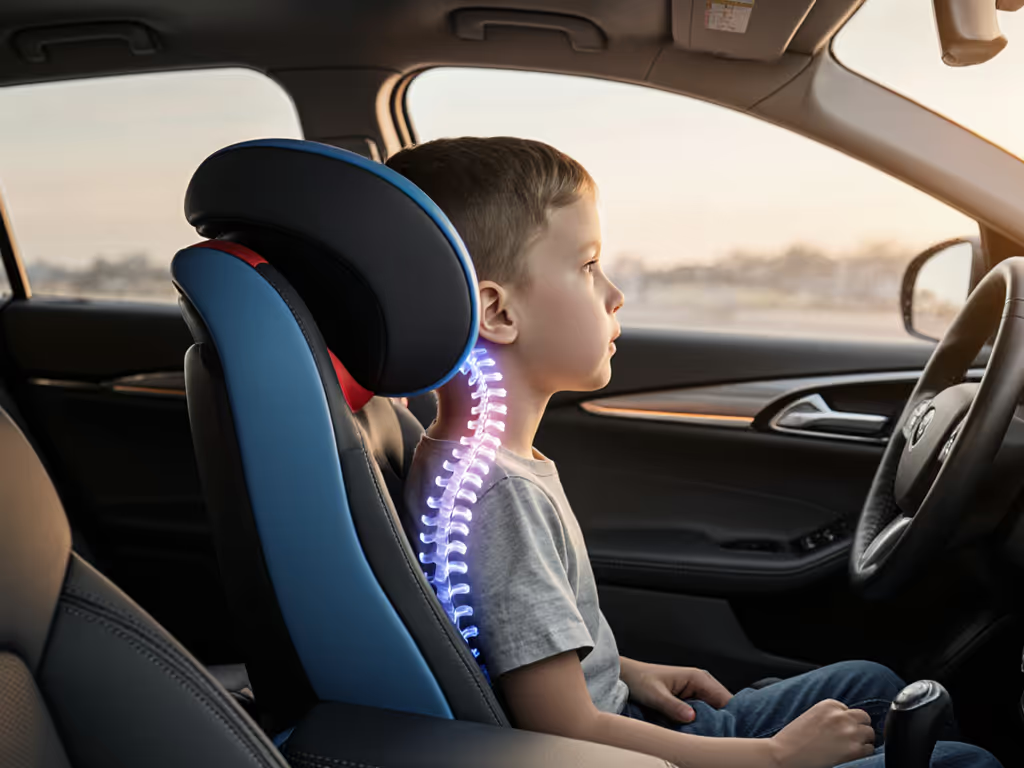
Car Seat Recline Mechanics: Why Vehicle Fit Varies
By Aisha Khan • 11th Mar
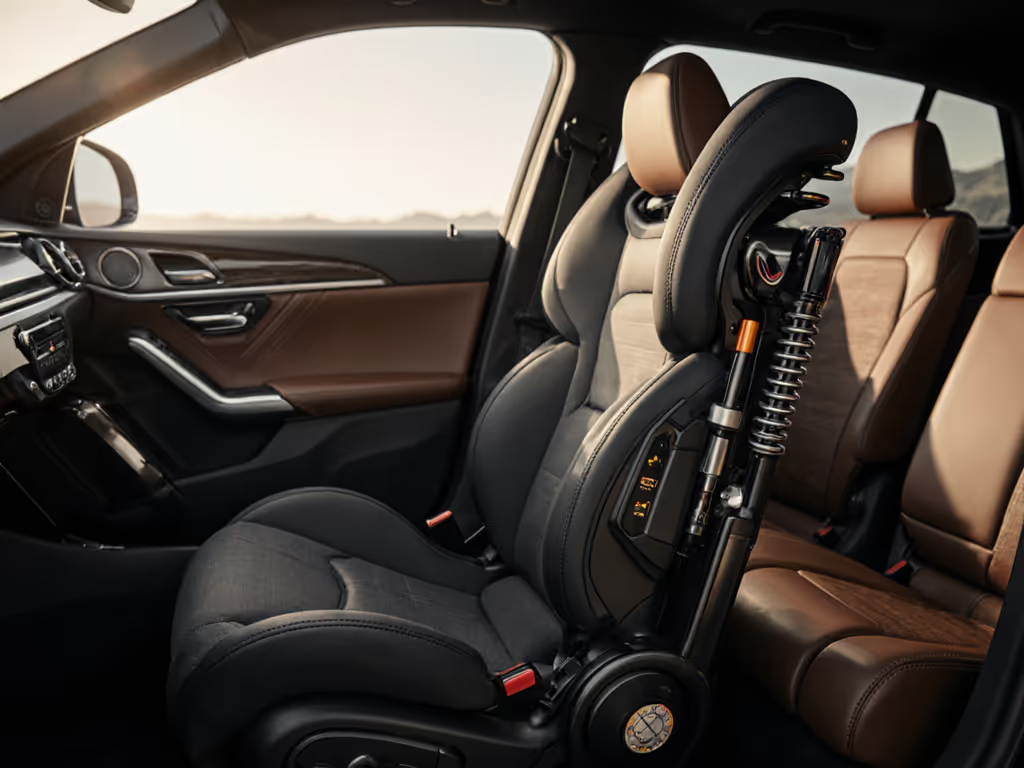
When parents shop for car seats, they often assume that if a seat meets safety standards, it will fit equally well in any vehicle. But car seat recline mechanics and how they interact with your specific vehicle's geometry reveal a more complex reality. The angle at which a backrest reclines, the pivot points engineered into the mechanism, and how that mechanism aligns with your vehicle's seat cushion all determine whether a seat installs securely, provides proper ergonomic support, and keeps your child comfortable during long rides. Understanding recline mechanism engineering helps explain why the same seat can feel like an excellent fit in one car and problematic in another. To see how seat design and vehicle geometry interact in practice, read our car seat fit essentials.
1. How Rotary Recliner Mechanisms Work in Modern Seats
Most car seats use a rotary recliner mechanism, essentially the "heart" of the seat's adjustability system. This mechanism employs an internal cam-style design with biased, movable locking elements that allow incremental adjustments about a horizontal axis. When you adjust your vehicle's front seat or recline a car seat, you're typically engaging a toothed top plate that rotates around this central axis, held in place by interlocking teeth until the next adjustment is made.
The critical insight here is that this mechanism is engineered to pivot around a single, fixed point determined by the seat manufacturer. Your vehicle's back seat, however, may have a different cushion angle, depth, or firmness than the manufacturer anticipated. If your vehicle's seat cushion slopes more steeply than the recliner mechanism expects, or if the pivot point sits too far forward or back, the car seat may not recline to the intended angle, even if the mechanism itself works perfectly.
2. Vehicle Seat Geometry and Reclining Angle Compatibility
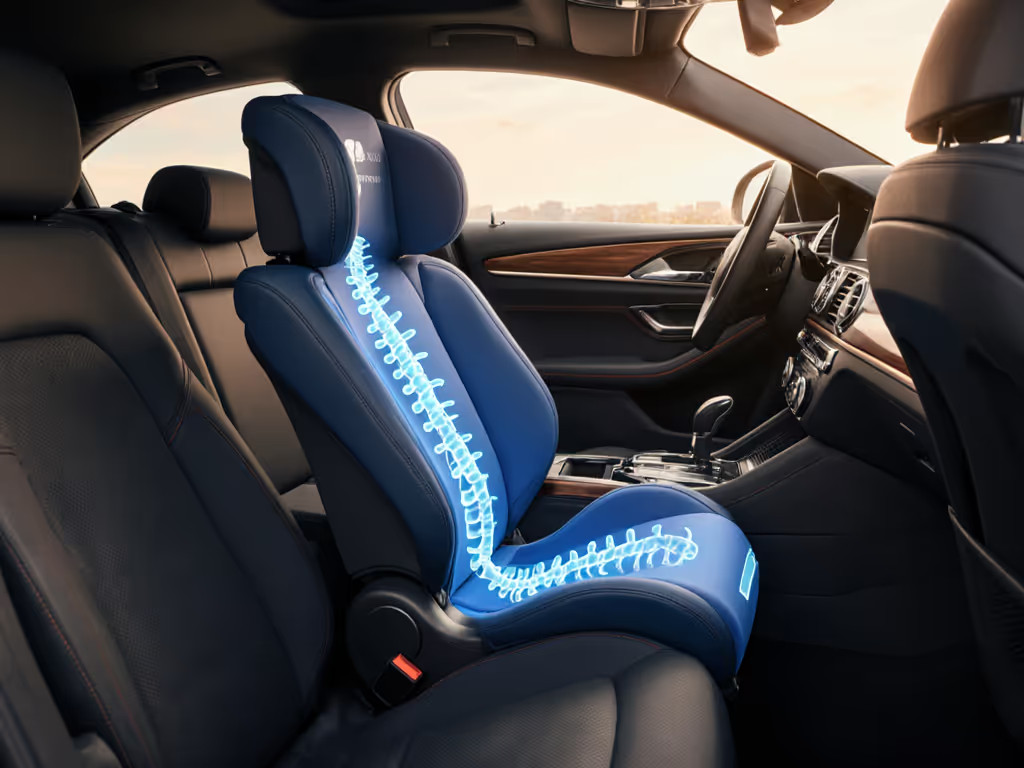
Recline angle safety isn't just about how far back a seat tilts; it's about the angle at which your child sits relative to gravity and the vehicle's structure. Most rear-facing infant and convertible seats are designed to sit at a specific angle (typically 30-45 degrees) to protect the baby's airway and spine during a crash. Forward-facing seats usually recline to allow comfortable napping without the child's head flopping forward, but they must maintain a safe angle for harness effectiveness.
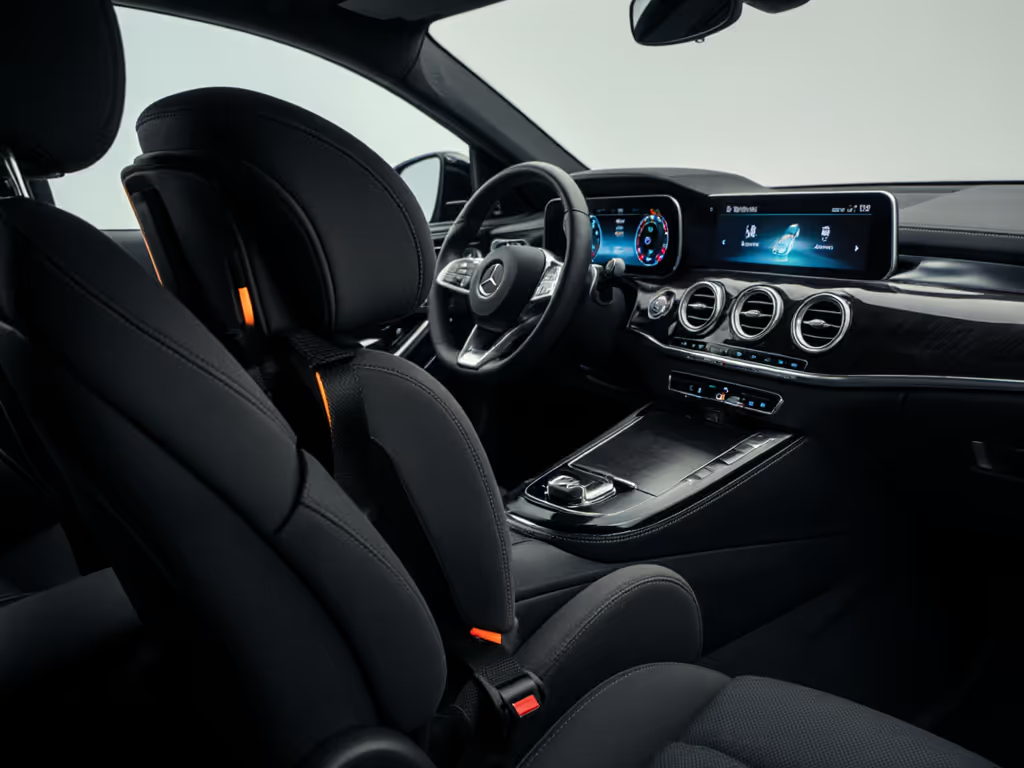
Vehicles vary dramatically in their factory-installed seat geometry. A low-slung sedan with flat, angled rear cushions creates a different baseline than an upright minivan or SUV. Compact cars often have rear seats pitched at a steeper angle, which means a car seat's built-in recline range may not achieve the manufacturer's intended angles. If you drive a small car, start with our best narrow car seats to find models that work on steep, tight back seats. A sports car, for example, might naturally tilt a seat backward so much that even a car seat's most upright position feels reclined. Conversely, a boxy vehicle with nearly flat rear seating may force a car seat into a more upright posture than its engineers designed, potentially compromising back support and nap comfort for the child.
3. The Role of Dump Latches and Secondary Pivot Points
Advanced recliner designs include a dump latch, a secondary pivot mechanism that allows additional movement independent of the main rotary system. When the backrest rotates beyond its maximum upright position, a follower engages a cam on the base plate, causing the dump latch to rock and unlock. This secondary axis of rotation provides fold-flat functionality in adult seats and gives some car seats an extra degree of recline flexibility.
In car seats, these secondary adjustments mean that a seat's recline range isn't always linear or obvious. Two vehicles with similar rear-seat angles may produce slightly different recline outcomes if one seat's dump latch engages sooner than another's. For parents juggling multiple vehicles, this inconsistency can be frustrating. To simplify swaps, see our car seats for multiple vehicles, selected for quick, reliable installs across different cars. A seat that reclines perfectly in the family sedan might feel too upright or awkwardly tilted in grandma's SUV.
4. Seat Cushion Variations and Installation Physics
Car seat installation physics depends on more than just the recliner angle; it requires intimate contact between the car seat's base and the vehicle's cushion. Many vehicles have sculpted rear cushions designed to cradle passengers comfortably. However, car seats are engineered with flat or minimally curved bases to distribute crash forces evenly. When a flat car seat base meets a highly contoured vehicle seat, there can be air gaps, especially along the sides and between the base and the junction where the backrest begins.
These gaps don't just affect comfort; they can mean that a seat's anti-rebound bar or load leg (if equipped) doesn't contact the vehicle's floor as intended, or that the seat rocks slightly side to side during normal driving. Vehicles with particularly sloped cushions require recline angle adjustments to keep the car seat base level relative to the floor, a detail that many parents overlook when reading "recline to angle X" instructions. Use our vehicle-tuned installation guide to correct for cushion slope and eliminate base gaps.
During a July road trip, a shift from a harsh aftermarket seat cover to a breathable, FR-free fabric trim reminded me how much the small details matter. The cabin temperature and humidity logger showed the same readings, yet the seat stayed cooler and quieter, and my toddler woke calm instead of sweaty and irritable. That day, I realized that recline angle alone doesn't guarantee comfort. Comfort grows from breathable fabrics, quiet design, and kinder chemistry. When a child is uncomfortable, they thrash, twist out of position, and shift the seat itself, undoing your careful recline adjustment.
5. Rack and Pinion vs. Rotary Design Trade-Offs
While traditional rotary recliners dominate, some manufacturers use rack-and-pinion systems, which employ a linear gear mechanism instead of rotational teeth. Rack-and-pinion designs promise a compact structure using fewer components and lower manufacturing cost than conventional mechanisms. However, their adjustment increments and mechanical advantage differ from rotary systems, meaning a rack-and-pinion-based car seat will behave differently in the same vehicle than a rotary-based competitor.
For parents evaluating seats across brands or swapping between vehicles, this engineering diversity matters. A seat that adjusts smoothly and locks confidently in one car might feel stiff or require more force to adjust in another. This is not a defect; it is a product of how the mechanism interacts with your vehicle's specific geometry and the force your body (or the vehicle's motion) applies to it.
6. How Headrest Position and Vehicle Roof Height Affect Recline Options
Vehicles also vary in headrest design, placement, and the distance between the rear seat and the roof or rear window. A tall SUV with a high roofline gives a car seat room to recline fully without the child's head hitting the rear window during naps. A compact sedan or coupe might have a lower ceiling, forcing you to keep the recline angle more upright to prevent the headrest from bumping the window or blocking the rear view.
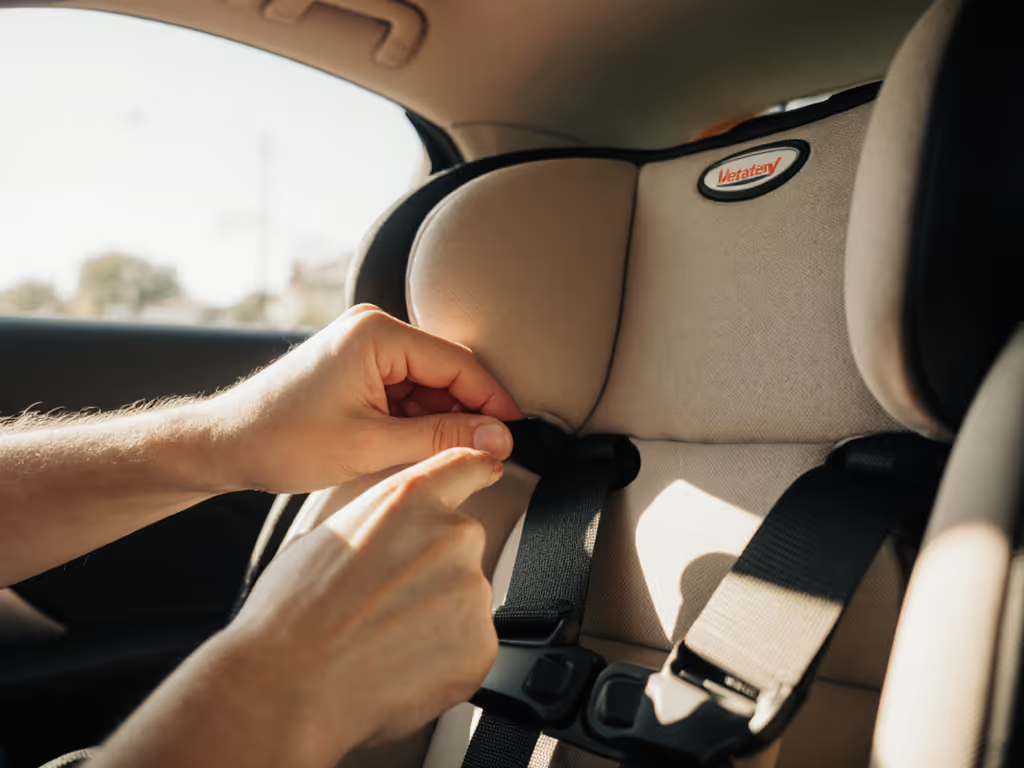
Some vehicles have fixed, integrated headrests that don't adjust or move. If your vehicle's fixed headrest is positioned higher or lower than the car seat's headrest, you may not have the recline flexibility the manufacturer's instructions show in their demonstration photo (which typically uses a neutral or larger test vehicle).
7. Testing and Verification Standards Don't Account for Every Vehicle Configuration
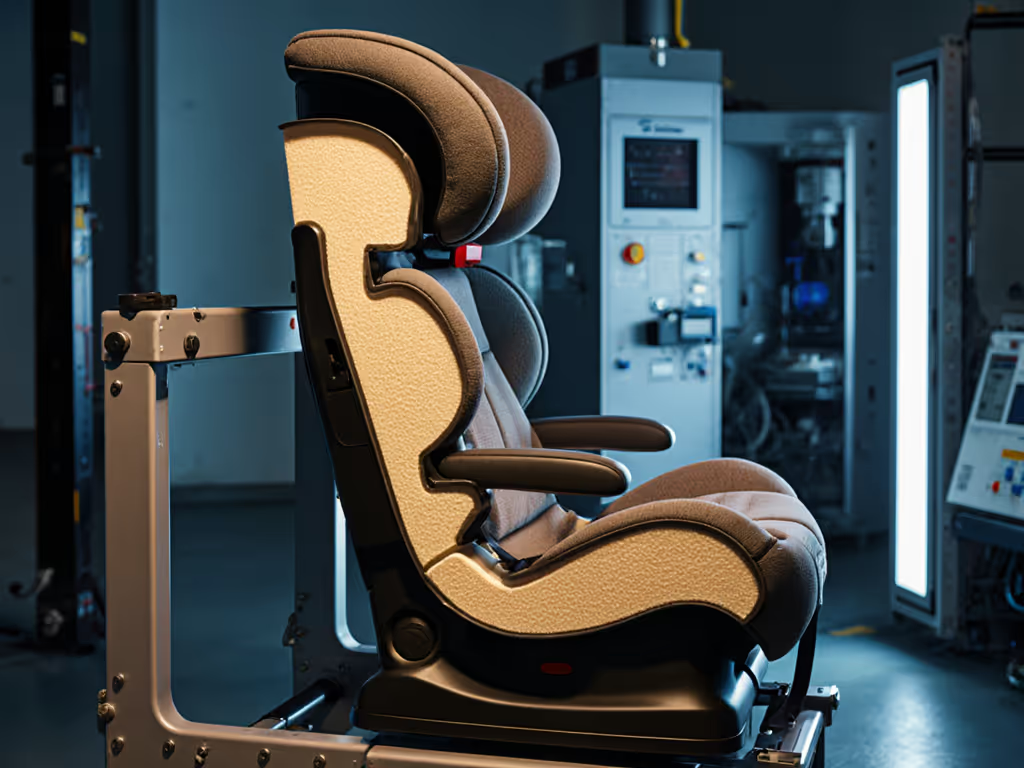
Car seats are tested for safety and function in controlled laboratory settings and a representative range of vehicles, but not in every possible configuration. Manufacturers of testing equipment like the Promess TorquePRO System use standardized test rigs to measure recliner mechanism performance, verifying that the seat achieves proper recline angles and that its locking function holds across a defined range. However, these tests don't replicate every vehicle's unique seat geometry, cushion firmness, or tether-anchor position.
When a seat arrives at your vehicle, there's always a small gap between the lab-tested "ideal" and the real-world "actual." That gap is where confusion arises and why a seat rated as "excellent" by independent reviewers might feel like a poor fit in your specific car.
Key Takeaways and Actionable Next Steps
Understanding recline mechanics helps you troubleshoot fit issues and make intentional choices. Here's what to do:
1. Know your vehicle's rear-seat geometry. Measure the angle of your rear seat cushion relative to the floor. If it's steep, you may need to keep your car seat reclined more than average. If it's flat, you might be able to recline less. Take a photo of your rear seat from the side to share with customer service if you're troubleshooting fit.
2. Test recline in your car before committing. If possible, visit a retailer that allows real-world installation tests in your specific vehicle model. A floor model is not the same as your car's seat.
3. Prioritize materials and ergonomic support as part of your comfort equation. A perfectly reclined seat won't keep your child comfortable if the fabric overheats, the padding is inadequate, or the headrest doesn't support restful sleep. Gentler materials, easier rides. This principle applies to both the seat's function and its feel.
4. Document your successful setup. Once you achieve a comfortable, secure recline angle in your vehicle, photograph it and note the specific setting. If you move the seat between vehicles, you'll have a reference point for replication.
5. Consult vehicle-specific resources. Many car seat manufacturers and child passenger safety technicians maintain databases of known fits for popular vehicle and seat combinations. Use these before making assumptions based on other families' experiences or online reviews, which may reflect different vehicle types. For model-by-model tips, see our complete compatibility guide.
Related Articles