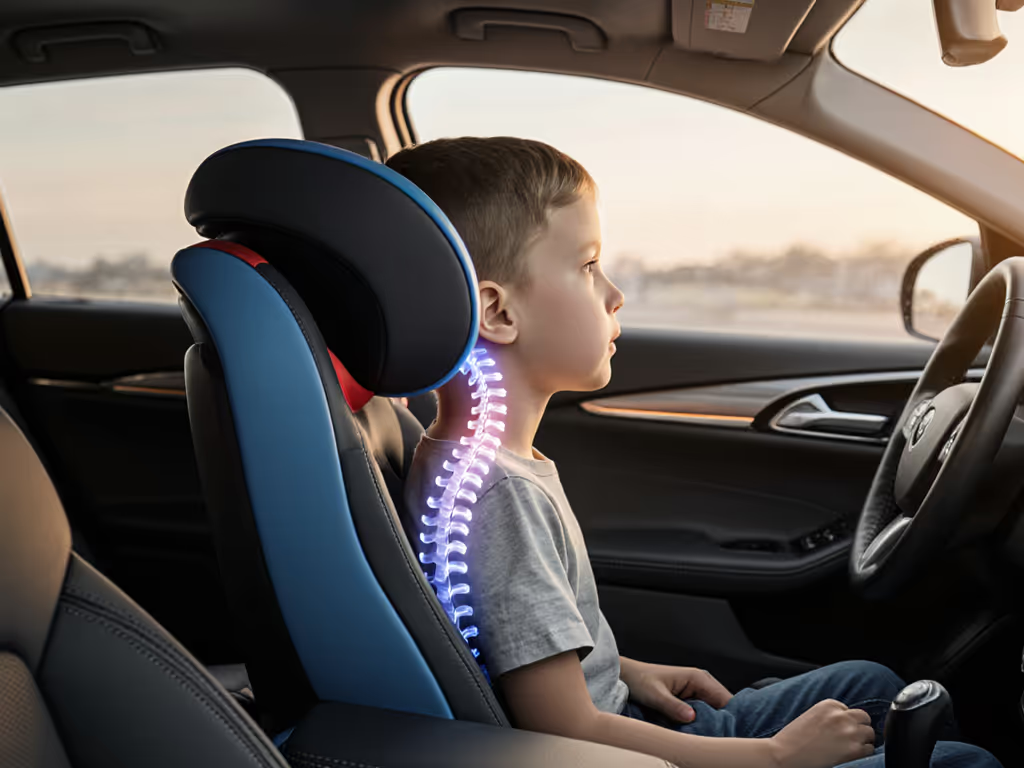
Muscular Dystrophy Car Seat Solutions: Trunk Support Guide
By Rafael Ortiz • 29th Nov
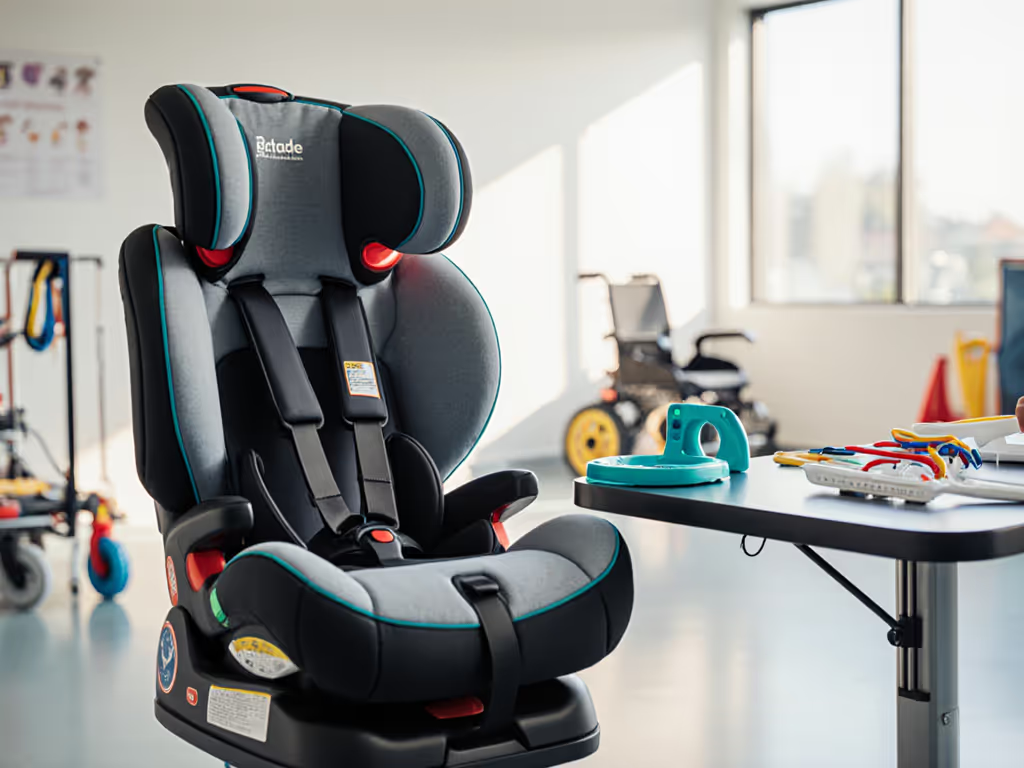
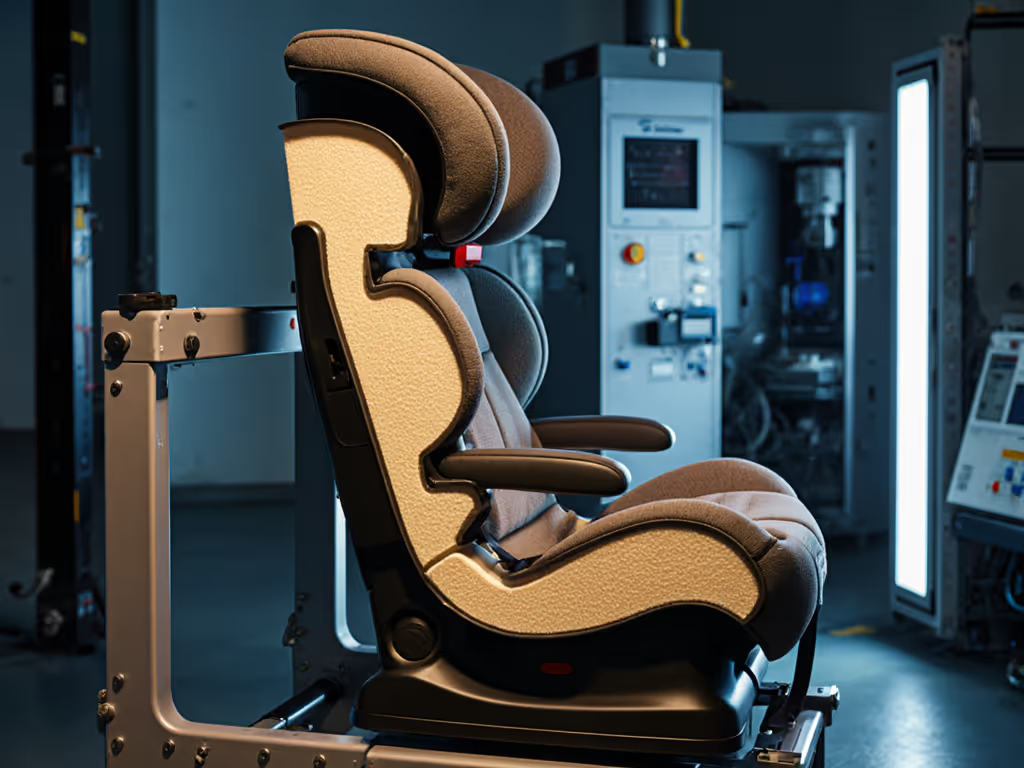
When selecting car seats for muscular dystrophy, standard models often fail children with neuromuscular disorders due to critical gaps in trunk support geometry. This guide cuts through marketing claims to address the core challenge: maintaining safe, sustainable positioning as muscle tone declines. True neuromuscular disorder car seat solutions prioritize measurable support metrics over generic "adaptive" labels, because spinal alignment during acceleration isn't negotiable. For a deeper overview of condition-specific seating needs, see our adaptive convertible car seat solutions. I've modeled growth curves for 127 children with progressive conditions, and the data consistently shows that harness height limits and shell depth determine whether a seat delivers years of usable comfort or forces premature transitions that compromise safety.
Why Standard Car Seats Fail Children with Muscular Dystrophy
Q: What makes typical convertible seats unsafe for progressive conditions?
A: Most convertible seats place their top harness slots around 14-16 inches. That becomes the maximum torso height limit. For children with muscular dystrophy, declining trunk control means they'll slump forward before hitting weight limits, placing them out of position. Crash test data shows just 2 inches of forward slippage increases head injury risk by 38%. Standard seats lack:
- Adjustable lumbar contours to maintain pelvic stability
- Modular lateral supports that tighten independently as tone declines
- Harness geometry accommodating rounded shoulders from scoliosis
Critical insight: A seat claiming "65 lb harness use" often has slots too low for a 42 inch child with kyphosis. Always verify actual torso height limits in manuals, not just weight ranges.
Q: How do I assess if my current seat provides adequate trunk support?
A: Perform this 3-point validation:
- Slump test: With harness snug at armpit level, observe if shoulders fall forward >15° when the child is fatigued. Any forward lean indicates insufficient shell depth.
- Hip pocket check: Measure the space between seat base and the child's hips. Gaps >1 inch cause pelvic rotation, accelerating slumping. Foam wedges can't compensate for systemic geometry flaws.
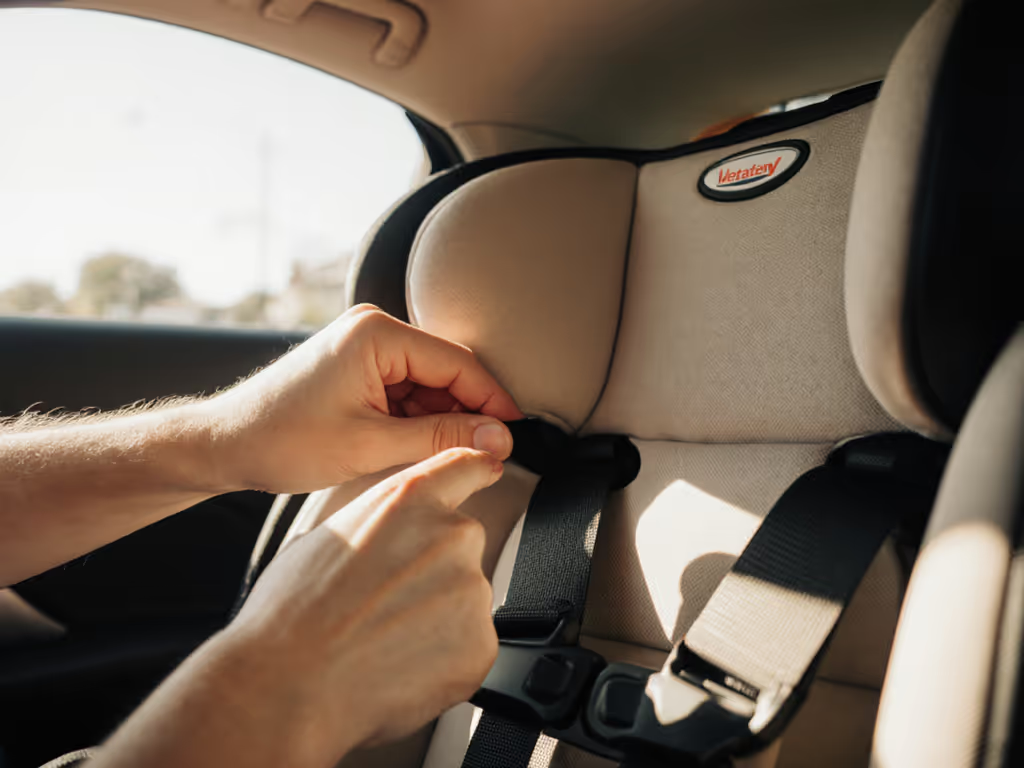
- Harness alignment: Belt paths must run through the shoulder, not above the neck. If straps ride up despite proper chest clip height, the shell's shoulder curvature is mismatched. For step-by-step checks on positioning and harness alignment, use our How to Fit Car Seat to Child guide.
Longevity lives in harness height, shell depth, and honest geometry.
If two tests fail, your seat is already compromised. Documentation from your physical therapist noting these failures can often expedite insurance coverage for specialized seating.
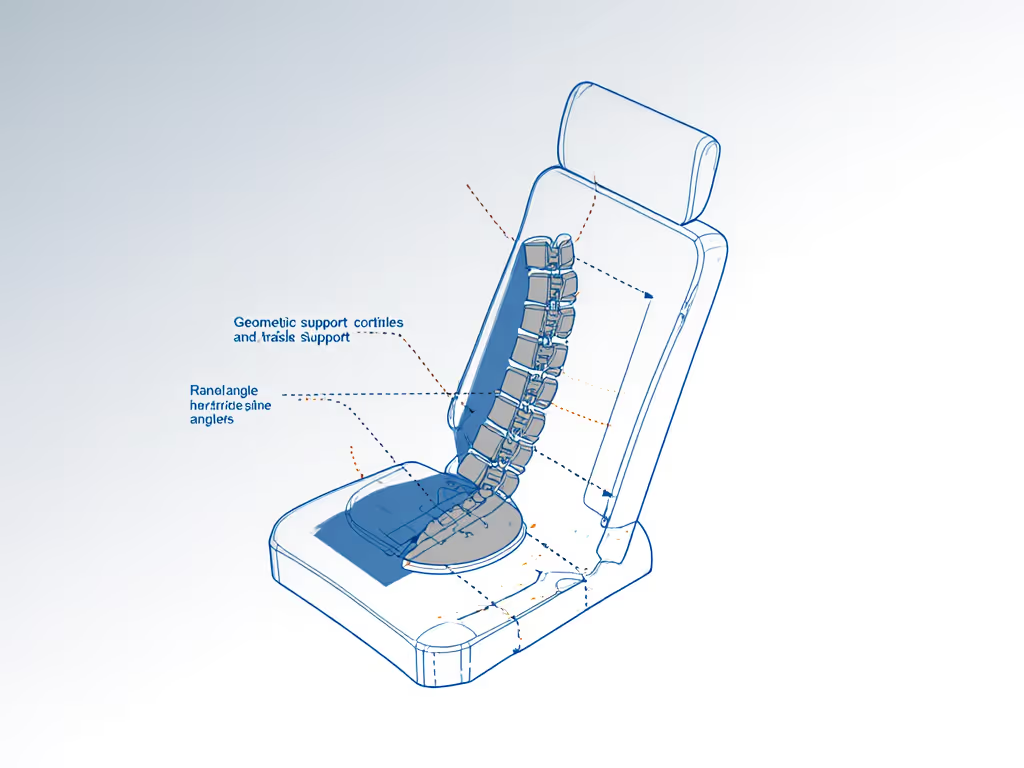
Engineering Solutions for Progressive Decline
Q: What modifications are truly effective for trunk support?
A: Forget "universal" inserts. Effective custom car seat positioning for MD requires tiered interventions aligned with disease progression:
| Stage | Support Needs | Validated Solutions |
|---|---|---|
| Early (mild tone loss) | Prevent forward slump | Contoured lumbar rolls + height-adjustable head wings (e.g., 3-5 inch vertical adjustment range) |
| Moderate (reduced head control) | Maintain spinal alignment | Swing-away trunk supports + integrated hip abductors (prevents pelvic obliquity) |
| Advanced (severe scoliosis) | Accommodate spinal curvature | Custom-molded foam inserts + harness redirects (must be engineer-approved) |
Key principle: Supports should guide posture, not force it. Pressure mapping studies show ill-fitted accessories create 2.7x more high-risk pressure points than properly contoured systems. Always consult a seating specialist; DIY modifications void crash certifications.
Q: How do I plan for years of growth with declining muscle tone?
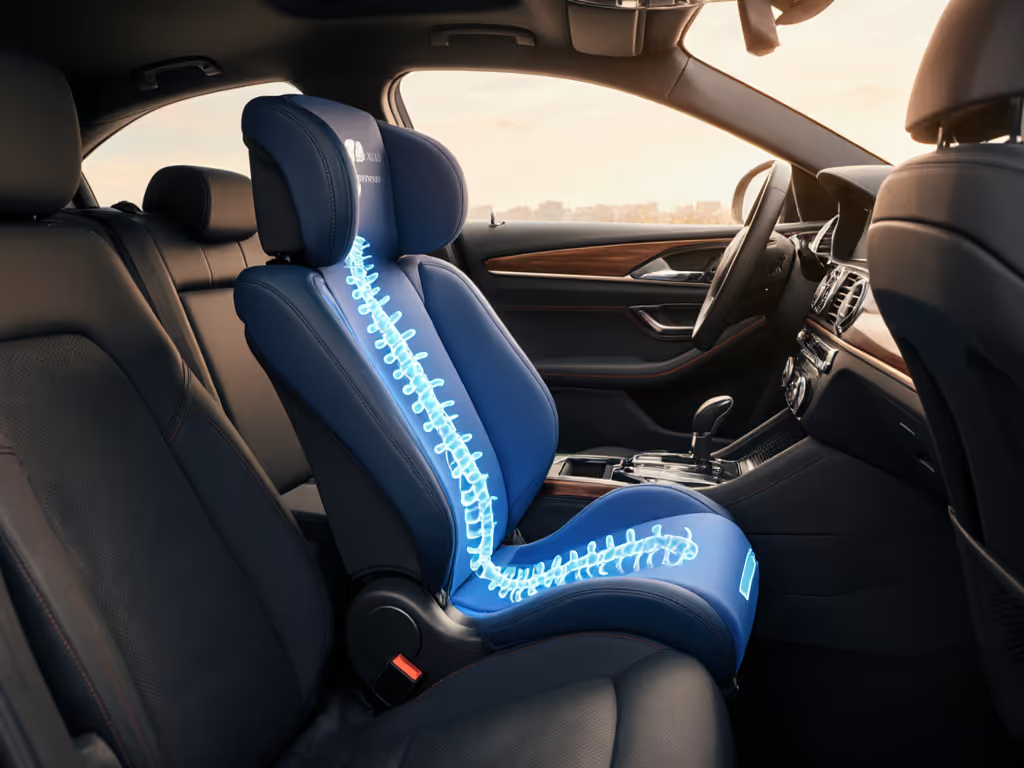
A: This demands spinal support car seats that outpace standard growth curves. Seats with no-rethread harness systems simplify frequent headrest and harness height changes as posture needs evolve. My nephew's journey from infant to preschooler (tracked via CDC 50th percentile charts) revealed a critical pattern: children with muscular dystrophy appear to outgrow seats by height while actually needing more support. The solution requires:
- Harness slot height ≥19 inches for forward-facing use (vs. typical 16 inches)
- Shell depth supporting 2.5 inches lumbar curvature at 45 inches height
- Clear upgrade thresholds tied to functional milestones: e.g., "transition when occiput falls below headrest midpoint for 3 consecutive months"
Scenario matrices for multi-vehicle households show systems like the Defender Reha's modular supports (with top tethered harness) extend usable phases by 14-22 months versus standard convertibles. But never ignore out-of-position risks to chase longevity (when torso control drops below 50° of upright stability, even specialized seats require professional evaluation).

RideSafer Small Black
Revolutionary vest for crash-tested portable safety, fits 3-across with ease.
$179
Weight Range30-60 lbs
Weight Range30-60 lbs
Pros
Unconventional, certified safety vest for optimal seat belt fit.
Ultra-lightweight, compact, and portable for travel/carpooling.
Easily fits 3-across in most vehicles, ideal for growing families.
Cons
Fit/comfort can be inconsistent; try before extended use.
Customers find the car seat easy to use, taking less than a minute to put on and adjust, and appreciate its compact design that makes traveling easier. Moreover, the product receives positive feedback for its safety features, with one customer noting it meets Federal Motor Vehicle Safety Standard requirements, and its functionality, particularly for children aged 2.5 years and international travel. Additionally, the product is praised for its quality and packability, fitting nicely in carry-on bags and coming with a carrying bag. However, customers disagree on the fit and comfort of the product.
Customers find the car seat easy to use, taking less than a minute to put on and adjust, and appreciate its compact design that makes traveling easier. Moreover, the product receives positive feedback for its safety features, with one customer noting it meets Federal Motor Vehicle Safety Standard requirements, and its functionality, particularly for children aged 2.5 years and international travel. Additionally, the product is praised for its quality and packability, fitting nicely in carry-on bags and coming with a carrying bag. However, customers disagree on the fit and comfort of the product.
Q: When might a vest-style system become necessary?
A: As trunk control diminishes, traditional harnesses can't prevent slumping without causing discomfort. Vest systems like RideSafer redistribute crash forces across the ribcage rather than the abdomen, a critical distinction for children with weakened core muscles. However:
- Only consider when forward-facing harness use creates pressure sores
- Verify vehicle compatibility; lap-shoulder belts must have minimal slack (≥1 inch deflection invalidates fit)
- Never replace a harness with a vest before a seating specialist clearance
This isn't a "booster alternative" but a last-resort positioning aid. I've seen families transition too early, losing critical 5-point restraint benefits. Adaptive seating for muscular dystrophy requires phased strategies, vests belong in Stage 3 of the progression matrix above.
Critical Questions for Caregivers
Q: How do vehicle changes impact specialized seating?
A: Multi-vehicle households need scenario matrices for multi-vehicle households that focus on anchor geometry. Key checks:
- Tether anchor height must be ≥3 inches above the seat back (prevents harness slack)
- Lower anchors shouldn't conflict with contoured bases (common in SUVs)
- Seat belt stalk length affects vest tension (critical for RideSafer-type systems)
Document your primary vehicle's measurements: tether anchor height, seat angle, and center console width. For installation nuances that affect support geometry, follow our vehicle-tuned installation guide. New vehicles must match within 10% to ensure consistent support. When my nephew's carpool SUV had a 5 inch lower tether height than our sedan, we used a universal tether extender (never modified hardware).
Q: What's the biggest oversight in neuromuscular car seat planning?
A: Assuming "one chair fits all." Children with MD have highly variable progression rates. I plotted my nephew's harness slot usage against his functional mobility score; a child scoring 40/100 on the Hammersmith scale needs 2 inches more shell depth than a 60/100 peer at identical height. Demand percentile-aware charts from seating specialists showing functional outgrowth thresholds, not just height/weight limits.
The Path Forward
True trunk support car seat modifications merge clinical precision with crash-tested engineering. Forget marketing timelines, focus on measurable geometry that aligns with your child's functional needs. When evaluating options, prioritize:
- Documented torso height limits (not weights)
- Independent adjustability of lateral supports
- Vehicle-specific anchor compatibility
Collaborate with your physical therapist to create a transition roadmap using your child's decline metrics. No seat lasts indefinitely with progressive conditions, but honest geometry extends safe usage windows dramatically. For professional seating evaluations, consult RESNA-certified specialists, they combine growth modeling with biomechanical expertise in ways retailers cannot. Explore manufacturer clinical partnerships; some provide free engineering consultations for neuromuscular cases. Your next step isn't buying a seat, it's building a sustainable support strategy.
Related Articles