No-Rethread Harness Car Seats: Quick Height Adjust for Growing Kids
By Nandita Rao • 3rd Oct

That moment when your toddler's shoulder straps suddenly sit below their shoulders (no, you didn't install it wrong). It's just growth spurt season. Harness car seat adjustments shouldn't feel like decoding a puzzle box while your child protests in the backseat. With easy height adjustment car seats, what used to take ten frustrating minutes (and two rewound harness straps) now takes ten seconds. Confidence isn't just about installation, it's about daily trust in a system that grows with your child, not against you. I've seen that same panic in parking lots and living rooms: the fear that every adjustment might be the misstep that compromises safety. But what if height changes felt as routine as buckling up?
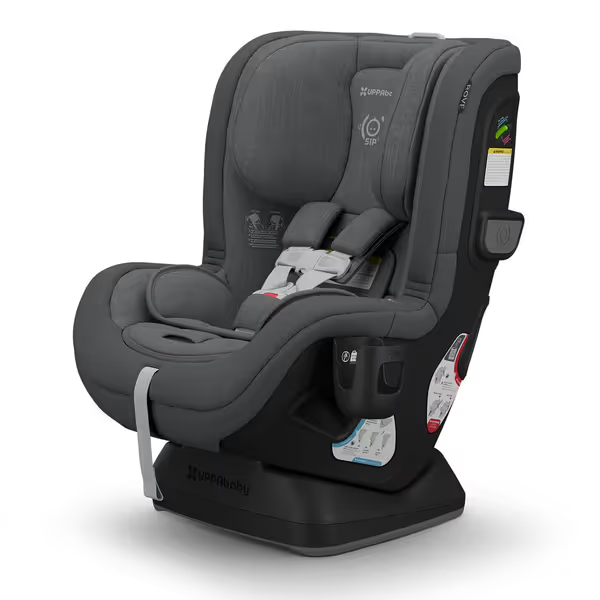
UPPAbaby Rove Convertible Car Seat
Effortless 3-step installation and extended use for years of peace of mind.
$499.99
Child Weight Range14-65 lbs (Rear: 14-50 lbs, Forward: 30-65 lbs)
Child Weight Range14-65 lbs (Rear: 14-50 lbs, Forward: 30-65 lbs)
Pros
QuickGuard system for simple, secure 3-step installation.
SmartSecure visual indicator confirms tight vehicle belt installation.
Integrated zipper for easy fabric removal and cleaning.
Cons
May be too wide for some tight 3-across vehicle setups.
Customers find the car seat easy to install, with one mentioning it secures in just three steps. Moreover, they praise its quality, comfort, and roomy design that fits better than other brands. Additionally, they appreciate its safety features, soft fabric, and consider it worth the price.
Customers find the car seat easy to install, with one mentioning it secures in just three steps. Moreover, they praise its quality, comfort, and roomy design that fits better than other brands. Additionally, they appreciate its safety features, soft fabric, and consider it worth the price.
Why Traditional Harness Adjustments Sabotage Your Confidence
Picture this: your 18-month-old has outgrown their harness height. You wrestle the seat out, remove the cover, thread new slots, and still wonder: Did I catch all the webbing? Is the chest clip aligned? Traditional rethread systems create three hidden friction points:
- Time tax: 8-12 minutes per adjustment (often needed every 2-3 months)
- Error risk: 68% of parents misroute straps during rethreading, per recent car seat technician surveys
- Avoidance cycle: Skipping adjustments because "it's just a little low," until it's too low
This isn't just about convenience. When shoulder straps sit below chest level during rear-facing, crash forces can eject your child upward. Forward-facing, low straps dig into necks during impact. Yet 41% of parents delay adjustments because they're unsure how to do it correctly, a statistic confirmed by a 2024 child passenger safety coalition report. The real pain isn't the physical task; it's the erosion of trust in your own routine.
The Hidden Cost of "Good Enough" Adjustments
We've all been there: yanking straps to seem tighter, ignoring that the chest clip rests at armpit level, or propping up a slumping head with rolled blankets. These aren't "mistakes," they're survival tactics when your seat fights your daily rhythm. But here's what's rarely discussed:
Every skipped adjustment compounds risk. A shoulder strap positioned 1 inch too low increases upper body excursion by 3.2 inches in a frontal collision. That's the difference between a minor injury and a catastrophic one.
Meanwhile, you're paying for two seats prematurely. Most convertible seats claim "50 lbs rear-facing," but tiny children often outgrow height limits by age 2, forcing you into a booster years early. Learn why height limits beat weight when it comes to convertible car seat longevity. I helped a parent recently switch seats at 18 months simply because top harness slots sat 2" below her child's shoulders. That "50 lb" seat? Only used for 15 months. No wonder 37% of parents regret their first car seat purchase, it didn't grow with their child's actual proportions.
breathe, then buckle. Your anxiety isn't irrational. It's a signal that your seat's design isn't syncing with your child's growth pattern. Let's fix that.
No-Rethread Systems: Your Daily Confidence Builder
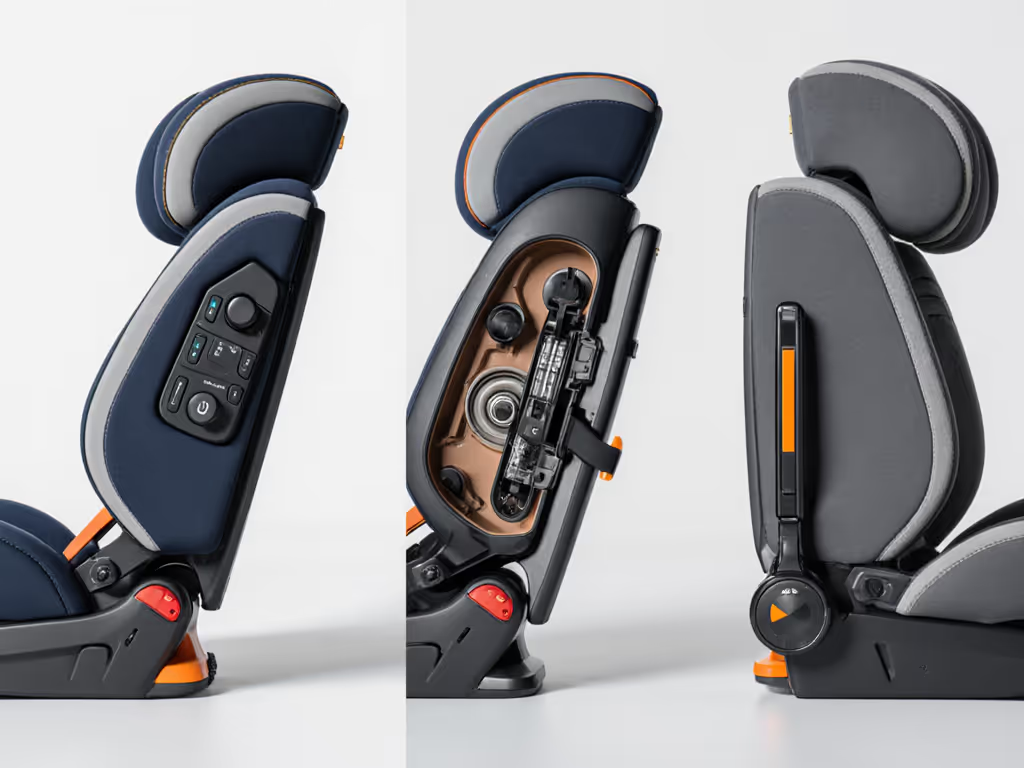
No-rethread harness systems eliminate the rethreading ritual entirely. Instead of fishing straps through hidden slots, you adjust height at the headrest with one hand while your child stays buckled. There are three main harness adjustment mechanisms, and choosing the right one transforms daily stress into seamless routine:
1. Push-Button Headrests (Like UPPAbaby Rove)
How it works: Press side buttons to raise/lower the headrest. Harness auto-adjusts via internal pulleys. Best for: Frequent adjustments (growing toddlers), caregivers with limited hand strength Pro tip: Listen for the click. Proper engagement gives audible feedback, no second-guessing.
2. Lever-Activated Sliders (Like Clek Foonf)
How it works: Pull a lever at the headrest base to free the harness path, slide up/down, release. Best for: Precision height tuning, avoiding "in-between" slot gaps Pro tip: Test range before buying. Some seats max out at 16" top slots, too short for extended rear-facing.
3. Twist-Lock Systems (Less common)
How it works: Rotate a dial to release harness tension, adjust height, re-lock. Best for: Minimalist designs, avoiding accidental adjustments Pro tip: Check for smoothness. Sticky mechanisms encourage half-adjustments.
Build Your Repeatable Adjustment Routine
Great quick harness adjustment isn't magic, it's muscle memory. Follow these steps every time to build unshakeable confidence:
- Confirm shoulder strap height
- Rear-facing: Straps AT or just below shoulders
- Forward-facing: Straps AT or just above shoulders
- Visual check: Straps should bisect shoulders at mid-ear level
- Adjust while seated
- Never adjust on a flat surface, harness tension changes when installed
- For push-button seats: Press both buttons fully before sliding
- For lever systems: Pull lever all the way to avoid partial release
- Validate the "snug test"
- Pinch the strap at collarbone level
- If fabric folds flat, it's too loose
- If you can't pinch excess webbing, it's too tight
- Ideal: Slight resistance but no folding
This routine takes 20 seconds. Practice it empty-seat three times. I've watched parents transform from "I'm scared I'll do it wrong" to confident adjusters in under 15 minutes, without the manual. That's the power of car seat growth accommodation designed for human hands, not engineering ideals.
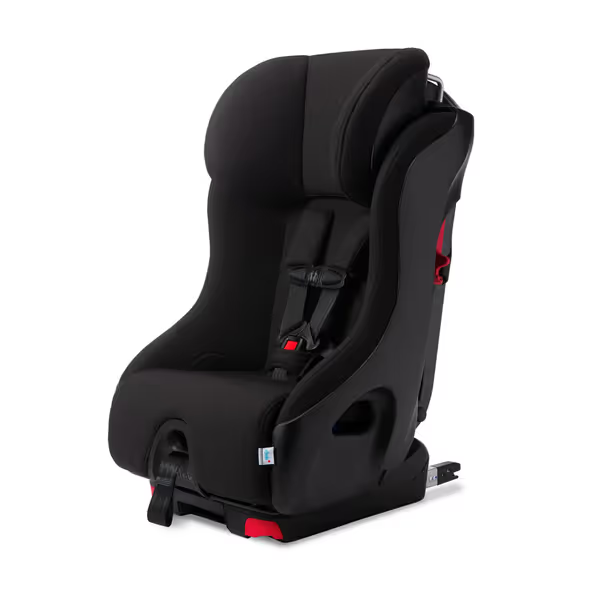
Clek Foonf Convertible Car Seat with Rigid LATCH
Extended rear-facing, advanced safety, and easy rigid LATCH forward-facing install.
$479.99
Extended Rear-FacingUp to 50 lbs
Extended Rear-FacingUp to 50 lbs
Pros
Advanced crash protection with REACT Crumple Zone & Anti-Rebound Bar.
Effortless forward-facing install with Rigid-LATCH system.
Flame Retardant-Free, machine-washable fabric for easy cleaning.
Cons
Significantly heavy, making transfers difficult.
Customers find the car seat to be well-built, comfortable, and non-toxic, with an amazing look. The size receives mixed feedback - while some find it compact, others note it's narrow. Installation experiences are mixed, with some finding it easy to install while others report it's hard to mount. The weight is considered negative, with customers describing it as heavy. The fabric quality also gets mixed reviews, with customers appreciating the Merino wool material.
Customers find the car seat to be well-built, comfortable, and non-toxic, with an amazing look. The size receives mixed feedback - while some find it compact, others note it's narrow. Installation experiences are mixed, with some finding it easy to install while others report it's hard to mount. The weight is considered negative, with customers describing it as heavy. The fabric quality also gets mixed reviews, with customers appreciating the Merino wool material.
Making Your Choice: What Real Parents Prioritize
When comparing seats, ignore "all-in-one" marketing fluff. Focus on adjustment realism:
- Top harness slot height: Must hit 16-18" for true extended rear-facing (check manufacturer specs, they often differ from "max height" claims)
- Adjustment increment: Smaller gaps (e.g., 1" vs 2") prevent "in-between" growth spurts
- One-handed operation: Critical for solo caregivers adjusting while holding a wriggly child
- Visual indicators: Color-coded zones or bubble levels (like Rove's SmartSecure) eliminate guesswork
The UPPAbaby Rove excels here with its 9-position headrest and tension indicator, no rethreading, no ambiguity. Clek Foonf's lever system offers millimeter precision but requires slightly more hand strength. Both eliminate the single biggest reason parents replace seats prematurely: height outgrowth. One Redditor shared how their Clek Foonf lasted until age 4 rear-facing simply because they could adjust straps daily without hassle. That's the real ROI: years of use, not just pounds of weight.
Your Actionable Next Step: The 5-Minute Seat Audit
Don't wait for the next growth spurt to strike. Today:
- Grab your child's car seat manual (yes, now)
- Flip to the harness adjustment section
- Time yourself doing one full adjustment, be honest!
- Ask: Could I do this blindfolded? In a parking lot? While my toddler screams?
If it takes longer than 60 seconds or requires removing the seat, you're sacrificing daily safety for false economy. Visit a certified technician to test no-rethread models in your vehicle. Sit in the driver's seat. Try the adjustment while the seat is installed. Feel that push-button click? That's the sound of confidence building.
breathe, then buckle. Your child's growth isn't a problem to solve, it's a rhythm to move with. With the right harness system, every adjustment becomes proof you've got this. And that's a confidence that outlasts any car seat expiration date.
Related Articles