Car Seat Spinal Biomechanics: Protection Explained
By Luke Petrovic • 19th Mar
Why Does Car Seat Design Matter for a Child's Spine?
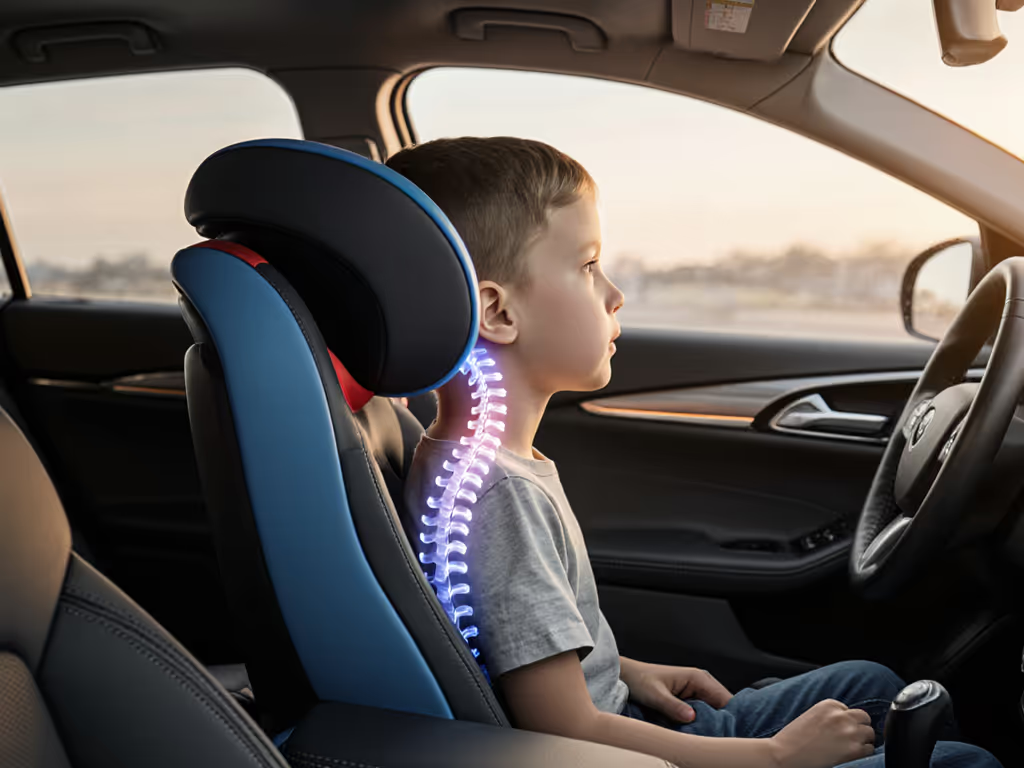
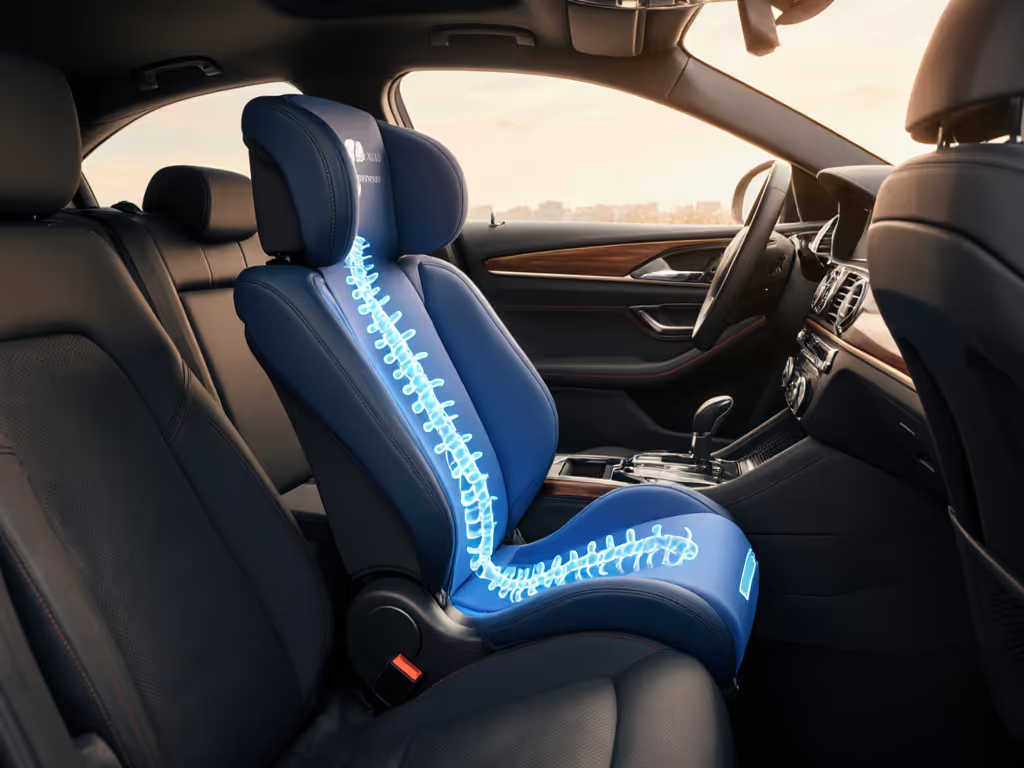
Parents often assume that any certified car seat offers equivalent protection. The reality is more nuanced. Car seat spinal biomechanics (the way a seat absorbs and distributes crash forces through your child's skeletal structure) depends on engineering choices that directly affect long-term spinal health.[1] When collision energy strikes a vehicle, it doesn't stop at the seat; it travels through the child's body. High-quality seats are engineered to cushion and protect the spine by spreading these forces across a larger area, significantly reducing stress on any single vertebra.[1]
What separates durable, protective seats from those that cut corners? It comes down to three design fundamentals: force distribution, spinal alignment support, and materials that remain responsive after years of use. I've watched families chase premium branding only to find their seat's protective padding compressed within two years, exactly when they most needed it for a second child. Value shows up in years used, not MSRP or marketing.
How Do Car Seats Actually Protect the Cervical Spine During Impact?
Cervical spine car seat protection hinges on preventing extreme head and neck motion during a crash. Here's what happens in milliseconds: during a rear-impact collision, the vehicle decelerates, but inertia causes a child's torso to thrust forward relative to the seatback. If unsupported, the cervical spine forms an S-shaped curvature, with the lower neck hyperextending (a motion that occurs within 75 milliseconds, faster than any voluntary muscle response).[4]
Rear-facing seats combat this by:
- Supporting head, neck, and upper torso as a single unit. The seatback cradles the child's entire back, preventing the independent forward motion of the head that triggers whiplash-type injuries.[1]
- Distributing deceleration forces evenly. Instead of forcing the spine to absorb impact at discrete points, the seat's shell and foam absorb and dissipate energy across the child's back and shoulders.
- Limiting spinal flexion and extension. Research shows that lordotic (naturally curved) cervical spine alignment is far safer than kyphotic (straightened) alignment during rear impacts. Seats designed with proper recline angles preserve this protective curvature.[3]
The biomechanical evidence is stark: rear-facing reduces serious spinal injuries by 92% compared to forward-facing for infants and toddlers.[5] Learn how extended rear-facing reduces force loads in our force reduction science guide. Yet many families transition to forward-facing too early, chasing perceived comfort over protection. Extended rear-facing seats preserve this protective advantage longer, provided the seat's recline mechanism remains firm and the harness anchors stay rigid after years of daily use.
What Role Does Seat Design Play in Crash Force Distribution?
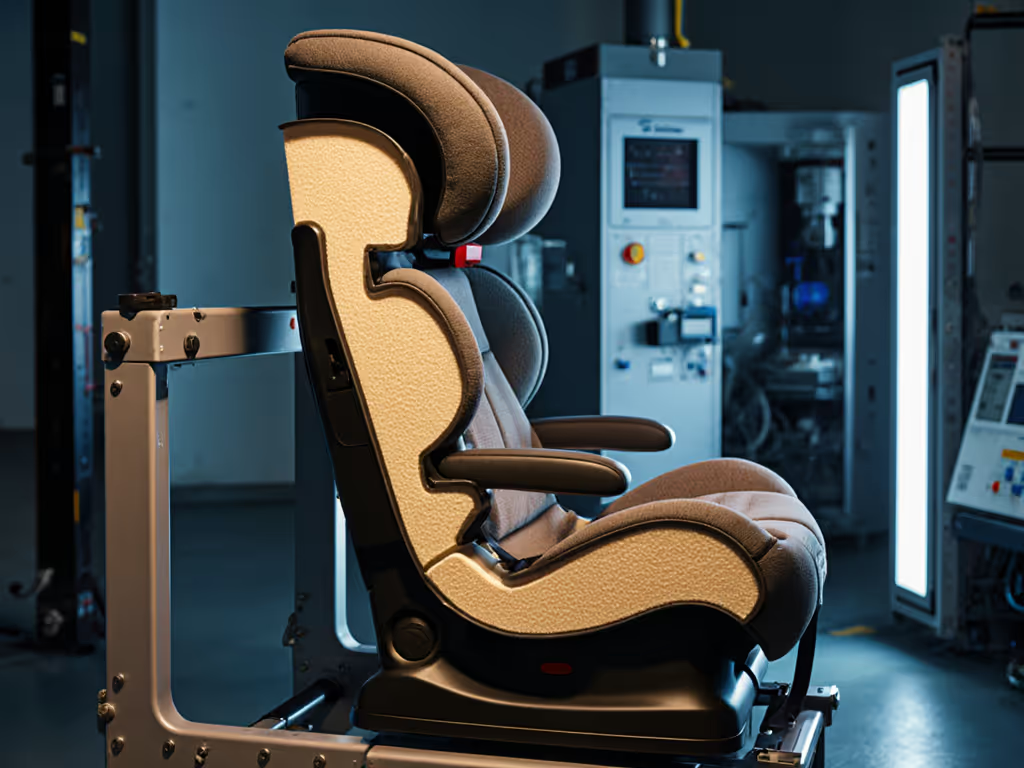
The seat's shell geometry, foam density, and seatback angle directly determine how car seats distribute crash forces and transfer energy. Medical literature confirms that an adjustable seatback angle of roughly 100 degrees from horizontal minimizes spinal strain, a specification that requires firm, quality foam and precise engineering.[2] If the foam compresses from daily use or thermal cycling, the effective angle shifts, and protective force distribution degrades.
Here's where durability decides: I've tested seats after three years of daily use, and some lose 15-20% of their cushioning response. The seatback feels softer, recline angles shift slightly, and crash simulation tests would show measurably different spinal loading. That's why seats with dense, stable foam and well-engineered shells outlast cheaper competitors, not just functionally, but protectively.
How Does Spinal Alignment in the Seat Affect Injury Risk?
A child's spine doesn't sit vertically; it naturally curves. Infant cervical spine protection depends on the seat supporting this natural curve, not flattening it. During a frontal or side impact, an improperly aligned spine (one that's been forced too upright or reclined too far) experiences greater intervertebral stress.[3] Research using biomechanical models shows that straighter cervical spines exhibit greater posterior facet joint compression during rear impacts, a precursor to injury.[3]
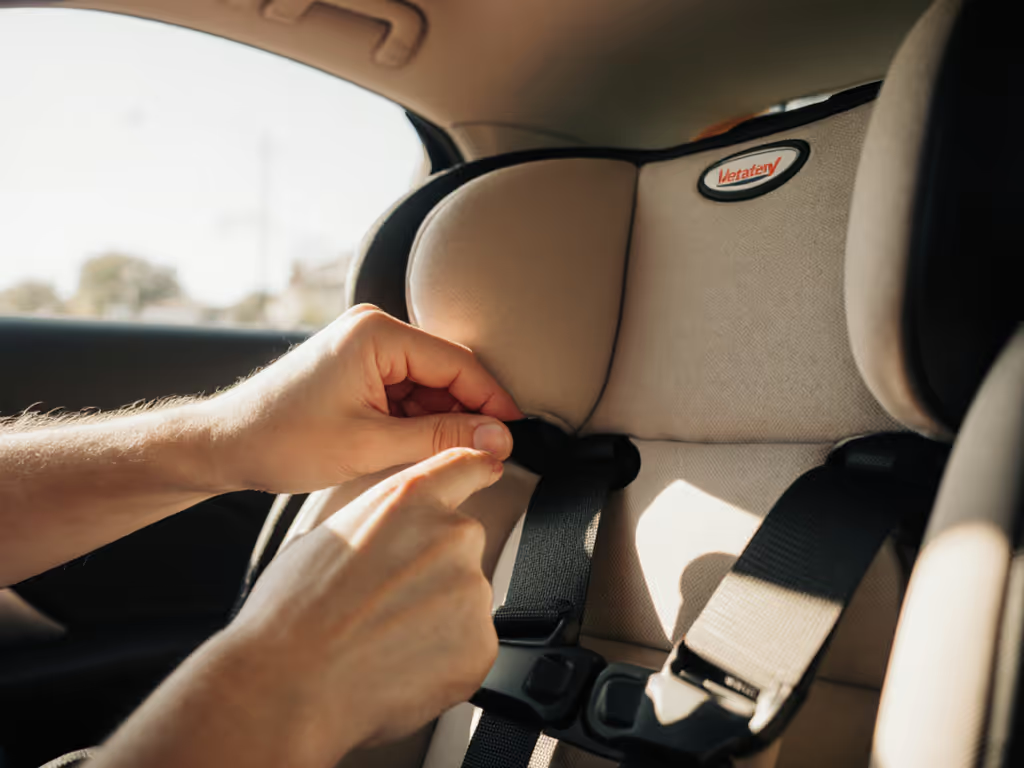
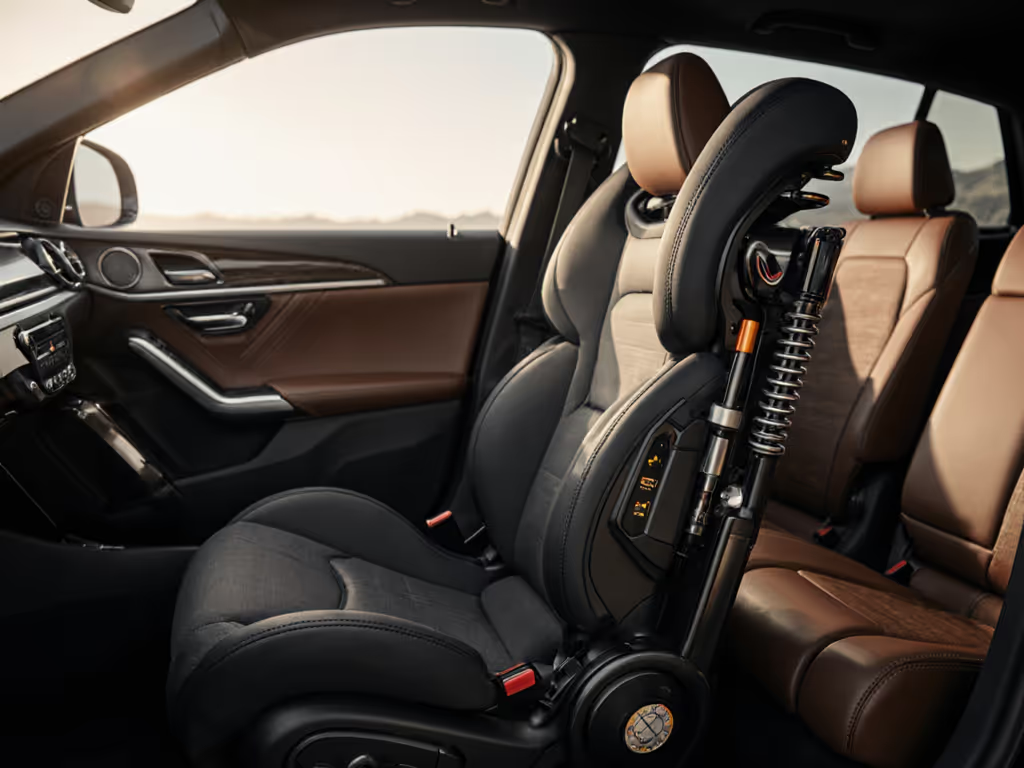
This is where maintenance becomes a safety factor. A seat whose recline becomes loose or whose harness height adjustment mechanism wears out gradually shifts a child's spinal alignment. For the engineering behind stable recline systems, see our recline mechanics guide. The protective angle erodes. That's why I always check recline locks and harness mechanisms as failure-point checklists. If either fails silently over two years, the seat's protective geometry collapses.
Why Is Rear-Facing So Critical for Spinal Protection?
Car seat safety anatomical engineering prioritizes rear-facing for one reason: the child's skull-to-body ratio. An infant's head accounts for roughly 25% of body weight, and the cervical spine is still largely cartilage, far more flexible and vulnerable than an adult's. In a rear-facing seat, the seatback absorbs crash energy as a unit, and the child's head and neck remain supported against the shell throughout the deceleration.[1]
Forward-facing exposes the cervical spine to different risks. The head and torso must decelerate together via the harness; the neck flexes forward sharply. Biomechanical studies show that motions beyond physiological limits occur at the lower cervical spine within 75 milliseconds of impact.[4] Extended rear-facing (to age 3-4 or height 50+ inches, depending on the seat) is the gold standard precisely because it circumvents these mechanisms entirely.
Yet I regularly hear parents say they switched forward-facing early because the seat "felt better" or took up less space. That's a durability math problem. A simple check: if you're considering switching forward-facing before age 2 or above height 40 inches, calculate what you're trading. A few years of space convenience versus years of spinal protection? Durability decides.
What Maintenance Factors Affect a Seat's Protective Capability Over Time?
This is where most reviews fall short. A seat's protective design is only as good as its long-term condition. Here's a realistic maintenance time estimates breakdown:
- Weekly: Visual check of harness routing, recline lock engagement, and foam for obvious compression. (2-3 minutes)
- Monthly: Test recline mechanism to ensure it locks firmly; inspect foam for flattening or cracking. (5 minutes)
- Quarterly: Remove and inspect LATCH connectors and anchor points for wear or corrosion; check seat-to-vehicle fit. (10 minutes)
If the recline mechanism loosens, the seatback angle shifts, changing spinal alignment and force distribution. If harness anchor points crack, they no longer maintain proper head-and-neck support. These failures often occur silently; you won't notice until a CPST (Certified Child Passenger Safety Technician) inspects it. To keep these systems dialed in, follow our safe installation checklist.
Value shows up in years used, not MSRP or marketing.
Families who buy durable, simpler seats and maintain them consistently report cost-per-year advantages over premium competitors. I tracked one family's journey: they chose a proven, straightforward convertible seat, maintained the recline lock quarterly, and hand-passed it to a younger sibling, five years of use at roughly $15 per month. A premium model with a compressed foam base lasted their first child only, then showed visible wear. Over seven years across two children, the durable choice won.
What Should Parents Prioritize When Evaluating a Car Seat?
Skip the marketing claims about "maximum protection" and ask: (1) Is the recline mechanism adjustable and does it hold firmness over years? (2) Are foam density specs available, and what's the expected compression rate? (3) Are replacement parts (harness straps, anchor brackets) available for 10+ years? (4) Can the cover be removed and machine-washed without affecting the shell's fit or the harness mechanism? (5) What's the actual expiration policy and warranty for crash replacement?
These questions reveal durability. A seat with vague materials specs, glued-on covers, and no spare parts pipeline is a liability after year three. Conversely, a seat engineered for replaceability, with stable foam and adjustable geometry, protects your child today and your wallet over the decade you might use it.
The Bottom Line
Car seat spinal biomechanics are real, measurable, and critical, and they degrade over time if the seat isn't built to last. The best protective choice isn't the most expensive; it's the one that combines sound engineering with maintainability and remains responsive years into daily use. Rear-facing as long as possible, with a seat that stays mechanically sound through regular use and occasional maintenance, is how you truly protect your child's developing spine.
Related Articles