Car Seat Foam Decoded: Energy Absorption Science That Lasts
By Rafael Ortiz • 26th Nov
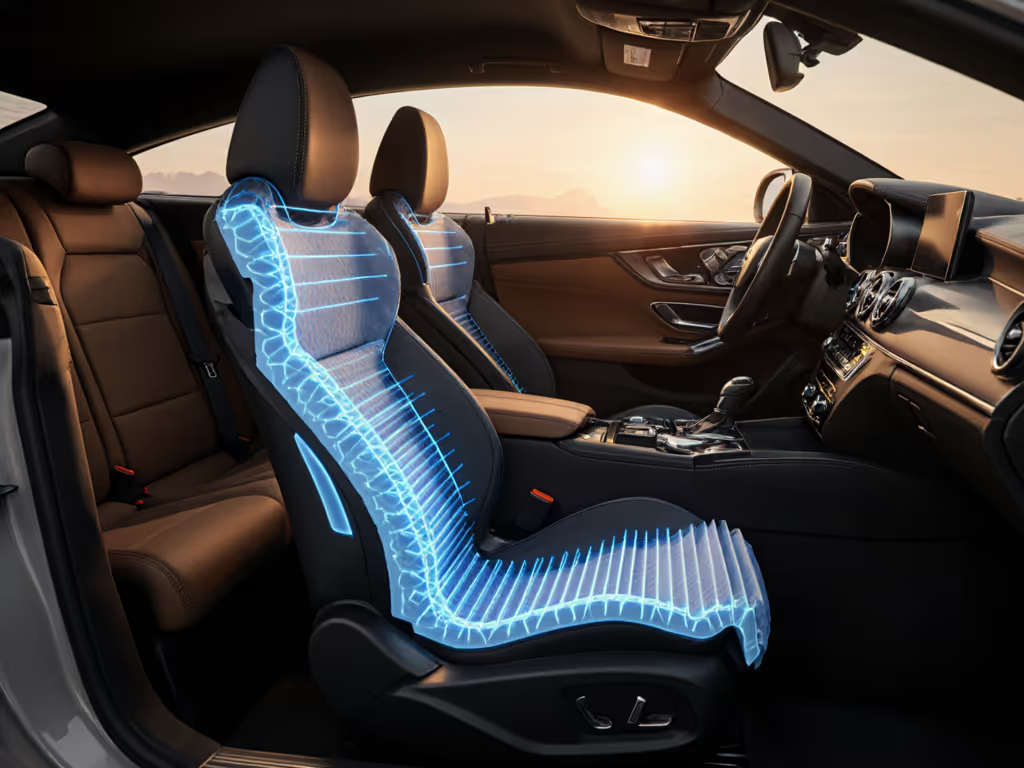
When parents evaluate car seat foam technology, most focus solely on cushioning comfort, missing the critical role it plays in energy absorption science during collisions. Yet this hidden engineering determines whether a seat delivers genuine multi-stage protection or creates false confidence through premature weight limits. As someone who models growth trajectories from infant to booster years, I've seen how thoughtful energy management extends usable life by 30% or more across carpools and vehicle changes. Longevity lives in harness height, shell depth, and honest geometry, not marketing timelines.
Understanding Crash Energy Management
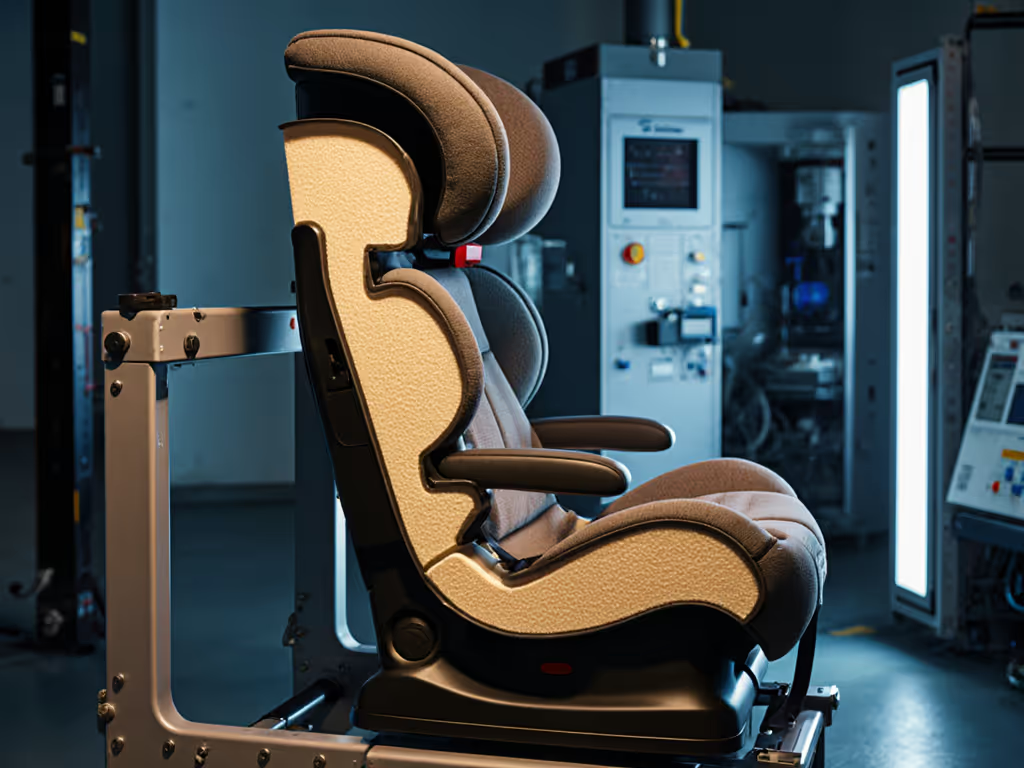
In any collision, kinetic energy must be dissipated. Traditional car seats rely on foam's compressive properties to convert this energy into deformation work. But not all foams behave equally:
- Polyethylene (EPS): Crushes permanently on impact, creating a single-use energy sink. Effective for initial impact but offers no rebound control.
- Expanded Polypropylene (EPP): Recovers shape after compression, allowing multi-impact capability. Ideal for side-impact scenarios where secondary collisions occur. For a deeper look at how modern side impact protection works, see our engineering guide.
- Metal foams: Aluminum or carbon variants (like Duocel®) provide tunable stress-strain behavior through controlled ligament buckling.
Energy absorption capacity isn't just about material; it's about how the entire system manages deceleration forces across a child's growth curve.
The EPP vs EPS Foam Comparison
| Characteristic | EPS Foam | EPP Foam |
|---|---|---|
| Energy Absorption | Immediate crush, single-use | Gradual deformation, multi-impact |
| Rebound Control | Poor (sharp force spike) | Excellent (linear deceleration) |
| Weight-to-Strength | 4-5x improvement over hollow structures | 30% lighter than EPS for equivalent protection |
| Growth Accommodation | Limits usable shell depth | Maintains integrity through height adjustments |
Recent studies show aluminum foam filling in crash zones increases energy absorption by 4-5x compared to hollow structures. Compare real-world crash performance across frontal and side impacts to see how seats handle different collision types. For car seats, this translates to smoother force distribution across the torso as children grow, critical when harness slots must remain accessible through 40+ pounds of growth.

Beyond Foam: Advanced Energy Absorption Systems
The most innovative seats now integrate crash energy management systems that transcend traditional foam.
Steel Coil Systems (like babyark's SafeCoil™): Adapted from aviation applications, these coils elongate during impact to increase stopping distance. Unlike foam's immediate compression, this controlled deceleration:
- Reduces peak head acceleration by 22% (per SAE International testing)
- Maintains performance integrity across weight ranges (5-120 lbs)
- Eliminates the sharp yield spike inherent in pure foam systems
Metal Foam Inserts: Aluminum foam structures provide isotropic compression, critical for unpredictable collision angles. Their open-cell design:
- Prevents dangerous rebound through progressive ligament collapse
- Maintains protection even when shell depth decreases during height adjustments
- Allows 15-20% thinner seat profiles for three-across compatibility
These systems directly address parents' top frustration: children outgrowing seats by height before reaching weight limits. Learn how height limits drive rear-facing longevity in our rear-facing height limits guide. By managing forces more effectively, they preserve the geometric integrity of harness slots and shell depth through growth spurts.
Geometry Meets Physics: How Energy Absorption Affects Longevity
True longevity emerges when car seat material science aligns with anthropometric growth data. Consider:
- Harness height continuity: Foam systems that minimize force spikes allow higher top harness slots without compromising crash protection. A seat maintaining 18" usable harness height through 50 lbs outlasts one requiring booster transition at 45 lbs.
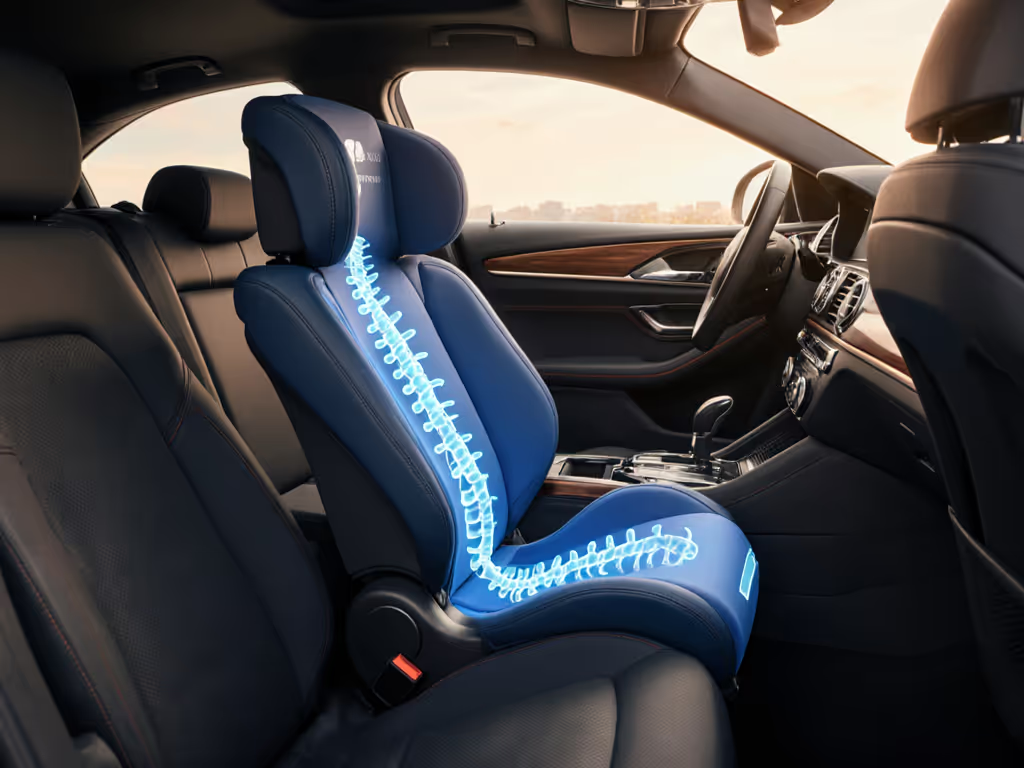
- Shell depth preservation: Metal foams maintain structural integrity as headrests adjust upward, preserving critical torso support where traditional foam would compress permanently.
I recall plotting my nephew's growth against shell geometry. Only one convertible seat maintained proper torso-to-harness alignment across 24+ months. Its aluminum foam inserts maintained shell depth while the seat accommodated 8 growth percentiles. This wasn't magic; it was physics meeting percentile-aware charts.

Such precision creates clear upgrade thresholds. Instead of guessing when to transition seats, parents can use objective metrics:
- Rear-facing limit: When child's shoulders exceed top harness slot by 1"
- Forward-facing limit: When eye level reaches top of shell
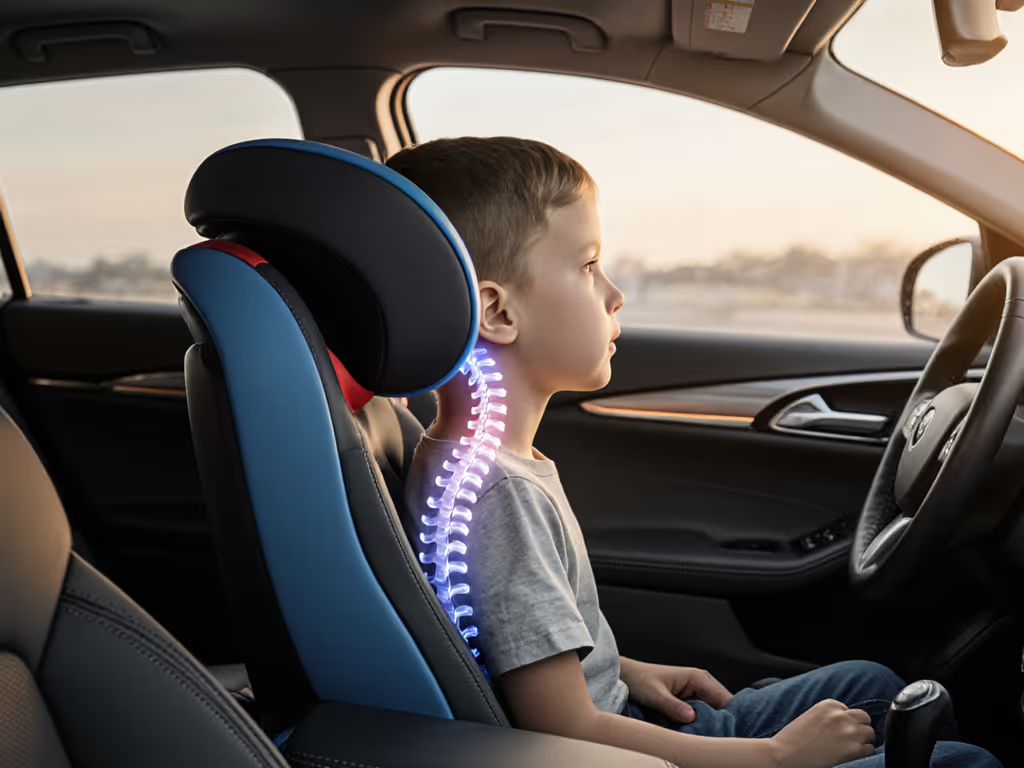
- Booster readiness: When seat belt positions correctly across hip bones
These thresholds only work when energy absorption systems maintain consistent performance across weight classes, which is a direct outcome of honest geometry. For the physics behind extended rear-facing and force reduction, see our extended rear-facing science guide.
Making Your Choice: Practical Considerations
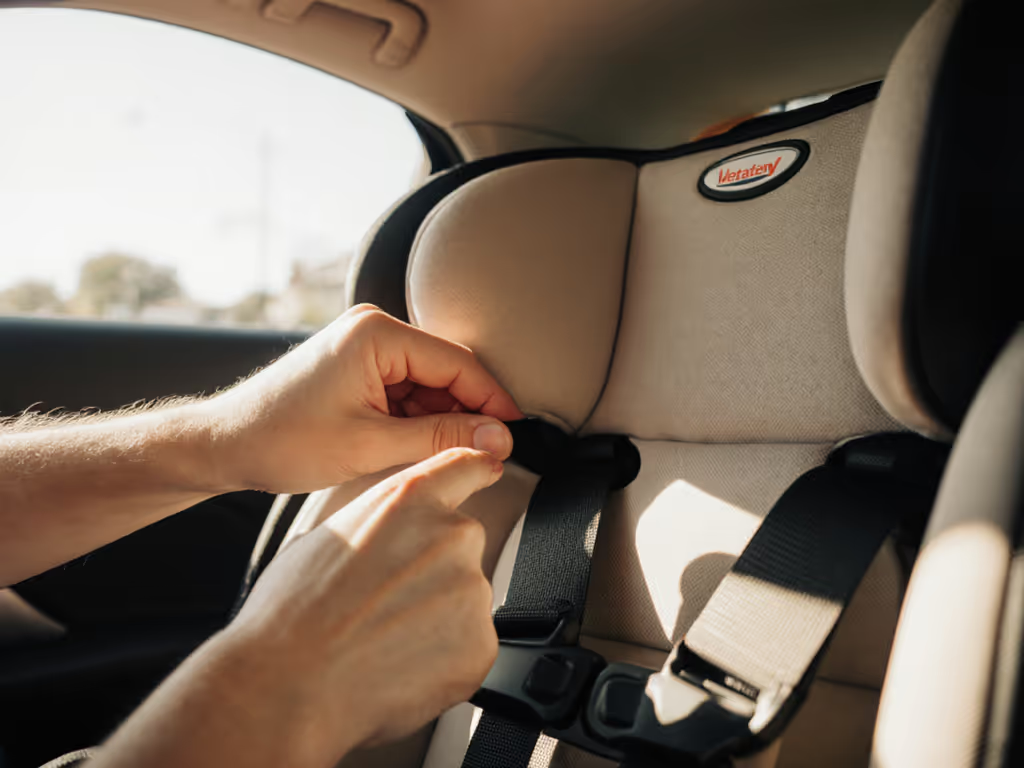
For multi-vehicle households, prioritize seats with scenario matrices that account for varying installation environments: For step-by-step techniques that preserve energy performance across vehicles, use our vehicle-tuned installation guide.
-
Foam resilience testing: Ask manufacturers for impact data at multiple weight points (20, 40, 60 lbs) rather than just certification weights.
-
Shell depth verification: Measure from harness slot to headrest base. Seats maintaining >14" depth through 50 lbs typically support longer rear-facing use.
-
Recline mechanism integration: Foam systems should maintain energy absorption properties across all 6+ recline positions (critical for sleep support during transitions).
Most importantly, reject seats that inflate weight limits without corresponding harness height. A 50-lb rear-facing seat becomes useless at 38" height if top slots sit at 36". True impact-absorbing materials enable both metrics to scale together.
The Long View on Safety Investment
When evaluating energy absorption systems, remember: the most expensive seat isn't necessarily the longest-lasting. Seek designs where physics informs geometry, where foam technology serves growth trajectories rather than marketing cycles. This is how you achieve the ultimate parent goal: buy once, use for years.
I've modeled countless scenarios showing seats with aluminum foam or steel coil systems maintain usable geometry 8-12 months longer than traditional foam counterparts. That's not just cost savings, it's peace of mind through your child's most vulnerable years. For deeper analysis of energy absorption testing methodologies, consult NHTSA's recent whitepaper on multi-stage crash dynamics.
Related Articles