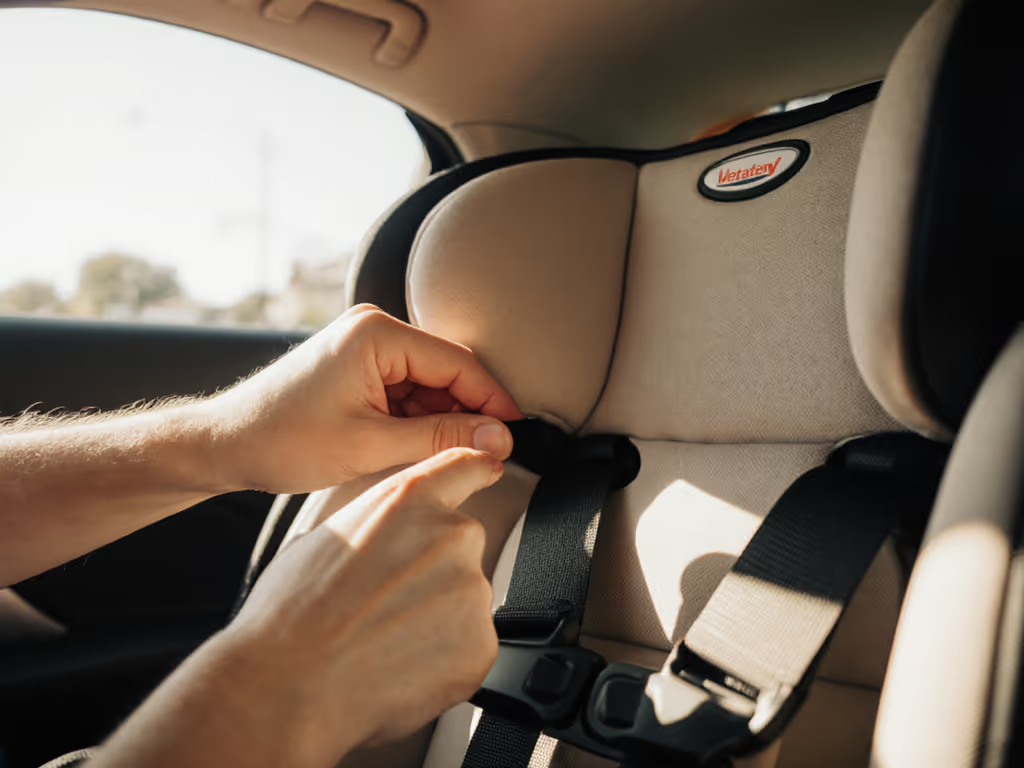

Car Seat Expiration Decoded: Material Science Behind the Dates
By Rafael Ortiz • 24th Apr
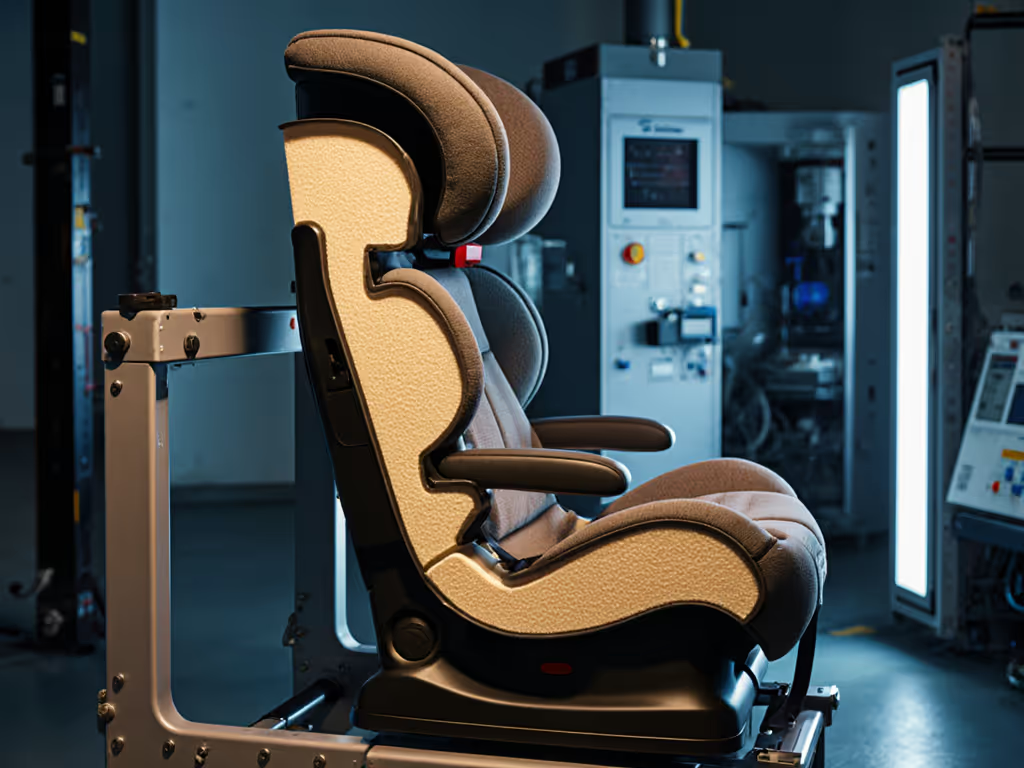
Car seat material science and plastic polymer degradation aren't abstract topics (they're the foundation of why expiration dates exist) and why that date on your seat's label is far more than marketing theater. Understanding the physics at work helps you make genuinely informed decisions about when to retire a seat and, more importantly, how to maximize safety and longevity before that moment arrives.
The frustration many parents feel isn't about expiration itself; it's the lack of clarity. Why exactly does a car seat expire? What's actually breaking down? And how do I know if my particular seat is still safe right now? Those questions deserve answers grounded in material behavior, not vague warnings.
What's Actually Happening Inside Your Car Seat's Plastic?
The shell of most modern car seats is injection-molded plastic (specifically, engineered polymers like acrylonitrile butadiene styrene, ABS, or polycarbonate blends chosen for their initial strength and impact absorption properties). But here's what matters: those polymers aren't static. Over years of exposure to temperature swings, sunlight, humidity, and physical stress, the long-chain molecules that give plastic its structure begin to break apart.
This degradation happens in layers, literally and figuratively. Surface degradation becomes visible (fading, brittleness, or stress cracks). But subsurface changes matter more for safety. Inside the shell, UV radiation and heat cause cross-link breakdown, reducing the plastic's ability to absorb the kind of impact energy that a crash demands.[1][2] The material becomes more brittle, less forgiving, and ultimately less capable of the deceleration a child's body relies on during a collision.
Manufacturers test this degradation curve extensively. Most car seats expire 6 to 10 years from the date of manufacture, depending on the brand's materials and structural design.[1][4][5] That range isn't arbitrary; it's the point at which testing shows material properties degrade enough to compromise the seat's protective function under the stress scenarios engineers model.[2]
Why Does UV Damage Matter More Than You'd Think?
Your car is essentially a greenhouse. Sunlight pours through windows, temperatures soar, and UV damage to car seats compounds daily. Unlike a toy left in a garage, a car seat installed in your vehicle sits at the intersection of intense heat and direct solar radiation roughly 8 to 10 hours a day (even more during summer or in southern climates).
The ultraviolet spectrum (particularly UVA and UVB) excites polymer molecules, causing them to lose electrons and form free radicals. These reactive molecules initiate chain scission, where the long polymer chains literally break apart. The result: plastic aging accelerates significantly faster in a sun-exposed car than in a climate-controlled home. This is why you'll notice color fading and surface embrittlement on car seats that spend years in sunlight, even indoors on sunny days.
What you see (fading, cracks) mirrors what's happening internally. For storage positioning and sun-blocking strategies that slow this process, see our UV fading timeline guide. The protective capacity diminishes in lockstep. A seat exposed to harsh sunlight in Arizona ages faster than one in a rainy Pacific Northwest climate, which is why some manufacturers acknowledge regional differences, even if they can't officially account for every microclimate.[3]
Temperature Swings: The Hidden Stress Factor
A parked car in summer can hit 140 to 160 degrees F inside.[2][3] Winter mornings in cold climates can drop to 0 degrees F or below. A single day might span a 100 degree swing. Your car seat experiences that shock repeatedly, year after year.
Plastics have a glass transition temperature (the point at which molecular motion increases dramatically). For most car seat polymers, that's around 100 to 120 degrees F. Above it, the plastic becomes more flexible and vulnerable. Below it, it becomes brittle. That cyclical stress (expand, contract, expand, contract) gradually weakens polymer bonds. It's not a single catastrophic failure; it's incremental fatigue accumulation. After several hundred or thousand cycles, the structural integrity that was designed into the seat begins to erode, even if you can't see it.[2]
This is why seats stored indoors in climate-controlled homes age slower than seats that live in cars. If you're planning to pause use between kids, follow our car seat storage guide to avoid safety decay. It's also why a seat purchased five years ago but left in a box indoors is different from one installed and cycled daily for five years, though manufacturers typically count both from the date of manufacture to be conservative.[2]
Humidity, Moisture, and the Hidden Inside
Polymer breakdown in car seats isn't just about heat and light. Humidity and moisture create their own damage pathway. Hygroscopic polymers absorb water, which acts as a plasticizer, softening the material and reducing its impact strength. That moisture also promotes hydrolysis, a chemical breakdown where water molecules insert themselves into polymer chains, breaking them apart.
A child's sweat, spills, high humidity in coastal or tropical climates, and even damp weather all introduce moisture. Most car seat fabrics are removable for cleaning, but the plastic shell beneath absorbs and releases moisture continuously, especially if liquid reaches cracks or seams. Over a decade, this combination of UV, temperature, and humidity exposure creates a compounding effect: each mechanism accelerates the others.[1][3]
How to Inspect for Real Signs of Aging
How to inspect expired car seats starts with the date, but shouldn't stop there. Check the label on your seat's underside or back; it shows the date of manufacture and expiration date.[1][3][4] That's your hard boundary, don't use the seat past that date, period.
But if you're deciding whether to retire a seat before expiration, look for:
- Visible surface cracks or crazing in the plastic (fine web-like cracks indicate embrittlement).
- Stress cracks near attachment points (handles, base brackets, and tether loops see repeated flexing and are telltale zones).
- Significant fading or discoloration, which correlates with UV-driven molecular degradation.
- Brittleness when you gently flex edges (very carefully, not forcefully). Aged plastic snaps rather than bends.
- Cover deterioration or adhesive failure where covers separate from the shell, exposing the plastic underneath to accelerated UV and moisture damage.
These visual cues suggest accelerated aging, particularly if you live in a high-heat or high-UV region. But here's the caveat: internal degradation doesn't always announce itself visibly. A shell that looks fine might have compromised impact strength. This is why manufacturers set expiration dates conservatively and why, once that date passes, no reputable lab can guarantee the seat's performance.[5]
The Timeline Question: When Is a Seat Actually Done?
This is where clear upgrade thresholds matter. A seat hasn't failed just because the expiration date arrived, but it's no longer certified by the manufacturer, and you've lost recourse if something goes wrong. Insurance, liability, and peace of mind all depend on using a seat within its designed lifespan.
Most car seats expire somewhere between 6 and 10 years from manufacture; specific timelines vary by brand and model.[1][4][5] Infant seats, being lighter and more plastic-intensive, often expire sooner (around 6 years). All-in-one and convertible seats, which are heavier-duty, typically reach 10 years.[3]
The honest answer: longevity lives in harness height, shell depth, and honest geometry. A seat engineered for depth and structure will last toward the longer end of that range. A lightweight, plastic-only design will degrade faster. If you're buying with an eye to buy once, use for years, material quality and design robustness directly correlate with how much of that potential lifespan you'll actually get to use before deciding to upgrade for growth or additional capacity.
Once the expiration date passes, don't donate or sell the seat. Find safe drop-off options in our expired car seat recycling guide. Manufacturers often run recycling programs or trade-in events; using an expired seat compromises the protection it was designed to provide and puts you outside the bounds of any safety guarantee.[2][5]
Next Steps: What This Means for Your Shopping and Use
When evaluating a car seat, ask the manufacturer for specifics: expiration timeline, materials used, and UV-protective strategies (some brands use special pigments or topcoats to slow polymer degradation). Check the label location; if it's embossed directly into the shell rather than on an external sticker, it will remain legible longer. And if you live in a high-heat or high-UV region, prioritize seats with longer expiration timelines and robust structural design, accepting that the materials science of aging is on an accelerated schedule where you live.
The goal isn't paranoia; it's precision. Understanding what's actually happening inside your seat's plastic gives you the framework to use it confidently while it's safe and to retire it decisively when it's done. That clarity is how you earn the peace of mind every parent deserves.
Related Articles