Best Car Seats for Compact EVs: Fit & Install
By Aisha Khan • 7th Mar
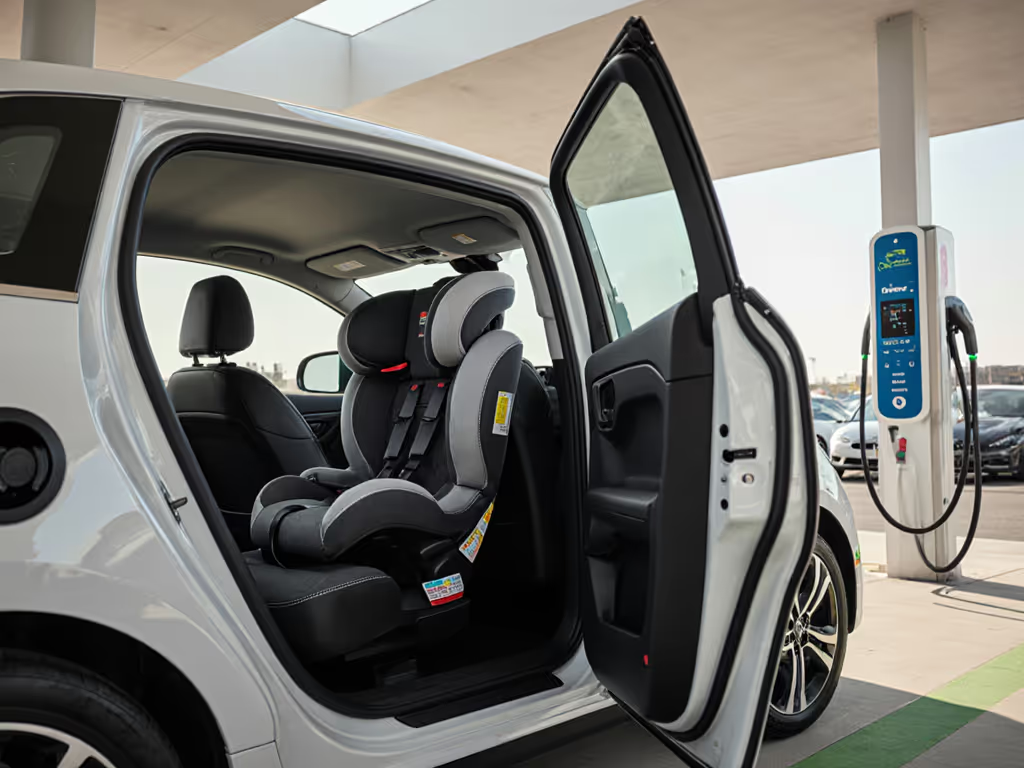
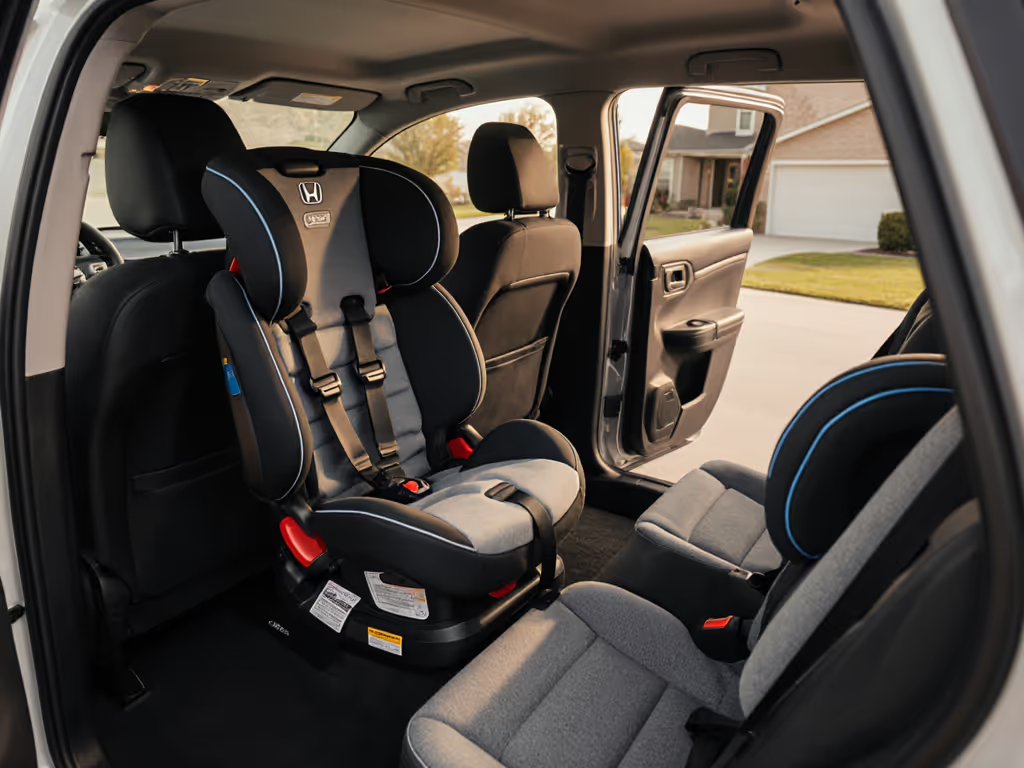
Finding the right best car seats for compact EVs means understanding how seat geometry, ISOFIX anchors, and vehicle legroom interact, and knowing which models actually deliver the comfort and usability you need across years of growth. With electric vehicles reshaping the family car landscape, compact EVs bring efficiency and lower emissions, but their tight cabins demand careful seat selection. This guide combines ergonomic principles, materials intelligence, and real-world EV dimensions to help you install confidently and keep your child comfortable through multiple growth stages.
The goal isn't just fitment; it's peace of mind. Comfort grows from breathable fabrics, quiet design, and kinder chemistry, and when your seat fits your specific EV snugly and installs without wrestle, daily routines feel less stressful. Let's walk through what to prioritize when shopping for electric vehicle car seat fit in a compact space.
Understanding Compact EV Seating Reality
Compact EVs (think Kia EV3, Hyundai Ioniq 5, or Skoda Enyaq iV) offer surprising internal space despite their modest footprints. The flat floor and shorter cabin nose of electric vehicles often translate to more usable rear legroom than you'd expect from a similarly sized gas car. However, the middle seat position is where most parents struggle. For EV-specific fit challenges and solutions, see our EV car seat installation guide.
The middle seat in compact cars is narrower, sits over the transmission tunnel, and typically has less recline range than outboard positions. When fitting a car seat there, especially if you need three across, geometry becomes mission-critical. ISOFIX anchor placement matters, too: many compact EVs offer four ISOFIX points split between outboard rear seats and sometimes the middle, but anchor distance and height can make or break an install.
Temperature and humidity notes matter here: compact EV cabins heat and cool quickly due to smaller air volume, so your choice of seat cover material affects how your child feels during waits, naps, and stop-and-go city driving. Breathable, FR-free fabrics resist heat trapping and allow evaporation, keeping your child cooler and reducing irritability during longer journeys.
1. Assess Your Vehicle's Exact Dimensions and Anchor Points
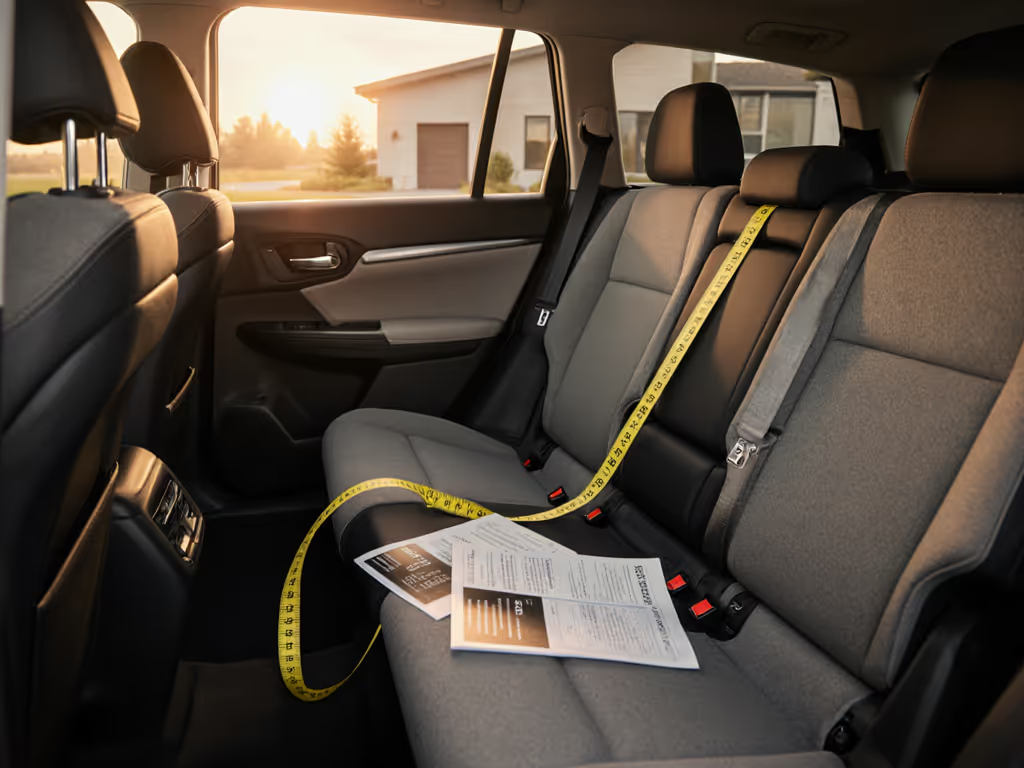
Before shopping, measure and document your own EV's specifics. You need:
- Rear seat cushion depth (front of cushion to backrest): This determines how far a car seat will protrude into legroom and affects forward-facing harness access.
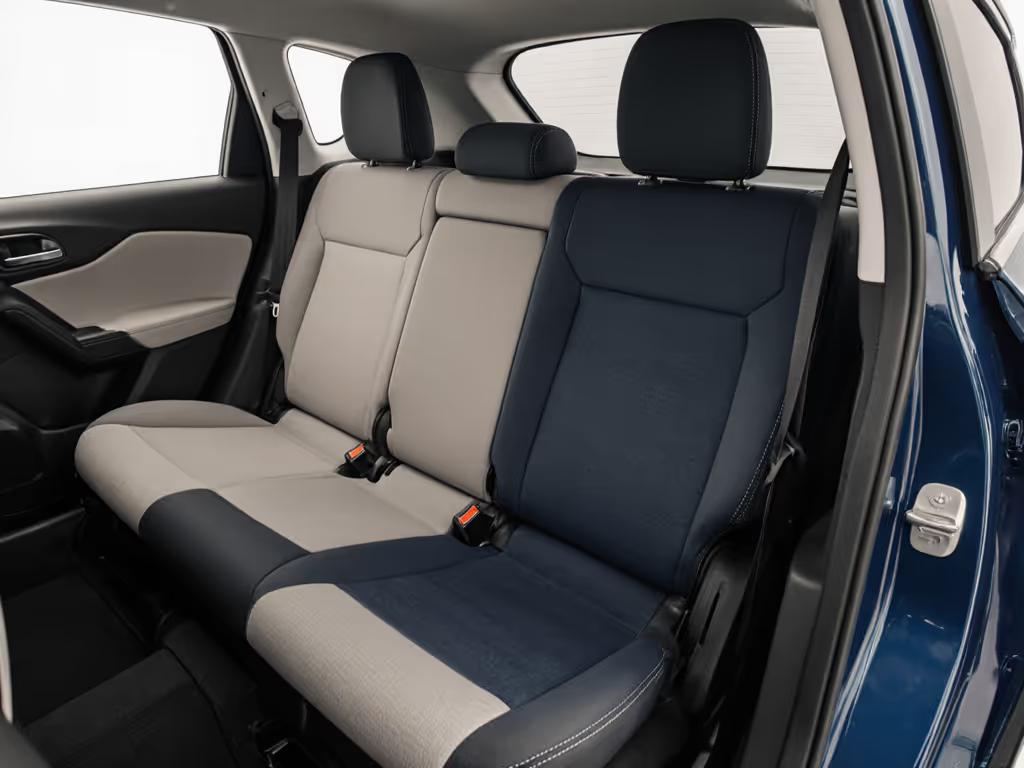
- Rear seat width between outboard edges: If you're targeting three across, this is your hard constraint. Models like the Kia EV3 and EV9 are explicitly marketed for three-seat fits, but smaller EVs like the Hyundai Ioniq 5 may only comfortably fit two, depending on seat width and bucket shape.
- Middle-seat ISOFIX anchor offset: Measure the distance from the middle anchor points to the vehicle centerline. Some EVs mount middle anchors far outboard, forcing the seat to sit at an odd angle or reducing access to belt paths.
- Recline range in each position: Try reclining the car seat manually at each outboard and middle position to confirm it reaches the recommended 45-degree rear-facing angle without jamming against the front seat or headrest.
- Tether anchor availability and location: Rear-mounted tether anchors (often behind the third row or on the rear parcel shelf in compact EVs) must be reachable without twisting straps through seats. In EVs with no third row, anchors may be floor-mounted or on the rear package tray.
Contact your EV's customer service or CPST (Certified Child Passenger Safety Technician) if dimensions aren't published. Many EV manufacturers are increasingly documenting car seat compatibility on their websites, especially as family appeal grows.
2. Prioritize True Extended Rear-Facing Capacity
Extended rear-facing (ERF) is the gold standard: keeping a child rear-facing until age 3 to 4 or beyond reduces injury risk significantly compared to forward-facing at younger ages. However, not all compact EVs' rear seats support the legroom needed for tall or long-bodied children rear-facing for years. To compare models that keep kids rear-facing longest, check our longest rear-facing seats comparison.
The Kia EV9 and some five-seat compact SUVs (like the Ioniq 5) offer sufficient rear legroom to support a rear-facing seat with a 170-186 cm (5'7"-6'1") driver sitting comfortably in front, a fact confirmed by real-world testing and manufacturer guidance. Smaller compact EVs, like the Renault 5 or Citroen e-C3, have tighter rear legroom, which may limit rear-facing use to age 2 to 3 without driver discomfort.
When selecting a car seat:
- Choose one with a high rear-facing height limit (40-50 inches / 102-127 cm is ideal). Seats with generous height slots mean your child won't outgrow rear-facing prematurely by torso length.
- Verify the recline angle stability in your EV: A seat that reclines well (around 45 degrees) at your vehicle's recline position ensures the child's airway stays open during sleep, reducing the risk of positional asphyxia during naps.
- Check shoulder strap slot placement: On a rear-facing seat, straps should sit at or just below the child's shoulder line. Seats with many vertical slot options accommodate growth without requiring cover replacement.
Narrow or space-efficient designs that enable three-across or multiple seats without sacrificing comfort or safety are your target here. A seat that's 17-18 inches wide at the base (vs. 19-21 inches) can mean the difference between fitting two across comfortably or struggling with three.
3. Evaluate Narrow Car Seats for Three-Across Fit
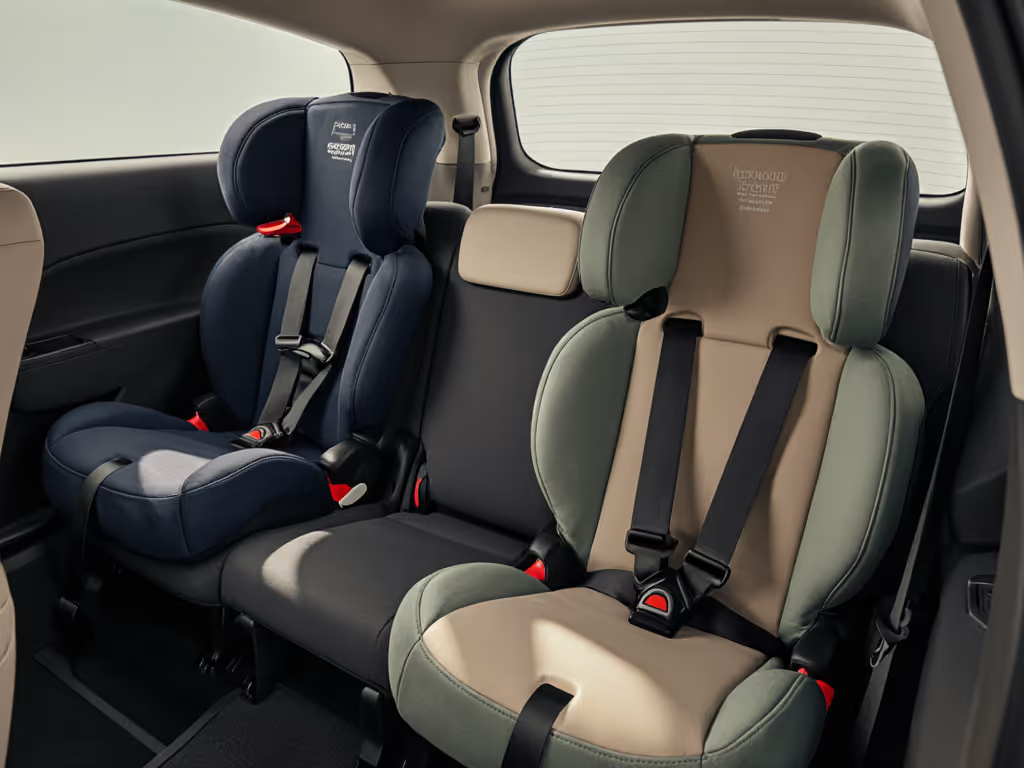
If you need to fit three children or anticipate carpooling, narrow car seats for EVs are non-negotiable. Traditional convertible seats often measure 20+ inches wide, making three-across fitting nearly impossible in compact cars. Seek models explicitly engineered for space efficiency:
- Slimline designs with a narrower base and recline mechanism tucked closer to the shell reduce width without compromising harness coverage or side-impact protection.
- No-rethread or quick-adjust harness systems matter here: when squeezed into the middle seat between two other installations, your ability to tighten the harness quickly without removing the seat from the vehicle saves daily friction.
- Lightweight construction (under 15 lbs for convertibles, under 8 lbs for boosters) eases the physical load if you're moving a seat between vehicles or adjusting it within the car.
The Kia EV3 has been validated to fit three child seats across its rear row, and reviewers note that the flat floor and spacious rear shoulder area (compared to exterior dimensions) make this feasible without excessive side-body contact against the door panels.
4. Confirm ISOFIX and Belt Path Compatibility
EV-specific car seat installation differs from gas vehicles mainly in anchor layout and belt stalk positioning. Most compact EVs have four ISOFIX anchors (two outboard and two in the middle row), but anchor height, angle, and proximity to belt stalk path vary widely.
When evaluating a car seat:
- Test LATCH (Lower Anchors and Tethers for Children) connection: LATCH is faster and often tighter than seat belt installation, but only if your EV's anchors are spaced correctly for the seat's lower connectors. Anchors that are too close together (common in narrow middle seats) can cause the seat to twist or sit at an angle.
- Understand seat belt path access: The car seat's belt path, where the EV's seat belt threads through the seat, must be accessible without removing the seat. In compact EVs with sloped seatbacks or integrated headrests, the belt path can be hard to reach. Test it in person before buying.
- Confirm tether anchor reach: A rear-facing seat with a tether strap must thread to a top anchor without excessive twisting or looping through seat cushions. In compact EVs, rear tether anchors are sometimes mounted on the parcel shelf or C-pillar, creating awkward geometry. Make sure your seat's tether strap (and hardware) can reach comfortably.
- Check for seat belt stalk interference: Compact EVs often have a seat belt stalk positioned close to the rear-facing car seat head shell. Confirm the car seat doesn't press against or cover the buckle, making it inaccessible to rear passengers.
Many car seat manufacturers now publish vehicle-specific installation notes or compatibility charts. Cross-reference your exact EV model before purchase. For step-by-step techniques across vehicles, use our vehicle-tuned installation guide.
5. Prioritize Breathable, FR-Free Fabrics and Comfort Engineering
Compact EVs warm up quickly in sun and cool down fast with AC, creating temperature swings that stress poorly ventilated car seats. Materials callouts matter: look for seats with breathable, moisture-wicking covers that resist heat trapping, particularly if your child will nap during trips or spend long stretches in the car.
FR-free (flame-retardant-free) and PFAS-free upholstery options are increasingly available. These gentler materials and easier rides are not just marketing; FR coatings and PFAS-based water repellents can off-gas in warm vehicles, and they reduce skin irritation for sensitive children. Wool blends, organic cotton, and polypropylene weaves offer flame compliance without chemical treatment.
Ergonomic cues for sleep and posture matter equally:
- Head support and neck angle: A forward-facing seat with a tall shell and integrated headrest prevents head slump during naps, reducing positional asphyxia risk and improving sleep quality.
- Recline range and cushion firmness: In a compact EV's narrower cabin, adequate recline angle (achieved through the seat's built-in recline feature and the vehicle's seatback angle) ensures a child's airway stays open. Firm, high-density foam in the cushion resists compression and maintains support through years of use.
- Legroom and footwell clearance: Rear-facing seats need floor space for a child's feet when the front seat is reclined. Forward-facing seats need legroom so the child's legs don't splay awkwardly or press against the front seatback.
Comfort and materials health reduce stress and make safety sustainable every day.
During a July road trip with my toddler, we switched from a standard fabric trim seat to one with breathable, FR-free material during our testing. The difference was immediate: even though the cabin temperature matched previous journeys, the seat stayed cooler and quieter, and my child woke less irritable. That experience crystallized my focus: kinder materials and thoughtful ergonomics transform daily drives.
6. Understand Harness Fit and No-Rethread Systems
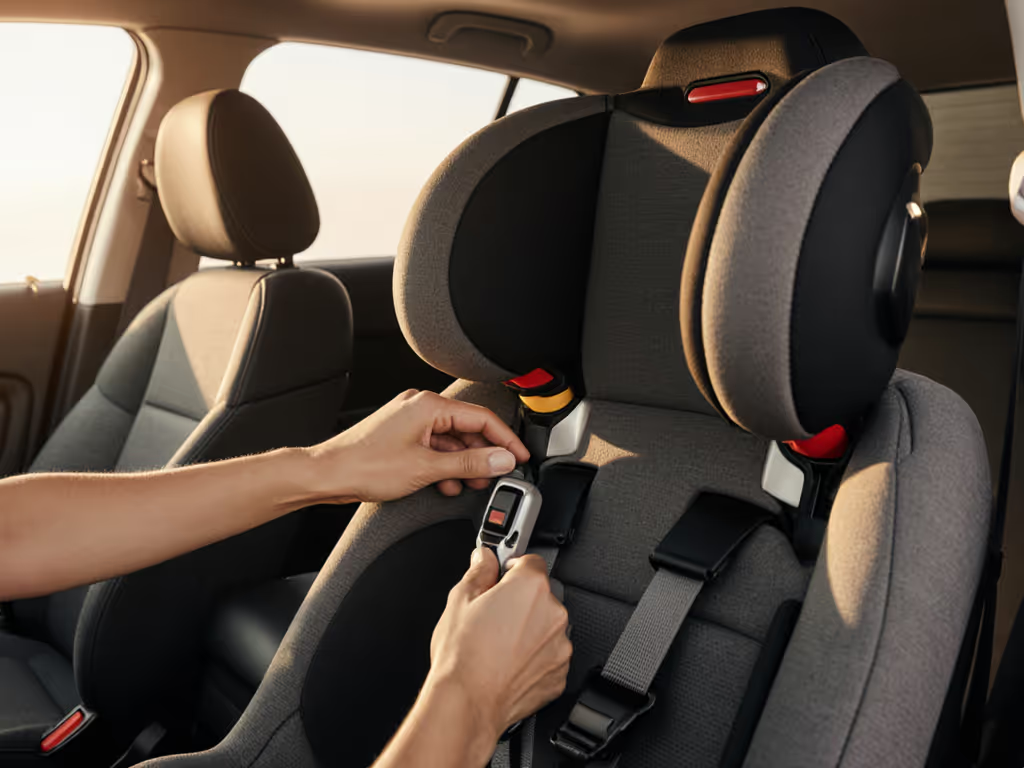
Incorrect harness fit is one of the most common installation mistakes, and in compact EVs where seats sit closer together, readjusting a harness that's become twisted or loose is annoying. For picks that adjust in seconds as kids grow, see our no-rethread harness seats. Look for seats with no-rethread or quick-adjust harness systems that let you modify strap height without removing the seat or rethreading webbing through slots.
In a convertible seat, harness slot height should be at or just below the child's shoulder line for rear-facing, and at or just above for forward-facing. If a seat requires you to rethread harness webbing through slots as the child grows, plan for frustration in a compact EV where you have limited working space on either side of the seat.
Additionally:
- Confirm the harness adjuster mechanism works smoothly in your vehicle's light and angle. Some seats have button-release or slide-lock adjusters that jam if the car seat is compressed against a narrow middle seat.
- Test buckle access and engagement force: In the middle seat of a compact EV, your hand space to guide the buckle into the connector is limited. A buckle with positive tactile feedback (a clear click) and a centered chest clip reduces mis-buckling and over-tightening from parents rushing through a tight squeeze.
- Check for strap twisting prevention: Some seats have webbing guides or soft caps that keep harness straps from tangling, which is a lifesaver when you're extracting a child from a side-adjacent seat and don't have room to untwist.
7. Evaluate Ease of Cleaning and Long-Term Durability
Compact EVs see high mileage from parents shuttling kids between school, daycare, and activities. Your car seat will endure spills, sun exposure, and repeated installs, all accelerated in a vehicle used intensively.
Seek seats with:
- Removable, machine-washable covers: Seats with full-coverage foam backing that can be thrown in the washer on cold cycle hold up better than spot-clean-only fabrics, which fade and thin with age.
- Non-porous foam cores: High-density polyurethane or expanded polystyrene resists liquid absorption and mold growth in humid climates or after spills.
- Accessible crevices: Gaps between the harness guide and shell, or around the recline mechanism, collect crumbs and become germ traps. Look for seats with smooth, integrated designs that minimize hiding spots.
- Readily available replacement parts: If a harness adjuster breaks or a cover stain won't come out, can you order a new part online? Seats from established manufacturers (Graco, Chicco, Britax, Cybex, etc.) typically have better spare-part availability than boutique brands.
FR-free and PFAS-free fabrics may require different washing protocols. Check the care label: some natural-fiber FR-free covers may not survive hot water, and PFAS-free water-repellent treatments can break down faster, requiring re-application. Factor maintenance into your buy-once, use-for-years calculus.
8. Plan for Multiple-Vehicle and Multi-Caregiver Scenarios
If your child travels in a parent's sedan, a grandparent's compact SUV (like the Skoda Enyaq iV or Hyundai Ioniq 5), and a daycare vehicle, you'll either duplicate your car seat across locations or invest in a lightweight travel/portable seat for secondary vehicles.
- Decide whether to buy one primary seat and a lightweight secondary, or duplicate the same model across vehicles. Duplicating costs more upfront but eliminates confusion about installation differences.
- If choosing a travel seat, test whether it fits your vehicles' middle-seat configurations. Travel seats are typically narrower (15-17 inches) and lighter (6-8 lbs), making them ideal for rentals and vehicles you use infrequently, but their recline range and comfort features are often compromised.
- Ensure all caregivers can install the seat correctly. Leave a laminated instruction card in each vehicle, or share a QR code linking to a video walkthrough. The goal is consistency: a seat installed identically in Mom's compact EV and Grandpa's sedan reduces cognitive load and installation errors.
9. Check Safety Ratings, Warranties, and Expiration Timelines
All car seats sold in the U.S., EU, and other regulated markets must meet federal/European safety standards (NHTSA FMVSS 213 in the US; ECE R44-04 or R129 in Europe). However, safety varies within those standards based on features like side-impact protection, rebound bars, and load legs.
- Verify which standards your seat meets: R129 (i-Size in Europe) allows rear-facing to 4 years and is considered more rigorous than R44-04. In the US, NHTSA standards are uniform, but insurance-institute crash tests reveal performance variation among seats.
- Understand warranty coverage: Most seats carry a 1-year manufacturer warranty against defects. A few offer extended warranties or promise crash-replacement coverage (free replacement if your car seat is involved in a crash above a certain threshold). Crash-replacement is increasingly common and highly valuable if you're planning to keep the seat through multiple children.
- Know expiration timelines: Car seats expire 6-10 years after manufacture (date molded into the plastic base), as plastic degrades over time. Buy a recent-manufacture seat if you plan to hand it down; check the date code before purchase.
- Confirm vehicle-specific recalls: Periodically search the manufacturer's site and CPST databases for recalls tied to your EV model and car seat model combination. Some recalls address specific fit issues in certain vehicles.
10. Test Install in Person and Document Your Setup
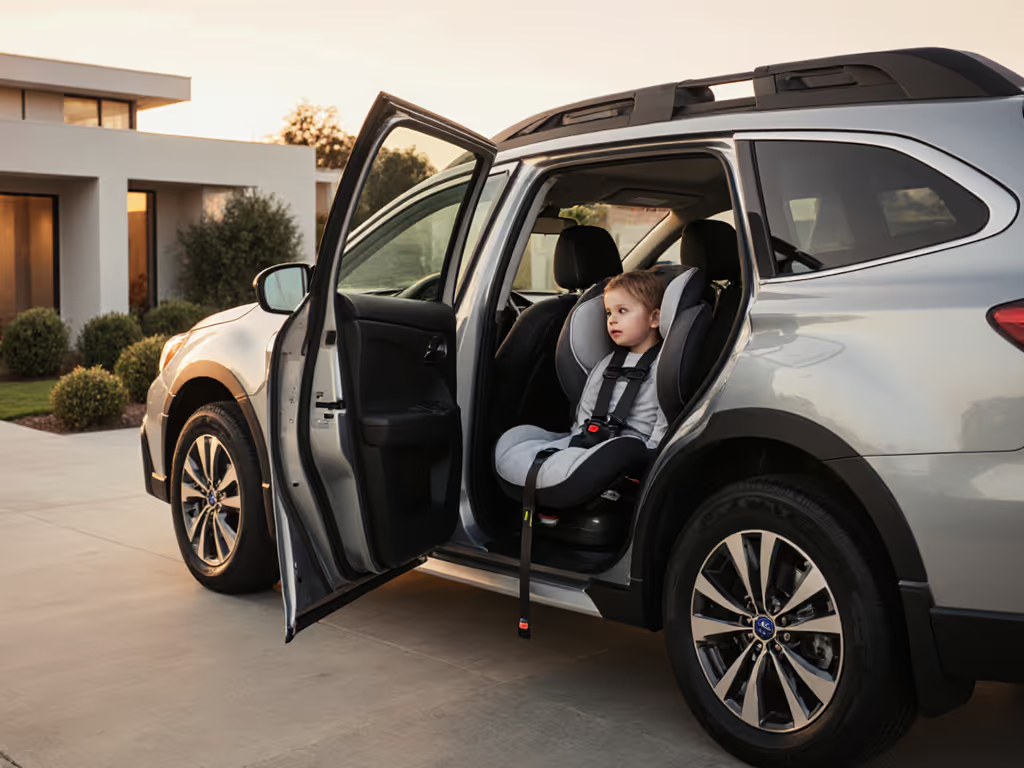
Before purchasing, request an in-person install test at a retail location or ask whether a CPST is available for a consultation. Many hospitals, fire departments, and car seat retailers offer free or low-cost install checks and can validate fitment in your exact EV.
- Bring your EV key or arrange the test at a dealership where you can use a comparable model.
- Test all three seating positions (left outboard, middle, right outboard) if you anticipate needing flexibility.
- Ask the CPST about recline angle, ISOFIX connector feel, and belt path accessibility specific to your EV and seat combination.
- Take photos or video of the final install (harness routing, anchor connections, recline angle) so you can replicate it if the seat is removed and reinstalled later.
- Get written confirmation (or a photo of the CPST checklist) that the install meets best practices. This documentation is invaluable if multiple caregivers use the seat.
After purchase, refer back to those photos when reinstalling in the same vehicle or troubleshooting why the harness feels looser than it did last month.
Next Steps: Build Your Car Seat Strategy
Finding the best car seats for compact EVs requires three deliberate actions:
-
Document your EV's rear-seat dimensions today: Measure cushion depth, width, recline range, anchor positions, and tether-anchor location. Email these to the car seat manufacturer's customer service or a CPST, they can often pre-screen which models fit best.
-
Prioritize your non-negotiables based on your routine: If you need three-seat fit, narrow designs are mandatory. If your child will spend 2+ hours per day in the car (long commute, road trips), prioritize breathable fabrics, strong head support, and proven recline stability. If you hand the seat to a younger sibling or donate it later, crash-replacement warranty and a long expiration timeline become critical.
-
Schedule a CPST install validation before finalizing your purchase (or immediately after). A 30-minute session costs $50-100 and is far cheaper than a misinstalled seat or discovering post-purchase that the seat doesn't fit your EV's geometry. Many CPSTs now work virtually or will come to your home or dealership.
Comfort and durable, evidence-backed fit are not luxuries, they're the foundation of sustainable, stress-free family rides. By anchoring your decision on your vehicle's specifics, your child's growth needs, and real-world usability, you'll find a seat that works for years, not months, and keeps your child safe and rested through every compact EV journey.
Related Articles