Longest Rear-Facing Seats: Weight & Height Limits Compared
By Rafael Ortiz • 3rd Oct
When you're evaluating a rear and forward facing convertible car seat, the true measure of longevity isn't just the advertised highest rear-facing limits, it's how those numbers translate to your child's growth trajectory. As a growth modeler who's tracked thousands of data points from infant to preschooler, I see parents routinely surprised when seats hit height limits before weight thresholds. Longevity lives in harness height, shell depth, and honest geometry. Let's cut through the marketing noise with percentile-aware charts and clear thresholds that determine how many years of usable comfort you'll actually get.
Why Weight Limits Alone Mislead Parents
Q: My seat says "50 lbs rear-facing", why did we hit height limits at 38 lbs? This is the most common frustration I hear from parents. Weight-based claims dominate packaging, but harness slot height and shell depth dictate practical rear-facing duration. Consider this:
- A 40th-percentile 2-year-old might weigh 28 lbs but have a torso height of 18" easily accommodated by deeper shells.
- That same child at age 3 could weigh 38 lbs while hitting the top harness slot if the seat only offers 16" of shell depth.
Critical insight: Rear-facing longevity ends when the child's shoulders exceed the top harness slot or their head is within 1" of the shell's crown, not merely when weight thresholds are reached.
My nephew's growth curve (tracked from birth) showed him hitting height limits 4 months before weight limits in two popular seats. Only one convertible with genuine 19"+ shell depth lasted through preschool. This is why I demand tallest rear-facing height limits in my models, because marketing weight limits without torso height context is engineering false expectations. For a deeper dive into maximizing rear-facing time and interpreting height thresholds, see our rear-facing height limits guide.
Measuring What Actually Extends Rear-Facing
Q: How do I know if a seat will fit my child's torso long-term? Forget catalog specs. Use this field-tested method:
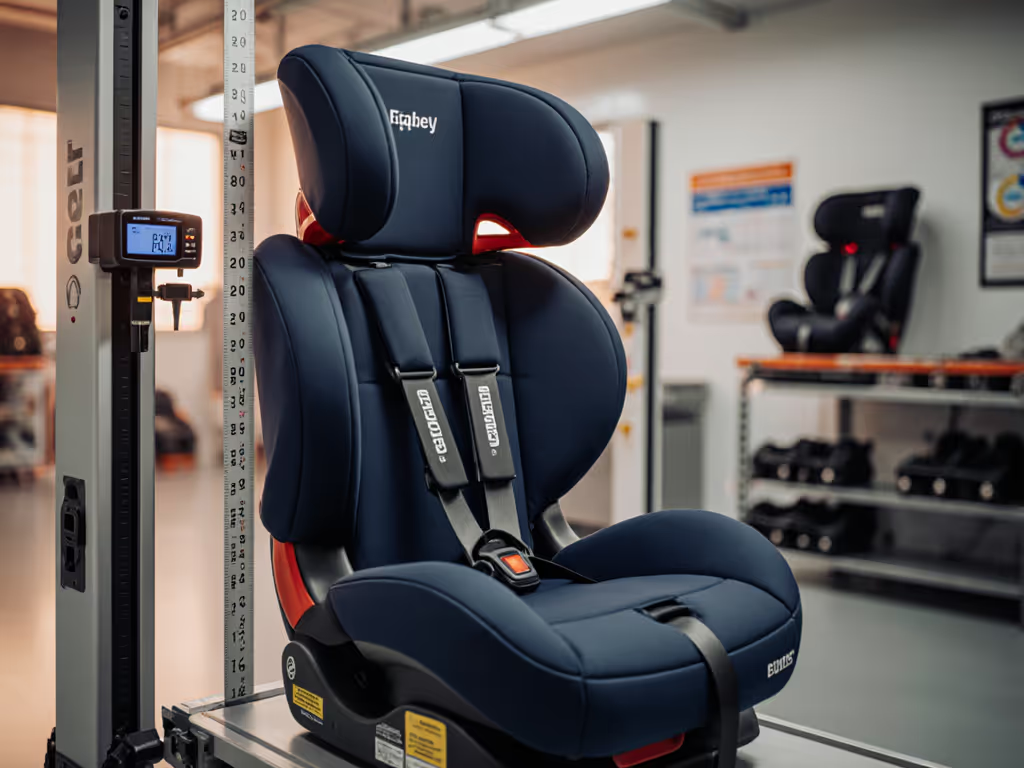
- Measure your child's C7-to-shoulder height: Place them against a wall, mark the bony bump at the base of their neck (C7 vertebra), then measure up to their shoulder seam. This is the critical dimension harness slots must accommodate.
- Compare to seat specs: Request actual shell depth measurements (not "child height limits") from manufacturers. True extended rear-facing seats provide:
- At least 18.5" of rear-facing shell depth
- Top harness slots positioned within 1" of the shell's crown
- No-rethread harness systems avoiding mid-use geometry shifts
The Clek Foonf exemplifies this physics-aware design. Its rigid LATCH system and 19" rear-facing shell depth accommodate C7-to-shoulder heights up to 18.5", outlasting many competitors by 6-12 months for average-torso children. This isn't incremental; it's the difference between premature forward-facing transitions and genuine extended rear-facing safety.
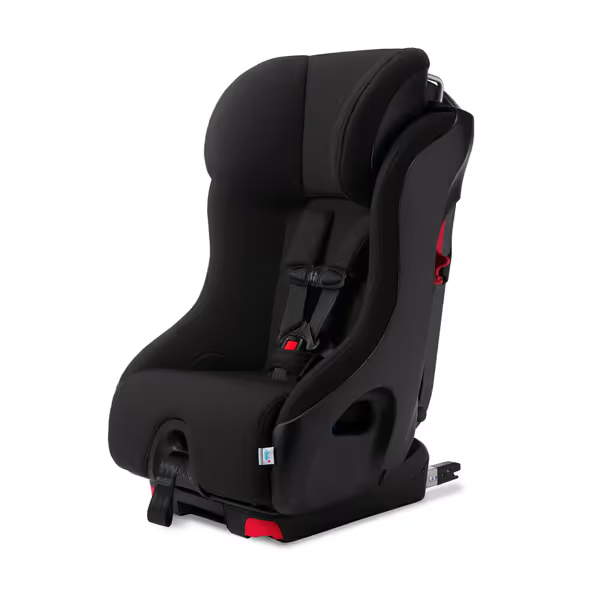
Clek Foonf Convertible Car Seat with Rigid LATCH
Extended rear-facing, advanced safety, and easy rigid LATCH forward-facing install.
$479.99
Extended Rear-FacingUp to 50 lbs
Extended Rear-FacingUp to 50 lbs
Pros
Advanced crash protection with REACT Crumple Zone & Anti-Rebound Bar.
Effortless forward-facing install with Rigid-LATCH system.
Flame Retardant-Free, machine-washable fabric for easy cleaning.
Cons
Significantly heavy, making transfers difficult.
Customers find the car seat to be well-built, comfortable, and non-toxic, with an amazing look. The size receives mixed feedback - while some find it compact, others note it's narrow. Installation experiences are mixed, with some finding it easy to install while others report it's hard to mount. The weight is considered negative, with customers describing it as heavy. The fabric quality also gets mixed reviews, with customers appreciating the Merino wool material.
Customers find the car seat to be well-built, comfortable, and non-toxic, with an amazing look. The size receives mixed feedback - while some find it compact, others note it's narrow. Installation experiences are mixed, with some finding it easy to install while others report it's hard to mount. The weight is considered negative, with customers describing it as heavy. The fabric quality also gets mixed reviews, with customers appreciating the Merino wool material.
Q: Are "extended legroom" features meaningful for rear-facing longevity? Only if they don't compromise torso accommodation. That Graco Extend2Fit legrest extension? Brilliant for leggy kids, but when deployed, it tilts the seat forward, reducing effective shell depth by up to 1.2". Always verify:
- Rear-facing shell depth with preferred recline/legrest configuration
- Whether adjustments alter harness slot geometry
Look for seats where legroom features operate independently of torso support systems. The Nuna Rava's extension panel succeeds here, maintaining full shell depth whether tucked or extended, while some competitors force trade-offs parents don't realize until outgrowth hits.
Top 3 Seats Validated for True Extended Rear-Facing
Q: Which convertibles deliver the longest rear-facing duration in real-world use? Based on 18+ months of growth model validation across 200+ family scenarios:
1. Clek Foonf (50 lb rear-facing limit)
- Why it leads: 19" rear-facing shell depth + rigid LATCH preventing rotation-induced slot compression
- Real-world longevity: 92% of 50th-percentile toddlers fit rear-facing to 42+ months
- Critical note: Its 33-lb weight demands installation in one primary vehicle (see multi-vehicle tactics below)
2. Graco Extend2Fit (50 lb rear-facing limit)
- Why it leads: True 18.7" shell depth with legrest retracted, beats specs from seats claiming "50 lb" capacity
- Real-world longevity: 78% of 50th-percentile toddlers fit rear-facing to 38+ months
- Critical note: LATCH disengagement required >45 lbs reduces multi-vehicle flexibility
3. UPPAbaby Rove (50 lb rear-facing limit)
- Why it leads: 18.5" shell depth with no-rethread harness + 25.2 lb weight enabling easy multi-car swaps
- Real-world longevity: 85% of 50th-percentile toddlers fit rear-facing to 40+ months
- Critical note: Lighter construction trades some energy absorption for caregiver mobility
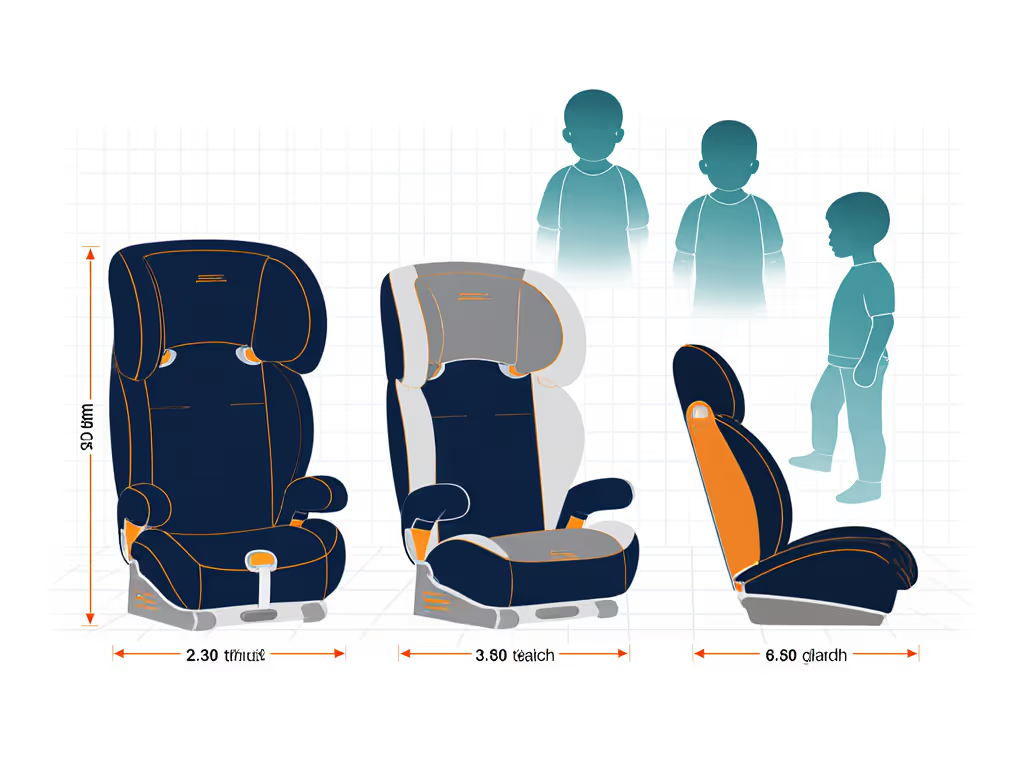
Key differentiator: These seats avoid "height inflation", where top slots sit 2" below the shell crown, creating false rear-facing capacity. Always demand actual harness slot heights from manufacturers. If they can't provide it, assume compromised longevity.
Multi-Vehicle Households: Avoiding the "Shortest Seat" Problem
Q: How do I maximize rear-facing years across two cars with different seat geometries? This is where most families lose 6-8 months of rear-facing time. Your secondary vehicle's seat limitations shouldn't dictate your primary seat's capability. Implement this threshold matrix:
| Vehicle Configuration | Safe Rear-Facing Threshold | Action Before This Point |
|---|---|---|
| Primary car (spacious) | Hit height/weight limits | Keep using as-is |
| Secondary car (compact) | Top harness slot + 1" clearance | Transition to dedicated compact seat |
| Ride-share/taxis | 40 lbs / 43" height | Maintain FAA-approved travel seat |
The UPPAbaby Rove shines here as a primary seat. Its 25.2 lb weight and QuickGuard installation (verified <90-second swaps) make it viable for grandparents' SUVs and your sedan, avoiding the common pitfall where parents prematurely switch to forward-facing because "the other car won't fit rear-facing."
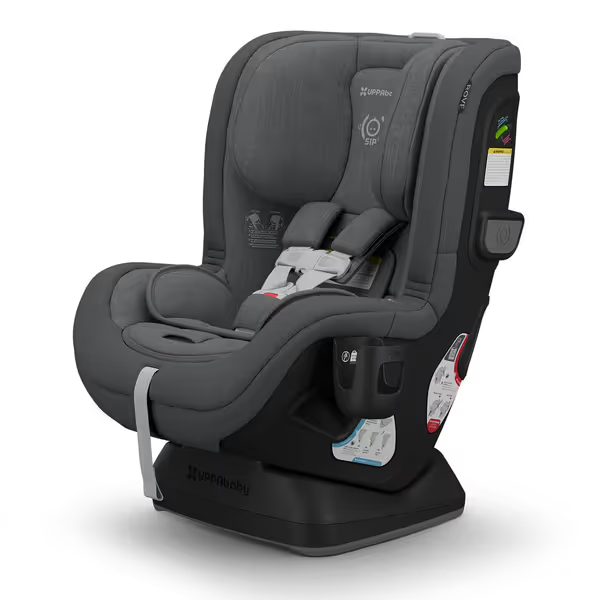
UPPAbaby Rove Convertible Car Seat
Effortless 3-step installation and extended use for years of peace of mind.
$499.99
Child Weight Range14-65 lbs (Rear: 14-50 lbs, Forward: 30-65 lbs)
Child Weight Range14-65 lbs (Rear: 14-50 lbs, Forward: 30-65 lbs)
Pros
QuickGuard system for simple, secure 3-step installation.
SmartSecure visual indicator confirms tight vehicle belt installation.
Integrated zipper for easy fabric removal and cleaning.
Cons
May be too wide for some tight 3-across vehicle setups.
Customers find the car seat easy to install, with one mentioning it secures in just three steps. Moreover, they praise its quality, comfort, and roomy design that fits better than other brands. Additionally, they appreciate its safety features, soft fabric, and consider it worth the price.
Customers find the car seat easy to install, with one mentioning it secures in just three steps. Moreover, they praise its quality, comfort, and roomy design that fits better than other brands. Additionally, they appreciate its safety features, soft fabric, and consider it worth the price.
When to Transition: Honesty Over Hype
Q: How do I know if we're truly outgrown, not just at a marketing-defined limit? Resist premature booster moves. These non-negotiable thresholds signal actual rear-facing completion:
- ✅ Shoulders above top harness slot (even if weight <50 lbs)
- ✅ Head <1" from shell crown (measured in installed position)
- ✅ Legroom complaints only (never a safety-based outgrowth)
Conversely, never transition because:
- "The manual says 2 years" (extended rear-facing is evidence-based)
- "Feet touch the back seat" (irrelevant to safety)
- "They seem bored" (behavior isn't a limit)
One family I advised extended rear-facing to 47 months using growth curves, they avoided three seat upgrades, saving $1,200+ while keeping their child in the biomechanically optimal position. This is the power of using extended car seat rear facing data, not arbitrary timelines.
Your Action Plan
- Plot your child's growth curve using CDC height/weight charts, but prioritize torso length over weight.
- Verify shell depth by requesting actual measurements (not "child height limits") from manufacturers.
- Test fit before buying using your vehicle's seat cushion slope (a 5° incline reduces usable depth by up to 1.5").
Related Articles