No-Rethread Harness Comparison: Testing Adjustment Mechanics
By Rafael Ortiz • 28th Apr

No-rethread harness comparison and best harness adjustment mechanisms sit at the intersection of engineering and daily reality, two forces that define whether a car seat serves you well or exhausts you before the first season ends. The mechanics matter. When a harness adjustment requires rethreading through shell slots every time your child hits a growth milestone, you're looking at repeated friction moments that compound across months and years. Understanding how adjustment systems actually perform reveals which designs truly earn years of usable comfort and which promise convenience they don't deliver.
I learned this lesson viscerally years ago, plotting my nephew's growth from infant bucket through preschool milestones on a spreadsheet (matching torso height percentiles to available harness slot positions and shell depth). One convertible seat with a thoughtful adjustment system outlasted three others across carpools and vehicle swaps, not because it was perfect, but because its geometry was honest and its adjustment mechanism didn't create barriers to proper use. That experience crystallized my core conviction: longevity lives in harness height, shell depth, and honest geometry.
What Makes a Harness "No-Rethread," and Does It Matter?
Understanding the Two Adjustment Approaches
Traditional rethread harnesses route adjustment straps through multiple slots in the seat shell. Each time your child grows (typically 2 to 4 times per year during early years) you physically unthread the harness from its current slot, raise or lower it, and rethread through the new position. The process takes roughly two minutes per adjustment, but it's also a friction point: the task feels fussy, parents sometimes skip proper height checks, and the mechanics feel outdated against faster-growing alternatives.
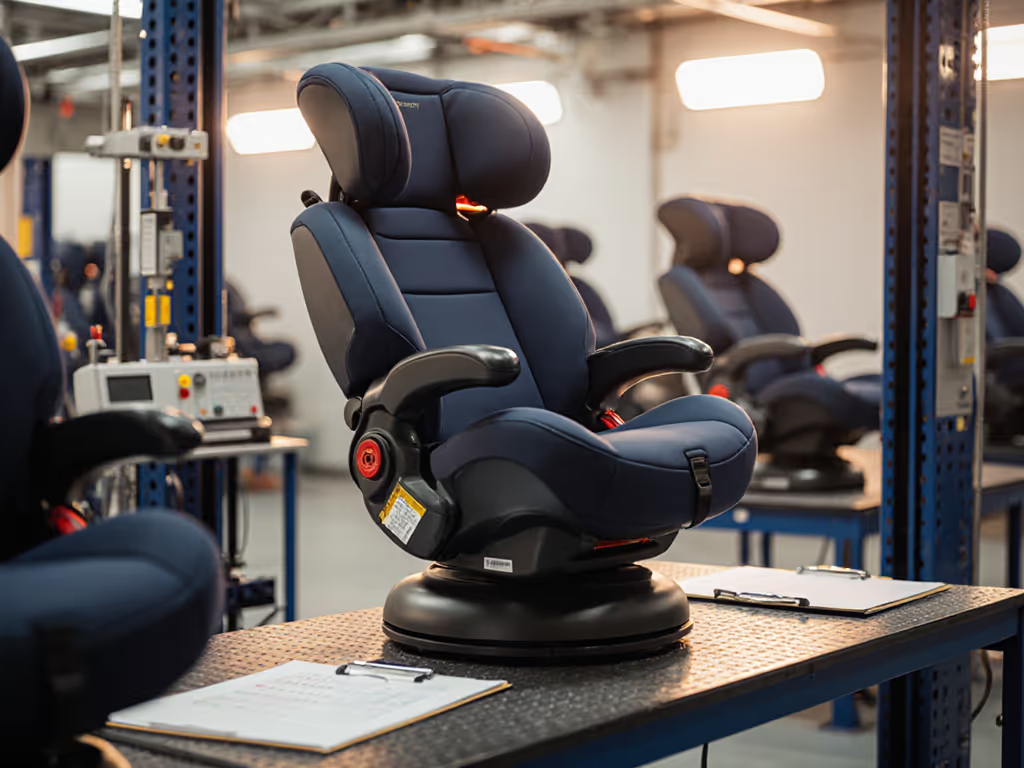
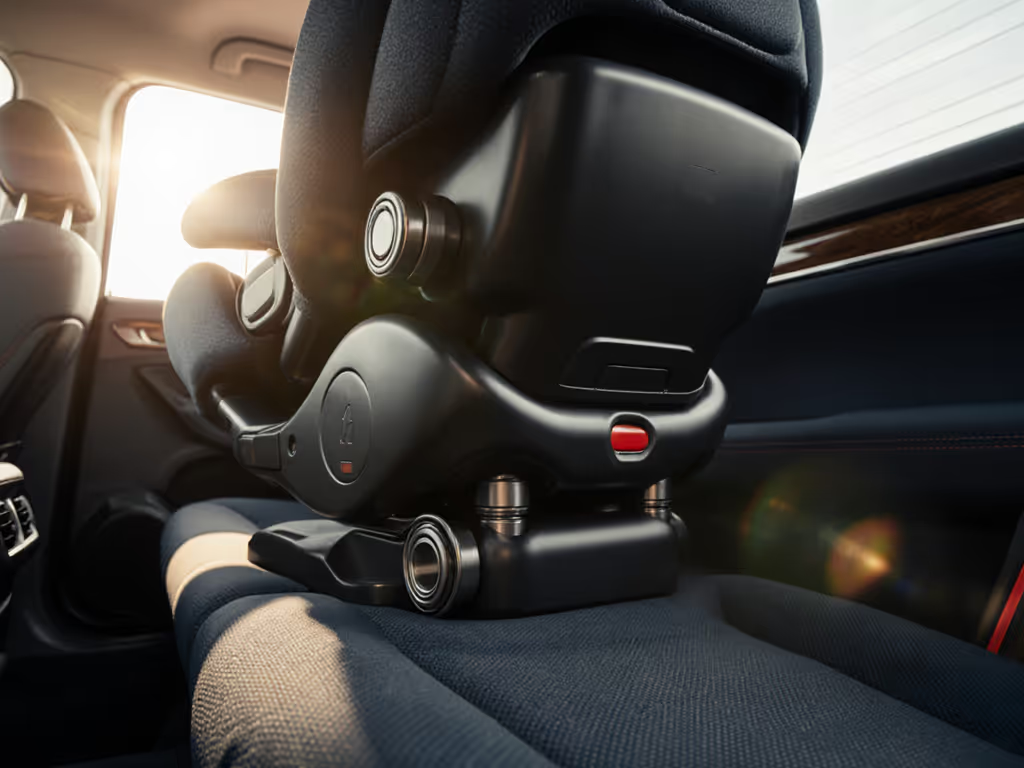
No-rethread (or auto-adjust) harnesses use a mechanical lever, hook, or ring near the seat's top. Pulling or squeezing this adjuster simultaneously raises the seat's headrest and lifts the harness straps to the next position without unthreading. The practical outcome: height adjustment happens in seconds, with no disconnect between shell position and strap height.
The Honest Trade-Offs
No-rethread systems do add measurable weight to the seat structure (typically 1 to 2 pounds for the mechanism and reinforced shell sections needed to support it). They also introduce a second variable to manage during daily use: the headrest height must track with harness position, which means one more component to monitor and keep aligned.
For infant-only seats (rear-facing exclusively), the value proposition weakens significantly. An infant will outgrow height-wise only once or twice over 12-18 months, making the investment in auto-adjust machinery less compelling. For convertible seats (rear-facing to forward-facing) spanning 4 to 50+ pounds across three to five years, no-rethread mechanics pay dividends by removing a recurring adjustment barrier.
FAQ: No-Rethread Harness Testing and Reliability
What Adjustment Ease Actually Means
Ease of adjustment isn't just convenience, it's a proxy for consistent, correct use. To confirm everyday safety, follow our pinch test harness fit guide. When tightening and repositioning the harness requires minimal resistance and clear mechanical feedback, parents complete the adjustment and trust it. When it's difficult, many defer adjustments or guess at positioning.
In testing, ease scoring typically measures:
- Actuation force required (how hard you pull or squeeze to trigger adjustment)
- Mechanical smoothness (resistance at each position, absence of grinding or sticking)
- Visual/tactile confirmation (audible clicks or clear lock-in points that signal success)
- One-hand operability (whether you can adjust while holding a child, bracing the seat, or reaching across the base)
Mechanisms that require two-handed operation or significant force often underperform in real homes, where perfect conditions rarely exist.
Does No-Rethread Mean Better Growth Accommodation?
No. Adjustment mechanism and growth accommodation are separate variables. A no-rethread seat with only five harness positions may constrain a tall child faster than a traditional rethread seat offering eight positions at finer height intervals. What matters is the total harness height range: how many inches of usable adjustment the seat offers from lowest to highest setting.
Percentile-aware analysis shows this clearly. A 75th-percentile-height child growing at a typical rate will require harness height increases roughly every 6-8 weeks during infancy, then every 10-14 weeks as growth curves slow. The seat that survives longest isn't the one with the fastest adjustment, it's the one with the deepest shell and the tallest final harness slot.
No-rethread or traditional rethread, the underlying geometry determines the ceiling. A seat offering 22 inches of harness height growth accommodates far more years than one bottoming out at 18 inches, regardless of how the mechanism works.
What Do No-Rethread Reliability Metrics Reveal?
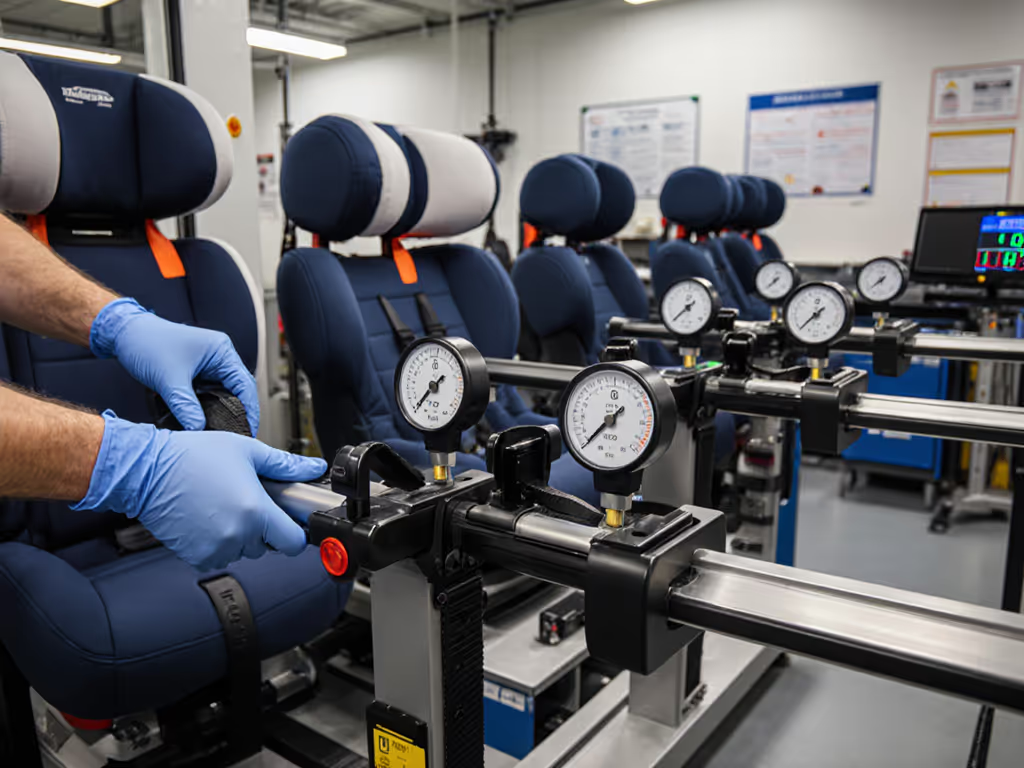
Reliability testing for no-rethread systems focuses on mechanical longevity under repeated use. Key metrics include:
- Actuation cycle count: How many up-and-down adjustments before resistance increases or mechanisms jam (typically tested to 10,000+ cycles, simulating 10+ years of active use)
- Lever/hook durability: Whether plastic components crack, hinges loosen, or springs lose tension over time
- Headrest alignment stability: Whether the headrest remains flush to the shell as harness position changes, or if gaps develop that allow strap slippage
- Weather and thermal cycling: How plastic mechanisms respond to temperature swings (especially in hot vehicles or cold garages)
Seats engineered with metal reinforcement around adjustment points and multi-part plastic assemblies tend to outlast single-piece designs. Cybex Cloud T, for example, incorporates internal reinforcement that extends mechanism lifespan across repeated adjustments.
Comparing Adjustment Mechanisms Across Growth Phases
Rear-Facing Phase: Where Mechanism Choice Matters Most
During rear-facing use (typically the first 2 to 4 years) a child's torso grows 4 to 7 inches on average, translating to 3 to 5 harness height adjustments. If the seat uses traditional rethread, that's 6 to 10 minutes of hands-on adjustment work spread across the period. If it uses no-rethread, that work collapses to 90 seconds total.
For parents managing multiple children, carpools, or frequent vehicle swaps, that time savings compounds. But it also reveals a secondary truth: during rear-facing, the ability to keep the child rear-facing longer matters more than the adjustment speed. For strategies and seat picks that extend rear-facing, see our extended rear-facing guide. A seat with a no-rethread mechanism but only a 20-inch harness height ceiling forces a forward-facing transition at a smaller child size than a traditional rethread seat offering a 22-inch ceiling.
Forward-Facing and Beyond: When Frequency Drops
Once a child transitions to forward-facing (typically 2.5 to 4 years old), harness growth adjustments slow significantly. A child might need only 2 to 3 more harness height increases before hitting the seat's height or weight limit. At this pace, adjustment mechanism type becomes less consequential than raw height availability.
Harness adjustment ease then serves a different function: daily buckling and unbuckling without strap twists. This is where no-rethread shines. Straps that don't need repositioning also don't get tangled during everyday use, reducing friction and frustration during morning car rides and nightly pickups.
Building Your Decision Framework
Scenario Matrix for Multi-Vehicle Households
| Vehicle/Scenario | Primary Seat Type | Adjustment Priority | Durability Need | Growth Range Required |
|---|---|---|---|---|
| Family sedan (daily driver) | Convertible | No-rethread preferred | High (5+ years) | 22"+ harness height |
| Spouse's compact car | Infant or secondary convertible | Minimal transfers | Medium | 18"+ |
| Grandparent's vehicle | Fixed convertible | Ease of use, simple setup | Medium | 20"+ |
| Rental/taxi use | Lightweight portable | Fast install only | Low (temporary) | 18"+ |
This visual breakdown shifts decision-making from emotion to clarity. If you rely on rideshare or taxis, use our ride-share car seat safety guide to choose truly portable options and follow local laws. You see immediately where no-rethread convenience matters (daily driver) and where it's less critical (rental backup).
Harness Height Adjustment Testing: Your Personal Checklist
- Actuate the adjustment mechanism 5 to 10 times in sequence without stopping. Notice any resistance, grinding, or delayed response.
- Adjust with one hand while holding weight in the opposite arm (simulate real life).
- Check that the headrest rises in perfect sync with harness straps (no gaps, no lag).
- Confirm that the harness locks firmly at each position (listen for clicks or feel a definitive stop).
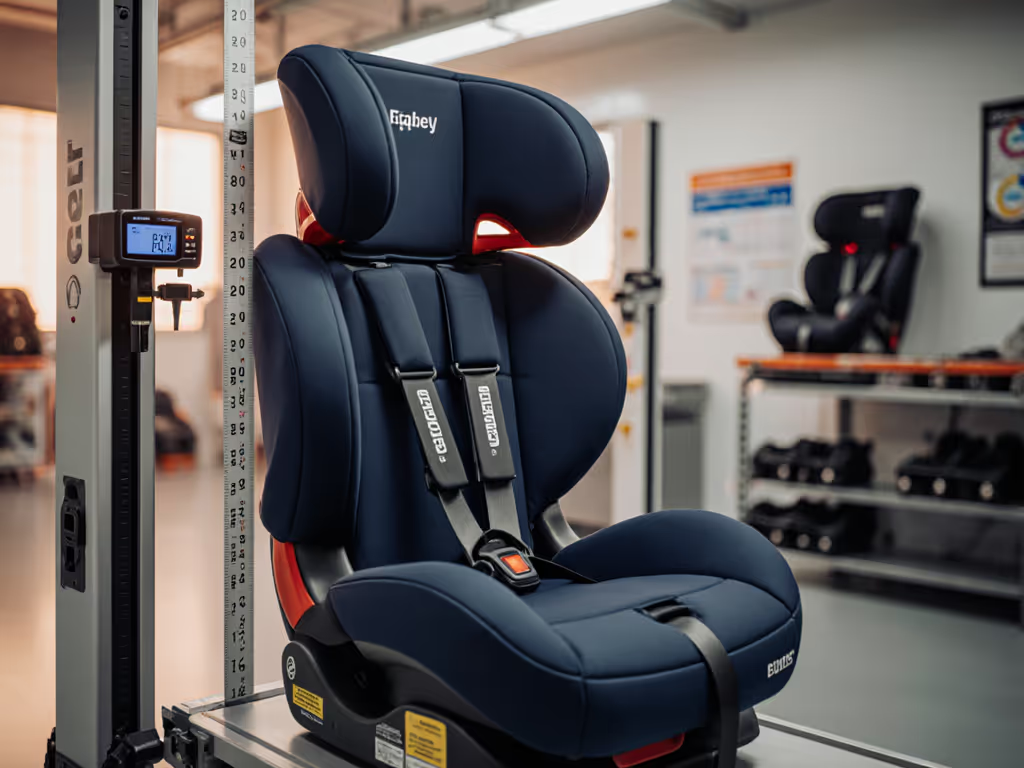
- Measure the total harness height range using a ruler: lowest slot to highest slot, in inches. Longer is better.
- Test adjustment during a cold morning and a hot afternoon, if possible, to sense any thermal-response differences.
No-Rethread Reliability in Real Homes
Maintenance and Longevity Predictors
No-rethread mechanisms that survive years of real use share common traits:
- Stainless steel or corrosion-resistant metal hardware rather than all-plastic triggers
- Sealed pivot points that resist dust and crumb accumulation (a common failure cause)
- Headrest attachment points reinforced with metal bracketing, not plastic clips alone
- Adjustment levers or hooks designed for repeated full-range use, not delicate precision mechanisms
Seats with overly complex or fragile-feeling mechanisms often show wear within 18 to 24 months of active use, especially in vehicles with high temperature swings or frequent disassembly for cleaning.
The Cost-Benefit Reality
No-rethread harness systems add $50 to $150 to the overall seat cost, depending on complexity. That premium is justified if you plan to keep the seat long-term and value the daily time savings. For families buying a single convertible that spans 3+ years and multiple children, the premium often pays back through reduced adjustment friction and improved likelihood of consistent, correct use.
For infant-only seats or seats you'll replace in 18 months, traditional rethread is typically the wiser economics.
Key Takeaways: What Your Testing Should Reveal
A no-rethread harness is worth choosing when it meets these criteria:
- The adjustment mechanism feels smooth and requires minimal force across all positions
- The seat offers clear upgrade thresholds (harness slot spacing and total height range that support at least 3+ years of growth without premature outgrowth)
- You're committing to a convertible (not a short-term infant seat)
- Daily buckle-unbuckle ease matters to your household's peace of mind
- The seat's overall geometry (shell depth, recline range, and legroom) supports extended rear-facing or comfortable forward-facing without forcing early transitions
Adjustment mechanism alone doesn't engineer longevity. Honest geometry does. But the mechanism you choose each day determines whether that geometry translates into years of usable comfort or frustration.
Moving Forward: Your Next Steps
If you're comparing no-rethread harness comparison options, focus your research on three dimensions: actuation smoothness (test it yourself if possible), total harness height range in inches (measure it), and your family's multi-vehicle reality. Build your scenario matrix, test adjustment mechanisms in person when feasible, and trust percentile-aware growth planning over marketing timelines.
Seek out resources that provide vehicle-specific compatibility notes, step-by-step installation videos, and real-parent feedback on whether adjustments truly stay smooth over years of use. For proven, model-specific steps, start with our vehicle-tuned installation guide. Connect with certified child passenger safety technicians (CPSTs) who can validate that your chosen seat's adjustment system works reliably in your exact vehicle and seating position.
The goal isn't perfection: it's informed geometry backed by honest mechanics. That combination is where longevity actually lives.
Related Articles