Extended Forward-Facing Car Seats for Tall Kids
By Rafael Ortiz • 3rd Mar
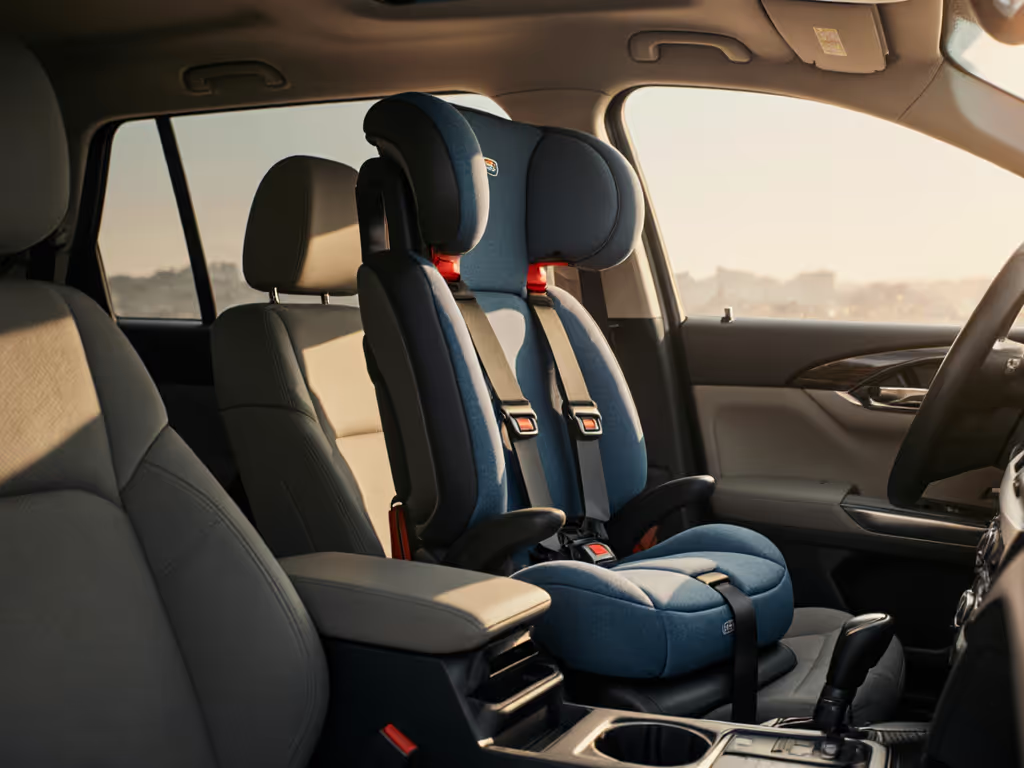
The moment you notice your toddler's knees approaching the back of the front seat during the rear-facing phase, the question surfaces: Will this convertible car seat actually serve my tall child through the forward-facing years? If your child is tracking above the 85th percentile in torso length, or you're simply planning conservatively, understanding the best convertible car seat for tall infants and which seats offer high forward-facing height limits becomes essential to your buy-once strategy. For model picks verified for tall builds, see our best convertible car seats for tall infants.
Many parents discover too late that their seat's top harness slot maxes out at 48 to 49 inches forward-facing, a threshold that shorter children may not hit until age 5 or 6, but tall kids can reach by age 3 or 4. This article walks through the geometry of extended forward-facing seats, how to measure your child's growth trajectory, and which models are engineered to delay that transition.
What Does "Extended Forward-Facing" Actually Mean?
The Harness Height Ceiling
When manufacturers list a convertible seat's forward-facing weight limit (commonly 65 lbs or higher), they're not promising your child can harness-ride until that weight. Instead, your child exits the harness when they reach either the weight limit or the height of the top harness slot (whichever comes first).[1] For tall children, height wins almost every time. Learn why height limits usually beat weight for longevity when choosing a convertible seat.
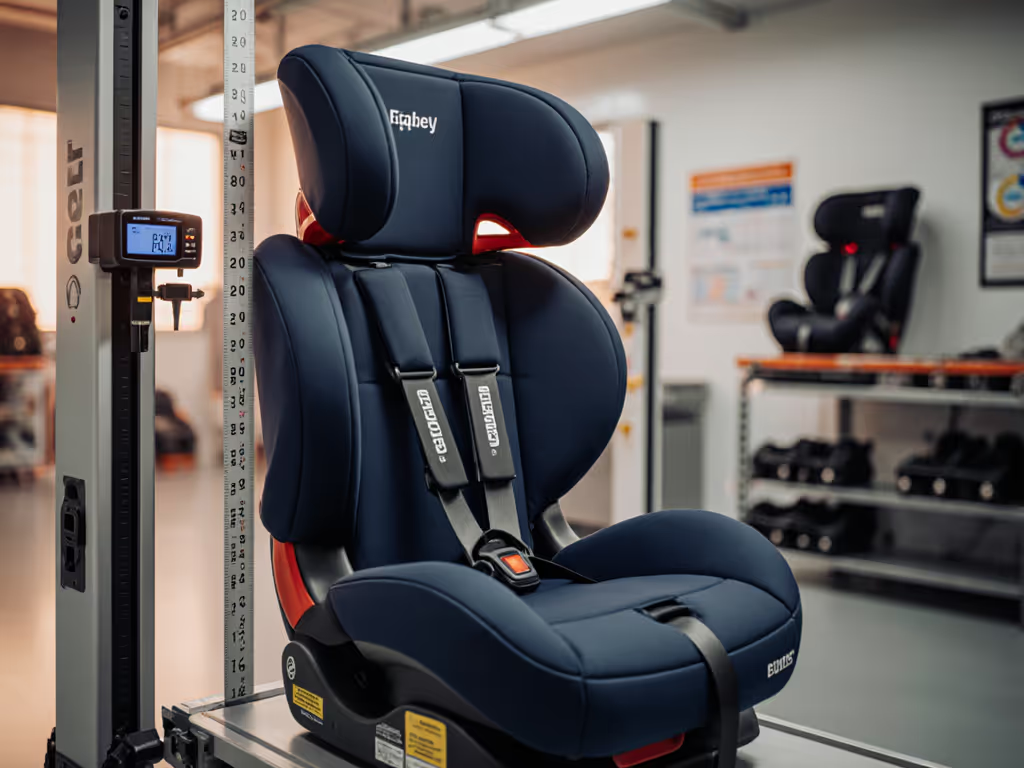
A seat with a 65-pound forward-facing weight limit but a top harness slot at 49 inches may serve most children until age 5 to 6 in harness mode. But a tall 3-year-old already at 48 inches is weeks or months away from booster transition, regardless of weight.[1] Longevity lives in harness height (the physical distance from the seat base to the topmost harness position).
Why Torso Length Matters More Than Overall Height
Your child's total height includes leg length, which doesn't directly affect harness fit. Instead, torso length (measured from the base of the spine to the top of the head when seated) determines when the harness becomes too high relative to the shoulders. Two children at the same overall height can have vastly different torso proportions. One with longer legs and a shorter torso might harness-ride safely until age 6; another with a longer torso and shorter legs might outgrow at age 3.5. Seats with a no-rethread harness make these frequent height adjustments much faster.
If your child is genetically tall or shows early signs of longer torso proportions, comparing torso measurements across percentile charts is more predictive than height alone. Children in the 90th percentile for torso length at age 2 will likely spend fewer years in harness than a 50th-percentile peer.
Which Convertible Seats Maximize Forward-Facing Height?
The High-Limit Contenders
The Orbit Baby G5 stands out with a forward-facing height capacity of 53 inches (meaningfully higher than the typical 49 inch ceiling).[2] For a child tracking in the 85th or 90th percentile for height, this additional four inches can translate to an extra 12 to 18 months of harness use. The seat also offers machine-washable fabrics and a slim profile, which matters if you're coordinating multiple seats across vehicles.[2]
The Cybex Callisto G 360° is engineered with a high top harness position and rotates in all three modes (rear-facing, forward-facing, high-back booster), explicitly designed for taller children who carry their height in their torsos.[1] If you're comparing options, our Cybex Callisto vs Nuna REVV breakdown covers comfort and long-term value. Its premium price tag ($749.95) reflects specialized geometry, not just brand polish.[1]
The Graco Extend2Fit 3-in-1 delivers solid rear-facing capacity (50 lbs) and a compact footprint that fits sedans and smaller SUVs.[1] However, its top harness height is lower than peers in this category, meaning taller children may outgrow it forward-facing sooner, a key trade-off.[1] If your child is in the 60th to 75th percentile for torso length, this seat performs well. For 85th percentile and above kids, its geometry places it in the middle tier for extended forward-facing longevity.
Related Articles