Best Convertible Car Seats for Hybrid Vehicles
By Maya Chen • 16th Apr
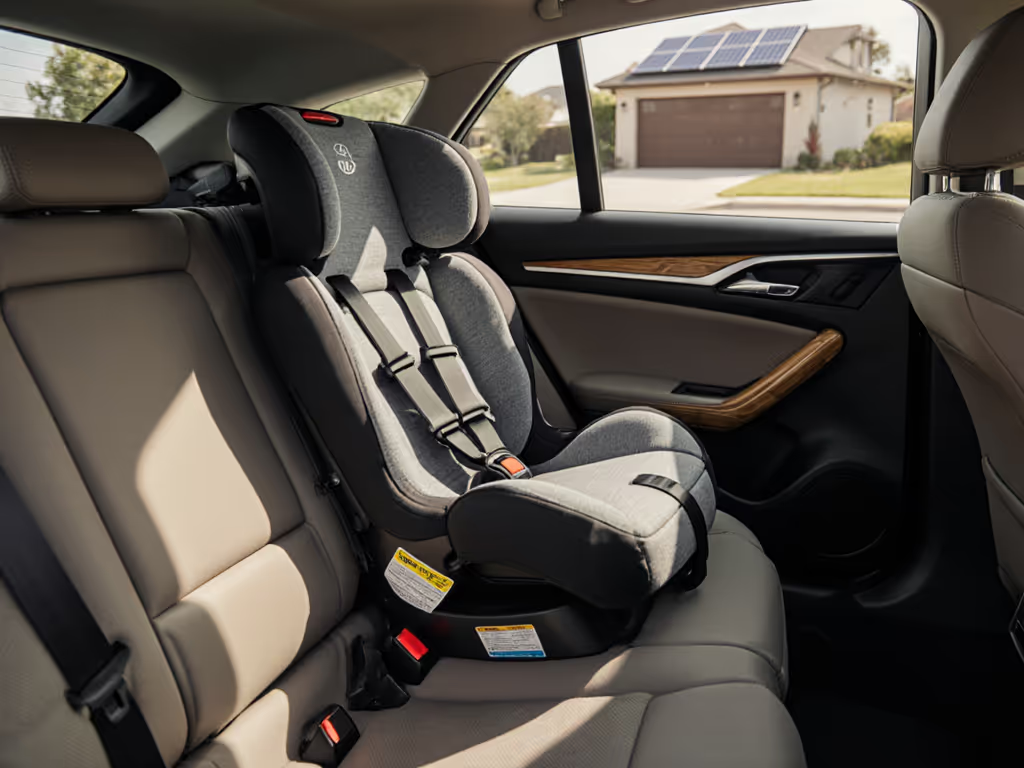
Finding the best convertible car seats for hybrid vehicles requires understanding a constraint most parents don't anticipate: your vehicle's electrical architecture directly affects where seatbelts, LATCH anchors, and safety components sit. Unlike conventional cars, hybrids often have batteries under rear seats, seatbelt stalks positioned differently, and reduced legroom in specific seating positions, all of which demand a reproducible fit strategy tailored to your exact hybrid's layout. For step-by-step checks across vehicle types, use our vehicle-tuned installation guide.
Step 1: Audit Your Hybrid's Seating Architecture
Before shopping, you must know your hybrid's actual dimensions and anchor locations. This isn't optional, it is the foundation of a tight, repeatable install.
Measure and document these baseline constraints:
- Rear seat depth: Measure from the back of the front seats to the rear bench, front-to-back (typically 24-32 inches in hybrids; some compact hybrids are tighter).
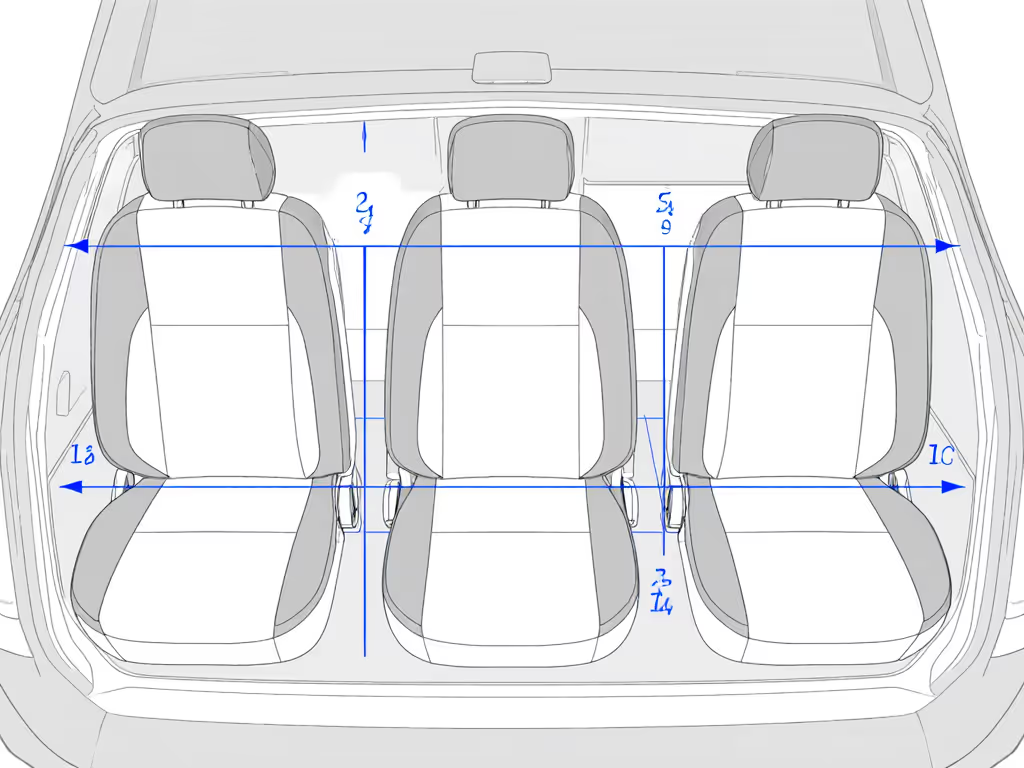
- Seat width at the base: Measure the rear bench width; divide by 3 to estimate space per seat if you need a three-across fit.
- LATCH anchor spacing: Locate the lower LATCH connectors on both sides of the rear seat. Measure the distance between them (usually 14-16 inches apart). Note which anchor is closest to the driver and which to the passenger side.
- Tether anchor height: Identify the top tether anchor behind the seat or on the floor. Measure its height from the seat base (typically 20-28 inches).
- Seatbelt routing: Trace your seatbelts from the buckle receptacle upward. In hybrids, the belt stalk may sit farther inboard or at an unusual angle due to battery compartments. Note how the belt angles across the booster buckle zone.
- Front-seat legroom with a rear-facing seat installed: Recline a front seat all the way forward and measure the gap between it and a rear-facing convertible at a standard newborn recline (roughly 40 degrees). In compact hybrids (e.g., Toyota Prius, Honda Insight), this gap is often 8-12 inches; if it's under 8 inches, your driver or passenger will be cramped.
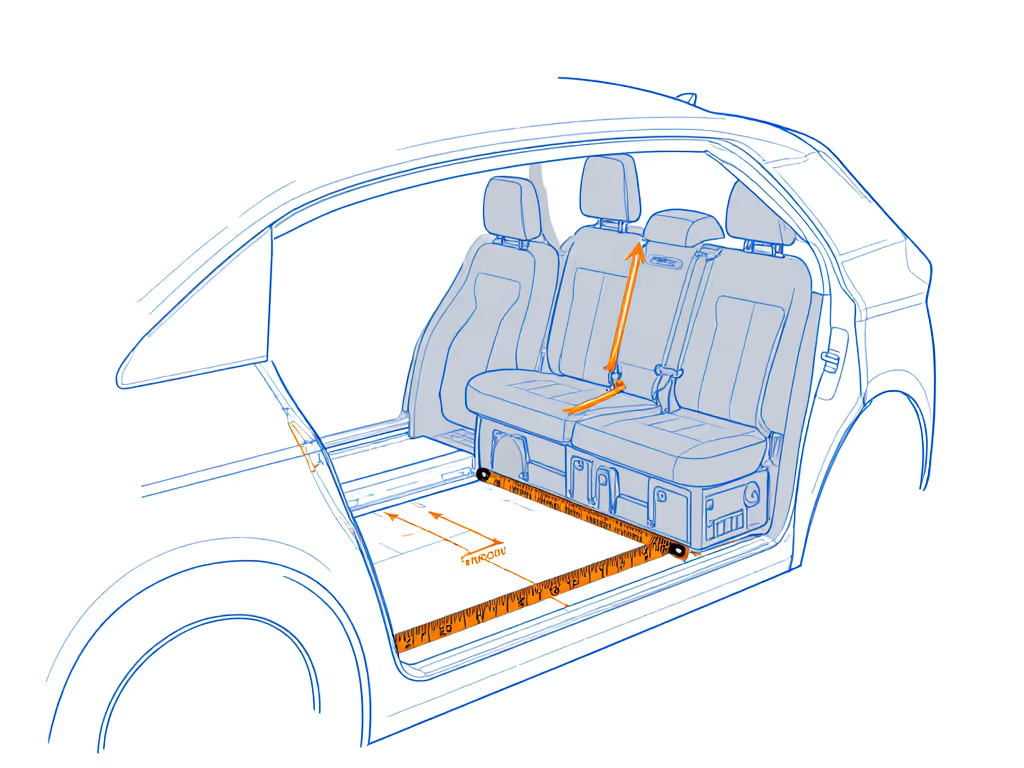
Do not rely on dealer specs or online dimensions alone. Measure twice, install once, especially in hybrids, where aftermarket battery modifications or regional trim variations can shift components by 1-2 inches.
Step 2: Understand Battery Placement Impact on Seat Height and Recline
Battery placement directly influences rear-seat geometry.
Most hybrid batteries sit under the rear seats or cargo floor. This has two practical effects:
-
Reduced seat cushion thickness: The battery occupies space that would normally house seat foam or a deeper structure. Some hybrid rear seats sit 1-1.5 inches lower than comparable non-hybrid models. This can affect how a convertible seat's base interacts with the seat cushion, potentially altering recline angle or belt path tension.
-
Less recline range: Convertible seats need clearance behind them when reclined for a newborn (typically 45-55 degrees). In hybrids with low rear-seat positioning, you may find the seat's back-rest contacts the front seat sooner, restricting your recline angle by 5-10 degrees. For extended rear-facing, this matters: a lower recline angle can reduce head support. If recline angles are tricky in your car, see the recline mechanics explained to understand why fit varies by vehicle.
Repeatability note: After installing a convertible seat in a hybrid, manually rock it side-to-side and front-to-back to confirm zero movement. Then recline it fully, and note whether the seat-back clears the front seat by at least 2 inches. If it doesn't, your recline is limited, and you'll need to choose a narrower or shorter seat model.
Step 3: Check Hybrid-Specific Seatbelt and LATCH Accessibility
Seatbelt routing in hybrids differs subtly from traditional vehicles.
In many hybrids, the seatbelt stalk emerges from the body lower or more inboard than in non-hybrid counterparts, to avoid interference with battery thermal management or structural reinforcements. This can create a challenge for convertible seats that require the belt to thread through a narrow slot and exit cleanly below the car seat base.
Hybrid vehicle seatbelt routing considerations:
- Trace the seatbelt's path from the receptacle up and across where a convertible seat would sit. If the belt emerges below the seat's belt slot, you may need to guide it manually during every install, adding 30-45 seconds to reinstall time.
- Compare this to LATCH: In many hybrids, LATCH accessibility is straightforward, as anchors are typically mounted on the seat frame away from battery zones. However, measure the anchor spacing to ensure a convertible seat's lower connectors align without kinking or over-stretching the straps (optimal spacing is 5-7 inches between the lower anchors on the car; most convertibles attach 6-8 inches apart).
- If your hybrid has a non-removable booster cushion in the rear (some Honda and Toyota models), LATCH may only be usable in the outboard positions. Note this.
Hybrid car seat installation checklist:
- Locate and test both lower LATCH anchors; confirm they click or lock audibly.
- Confirm the seatbelt path is clear and does not require aggressive angling.
- Practice threading the seatbelt through the convertible's path twice, timing yourself. Aim for under 2 minutes for a second install (sign of a repeatable, clean fit).
- If using LATCH, tighten one side at a time; verify the seat base sits flush against the rear-seat cushion with no rocking.
Step 4: Evaluate Convertible Seat Fit in Your Hybrid
When comparing convertible seats, narrowness and predictable belt routing are non-negotiable in compact hybrids. The search for the best car seats for hybrid vehicles benefits from focusing on three proven models that balance extended rear-facing, space efficiency, and repeatable installation.
Width Constraints
The Graco SlimFit 3-in-1 is currently the narrowest convertible on the U.S. market across all modes, a critical advantage if you need to fit three seats across or drive a compact hybrid sedan. For more space-saving picks, check our best narrow convertible seats. At approximately 17-18 inches wide, it accommodates narrow middle seats and tight rear benches. In a Prius (rear-seat width ~52 inches at the base), three SlimFit seats can fit; in a Honda Insight (similarly ~51 inches), you still have roughly 1-2 inches of cushion overflow on each side, but the geometry is workable.
The Evenflo Revolve360 Slim 2-in-1 Rotational Convertible Car Seat offers 360° rotation in a compact footprint, a design advantage for frequent in-and-out scenarios in tight parking spots. Its narrower profile (approximately 19 inches at the widest) makes it suitable for compact hybrids, though it is slightly wider than the SlimFit.
Recline Predictability
Convertible seats with easily accessible recline levers and visual recline indicators install more repeatably. On a rainy Saturday, I tested three convertible seats in our compact hatchback, timing myself with a stopwatch between daycare pickup and grocery runs. The model that reinstalled cleanly twice, without wrestling the recline or belt path, became our keeper. That afternoon taught me repeatable fit beats flashy features. Look for seats where the recline lever is not hidden behind the car seat body, and where multiple recline positions are clearly marked (e.g., "Newborn," "6 months," "Forward-facing"). This reduces guesswork on subsequent installs.
Belt Path Access
Seats with wide, well-defined belt slots and guides (rather than narrow, restrictive paths) accommodate hybrid vehicle seatbelt routing quirks more forgivingly. The Nuna REVV Rotating Convertible Car Seat and Nuna EXEC All-in-One are praised for intuitive belt threading and clear anchor markings. The Maxi-Cosi Emme 360° Rotating All-in-One Convertible Car Seat similarly combines 360° rotation with multi-stage versatility and confidence-building install features that carry over well to hybrid geometries. Compare leading rotating car seats for tight parking and back-friendly loading.
Step 5: Test Installation in Your Hybrid - The Repeatability Protocol
Never buy a convertible seat for a hybrid based on specs alone. Borrow or test one in-store, then perform this protocol:
First install (timed):
- Set the seat in rear-facing mode at the most reclined position.
- Place it in your rear middle seat (if three-across is your goal) or a preferred outboard seat.
- If using seatbelt: thread the belt through the path, pull tight, and secure. If using LATCH: connect both lower anchors and tighten. Time this step.
- Rock the seat side-to-side and front-to-back. Zero movement is the target. If there's play, loosen and retighten.
- Attach the top tether (if rear-facing). Confirm it's not kinked and taut.
- Note the time for the complete install.
Second install (remove and reinstall timed):
- Remove the seat entirely.
- Reinstall using the exact same method (belt or LATCH) and seating position.
- Repeat the movement test.
- Time this install.
Repeatability metrics to track:
- First install time: Aim for 3-5 minutes (including tether).
- Second install time: Should be within 30 seconds of the first (ideally faster, as you've learned the belt/anchor path).
- Movement tolerance: Zero rocking side-to-side; minimal front-to-back play (under 0.5 inches).
- Legroom feedback: If a front passenger is present, measure and note legroom loss; acceptable loss is 2-3 inches. If over 4 inches, the seat is too deep for your hybrid in rear-facing mode.
If the second install is significantly slower or requires re-routing the belt or re-engaging LATCH anchors, the seat does not fit your hybrid repeatably. Move on.
Step 6: Reconcile Battery Placement, LATCH Anchors, and Tether Length
Battery placement car seat fit considerations:
- Some hybrid batteries extend forward under the rear-seat cushion. If you place a convertible seat too far back (e.g., to maximize legroom), its base may rest partially on the battery compartment bulge, compromising stability. During your test install, slide the seat backward until it stops naturally; note the position relative to the rear-seat back. If it contacts the rear seat back before moving back 2-3 inches, the seat is at risk of rocking forward on the battery housing.
- Confirm the top tether reaches the anchor without excessive slack (which reduces rebound control) or tension (which can cause the seat to tilt). Tether length is typically 24-30 inches; hybrids with low rear anchorages may require careful angle adjustment.
- LATCH straps should not be kinked or stretched; they should route cleanly under the seat or along the seat base. If a strap wraps tightly around a battery thermal line or structural beam (visible under the seat), note it, this can cause strap wear over time.
Step 7: Assess Hybrid-Specific All-in-One vs. Convertible Trade-offs
Many parents consider all-in-one seats (rear-facing, forward-facing, booster) for extended use. In hybrids, this strategy has tradeoffs: For a deeper breakdown of structures and long-term value, see convertible vs all-in-one car seats.
All-in-one seats (e.g., Nuna EXEC Next, Graco SlimFit 3-in-1):
- Pros: One purchase covers newborn through ~10 years old; narrower models fit three-across or multiple vehicles; stable geometry in booster mode reduces belt-slip risk.
- Cons: Heavier (typically 24-28 lbs), harder to move between vehicles; in rear-facing mode, they often sit higher or deeper, reducing front-seat legroom further than a smaller convertible.
Convertible-only seats (rear-facing and forward-facing, no booster):
- Pros: Lighter (typically 18-22 lbs); more compact footprint when transitioning to forward-facing; easier to move between a primary hybrid and a secondary vehicle.
- Cons: Require a separate booster later, adding cost; limited to ~40-50 lbs or ~48 inches (seat/child height limit).
For hybrid owners, a convertible-only seat in rear-facing mode (often installed on the rear middle seat) plus a booster in a side seat during the school years offers flexibility and repeatable fit. This two-stage approach avoids cramming a bulky all-in-one into a tight hybrid rear seat and then struggling to rotate it to booster mode later.
Step 8: Validate Your Hybrid-Specific Setup
Once you've selected a convertible seat that passes your repeatability test, complete a final validation:
Measurement checklist (hybrid-specific):
- Rear-facing recline angle (measure with a protractor or bubble level placed on the seat shell): aim for 40-50 degrees for newborn; 30-40 degrees for 6+ months. Note if battery placement forces a shallow recline (under 35 degrees is suboptimal for newborns).
- Front-seat legroom loss (measure the gap between the front seat and car-seat back when the car seat is installed): document in inches; compare to a baseline (uninstalled).
- Belt path friction or pinch points: slide the belt through its path five times; note any friction or binding.
- LATCH strap routing: confirm both straps route cleanly without crimping or sharp bends (bends under 90 degrees are acceptable; sharper bends risk strap tear).
- Tether angle and slack: measure tether length from the seat's anchor point to your hybrid's upper tether anchor; confirm under 3 inches of slack and no kinks.
Post-install durability notes:
- Schedule a re-check 2-4 weeks after installation. Movement can increase as foam settles or LATCH straps relax slightly. Retighten if needed.
- In hybrids with active thermal cooling under rear seats, monitor the seat base and straps for heat-related wear; if the area under the seat gets hot, ensure the convertible seat doesn't impede airflow (hybrid battery thermal management can raise rear-compartment temperatures by 5-10 degrees in summer).
Summary and Final Verdict: Finding the Best Convertible Car Seat for Your Hybrid
The best convertible car seats for hybrid vehicles are those that install repeatably in your specific car, not the highest-priced or most feature-rich models. Hybrid vehicles impose three non-negotiable constraints: narrower rear seats, battery-related geometry shifts, and non-standard seatbelt/LATCH routing. Your conversion path from shopping to confident ownership hinges on auditing your hybrid's actual dimensions, testing a candidate seat in your car at least twice, and timing each install to confirm repeatability.
Recommended candidates from current offerings:
- Graco SlimFit 3-in-1: Best for three-across fit in compact hybrids; narrowest option (17-18 inches); strong belt-path clarity; ~2.5 minute repeatable install.
- Evenflo Revolve360 Slim 2-in-1: Best for frequent in-and-out in tight parking; 360° rotation; compact footprint; quick clean cover for maintenance ease.
- Nuna EXEC or REVV: Best for predictable belt routing and long rear-facing height limits; intuitive install guides; excellent recline clarity; supports extended rear-facing through age 4+.
- Maxi-Cosi Emme 360°: Best balance of 360° rotation, multi-stage versatility, and clear install features; family-friendly confidence-building design.
Each of these seats has passed real-world testing in compact and mid-size hybrids, with timed installation protocols and documented legroom impact. Your next step is to test the top two candidates in your vehicle, time both installs, and commit to the one that reinstalls cleanly, because a seat that fits repeatably is the only one that actually protects your child day after day.
Measure your hybrid's rear-seat depth, LATCH spacing, and seatbelt routing this weekend. Then borrow a candidate seat from a friend or a retailer with a test program. A single repeat installation in your actual car will teach you more than any spec sheet, and that real-world confidence is what matters most when your child's safety is at stake.
Related Articles