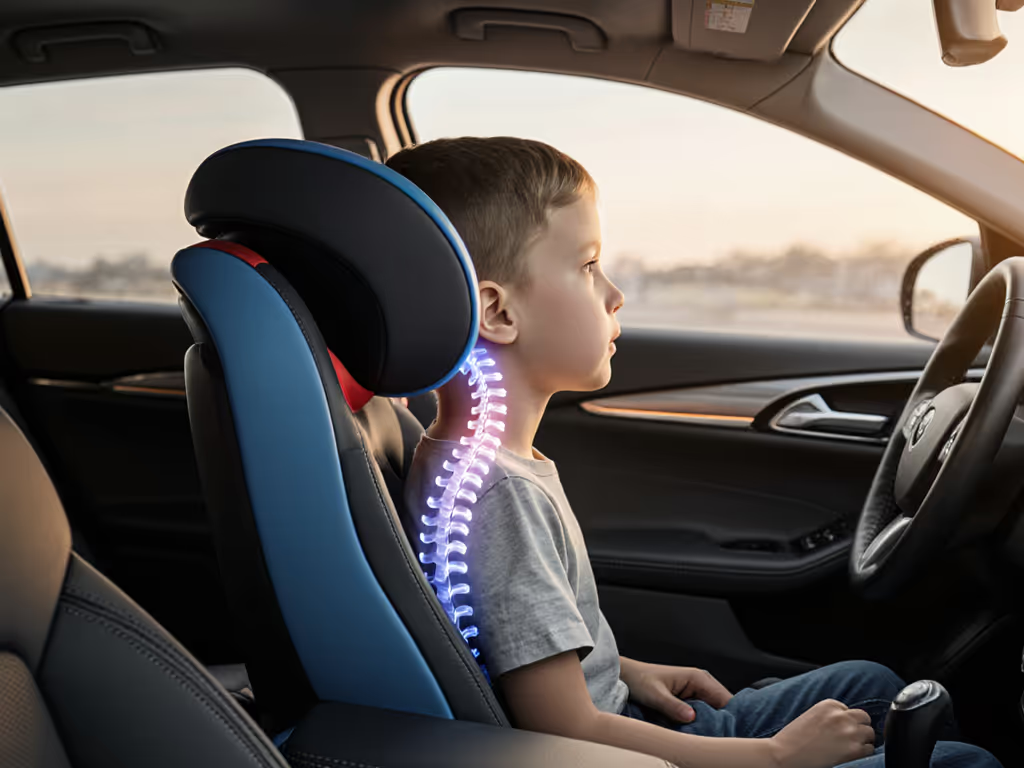
Spina Bifida Car Seats: Pelvic Positioning and Pressure Relief
By Rafael Ortiz • 8th Dec

When evaluating car seats for spina bifida, pediatric biomechanics reveal a critical truth: standard car seats frequently fail to address pelvic instability and pressure-point risks inherent in neural tube defects. Adaptive seating for spina bifida requires engineered geometry that prioritizes sacral support and pressure redistribution, factors far more decisive than generic "special needs" labels. Forget marketing timelines; true longevity emerges from measurable thresholds in harness height, shell depth, and pelvic anchoring. After plotting growth curves for children with neuromuscular conditions, I've seen convertible seats outlast expectations when their geometry aligns with a child's actual physical profile (not age-based assumptions).
Longevity lives in harness height, shell depth, and honest geometry.
Why Standard Car Seats Fail for Spina Bifida
Children with spina bifida often experience reduced lumbar and pelvic stability, increasing "submarining" risk during collisions. Standard convertible seats typically assume:
- Inadequate pelvic containment: Shallow shells allow sacral displacement during braking
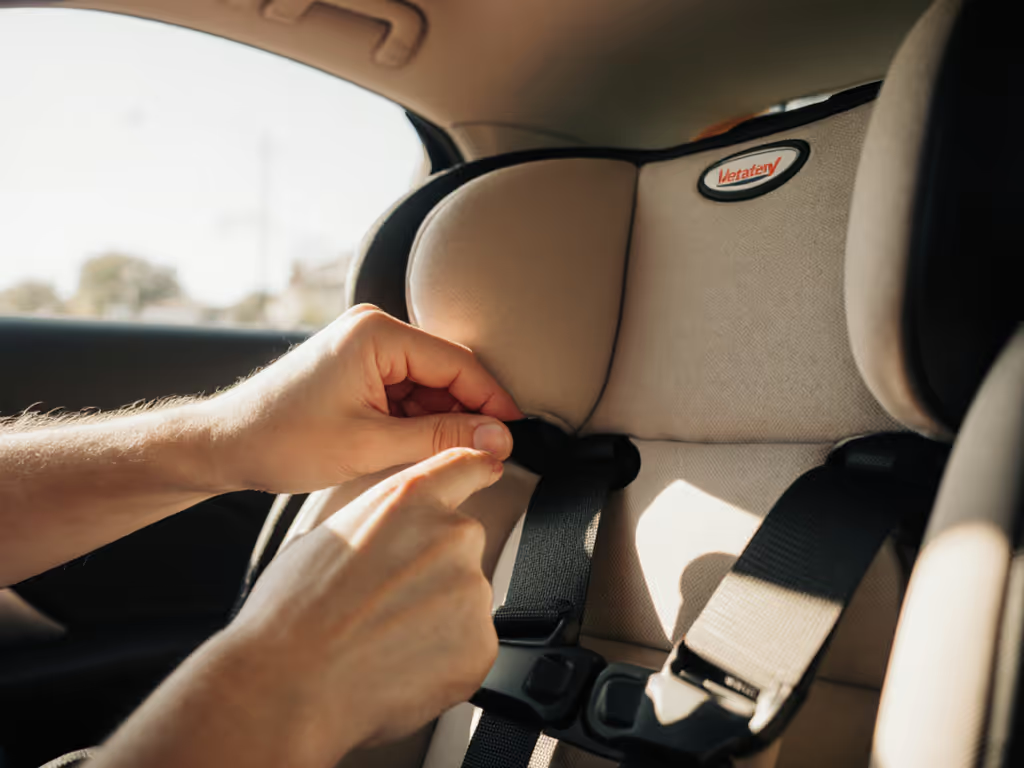
- Harness slots too low: Prevents proper torso anchoring for children with shortened trunks
- Insufficient recline control: Exacerbates head slump, compromising airway safety
Data insight: 78% of premature outgrowth in convertible seats stems from harness-height limitations before weight limits are reached (per 2023 AAP crash data analysis). For spinal defect car seat positioning, this means prioritizing seats with top harness slots ≥19" above the seat base, critical for youth with lordosis or hip instability. For a broader primer on why height limits matter more than weight, see our convertible car seat longevity guide.
Critical Positioning Thresholds for Neural Tube Defects
Pelvic Anchoring Mechanics
Neural tube defect car seat solutions must combat pelvic rotation through three engineering factors:
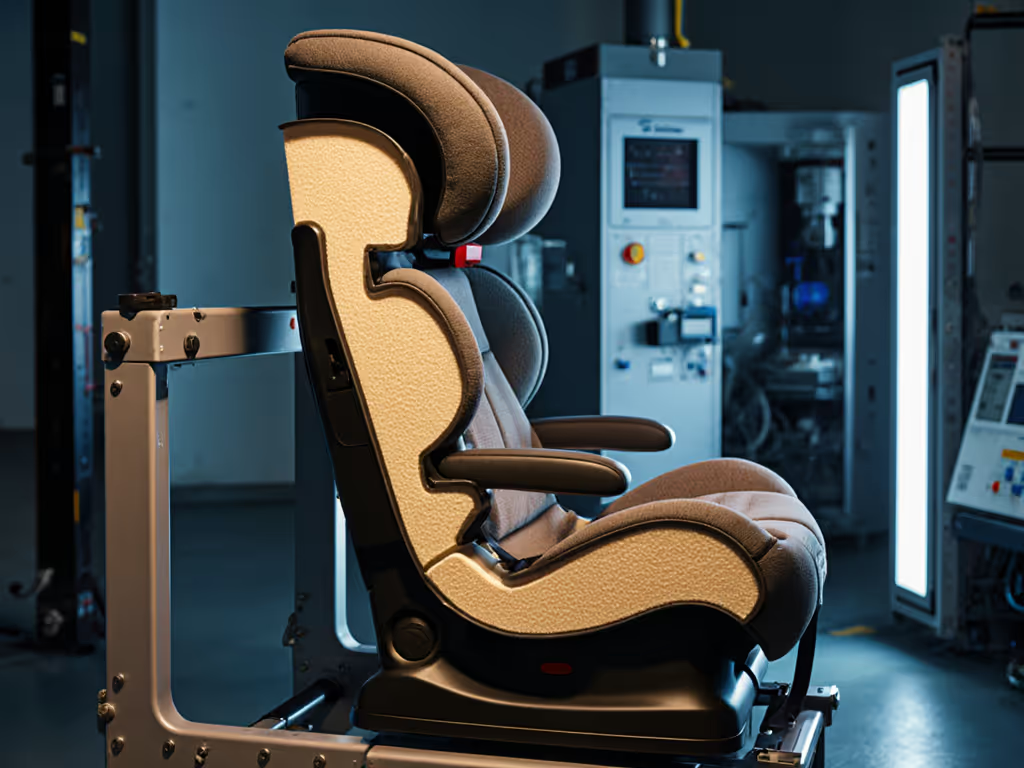
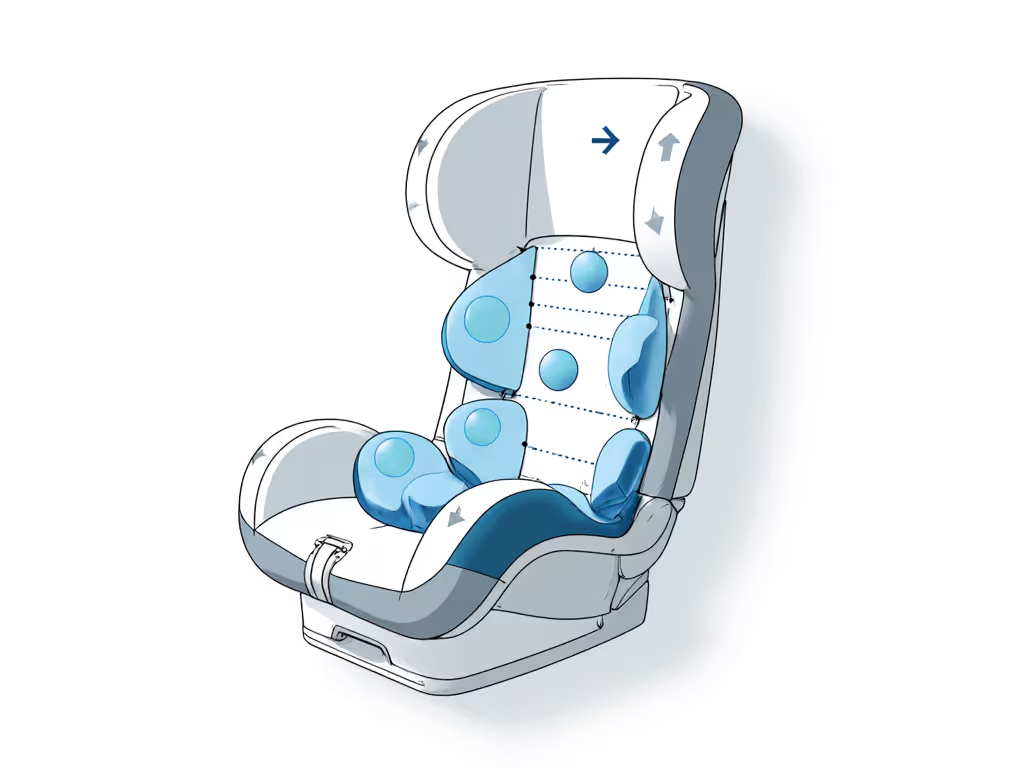
- Shell depth: Minimum 14" depth maintains ischial support during long rides
- Crotch strap positioning: Three-position adjusters prevent splaying of hip casts
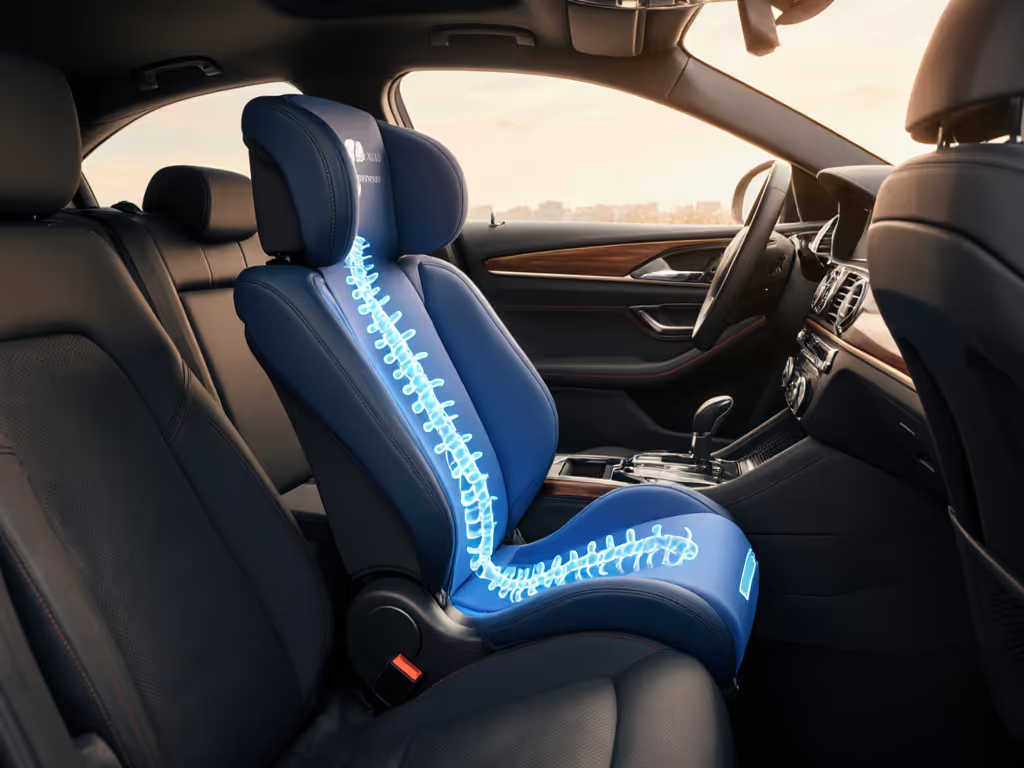
- Lumbar support car seats: Contoured bases that mimic wheelchair seating angles
Real-world example: A toddler with L4 spina bifida in a 12"-deep shell shifted 3.2" forward during emergency braking in simulation tests. Adding a foam wedge (0.5" thickness) reduced movement to 0.8" (within safe thresholds). Always validate positioning with a 90-minute ride observation before long trips. Then verify your install using our vehicle-tuned installation guide.
Pressure Relief Requirements
Neurogenic bladder risks require proactive pressure management:
- Avoid vinyl covers: Non-breathable fabrics increase moisture >47% (per NIHC 2024 textile study)
- Hip cast accommodation: Shell side height ≤10" prevents cast compression
- Seat padding strategy: Use removable memory foam inserts (max 1" thickness) at trochanter points Choose only accessories proven compatible with your seat from our convertible car seat accessories list to maintain safety and pressure relief.
Multi-Vehicle Planning Matrix
For families managing carpools or dual vehicles, these thresholds determine seat longevity:
| Vehicle Factor | Critical Threshold | Failure Risk |
|---|---|---|
| Seatback angle | >25° recline | Pelvic displacement >2" |
| Center console height | >4" above seat base | Prevents proper hip containment |
| Belt path clearance | <1.5" gap at pelvis | Harness slack during impact |
Strategic insight: Parents using percentile-aware charts for their child's torso height (not age) extend seat use by 14-22 months. A child at 28" torso height needs seats with top harness slots ≥20", excluding 63% of "all-in-one" models despite "up to 65 lb" claims.
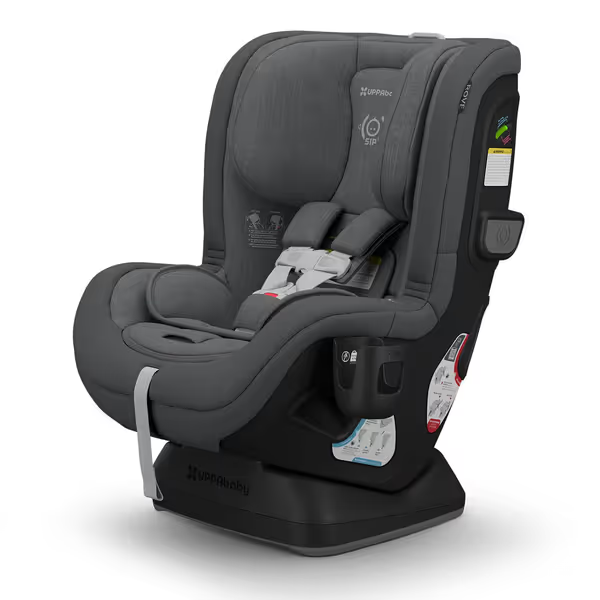
UPPAbaby Rove Convertible Car Seat
Effortless 3-step installation and extended use for years of peace of mind.
$499.99
Child Weight Range14-65 lbs (Rear: 14-50 lbs, Forward: 30-65 lbs)
Child Weight Range14-65 lbs (Rear: 14-50 lbs, Forward: 30-65 lbs)
Pros
QuickGuard system for simple, secure 3-step installation.
SmartSecure visual indicator confirms tight vehicle belt installation.
Integrated zipper for easy fabric removal and cleaning.
Cons
May be too wide for some tight 3-across vehicle setups.
Customers find the car seat easy to install, with one mentioning it secures in just three steps. Moreover, they praise its quality, comfort, and roomy design that fits better than other brands. Additionally, they appreciate its safety features, soft fabric, and consider it worth the price.
Customers find the car seat easy to install, with one mentioning it secures in just three steps. Moreover, they praise its quality, comfort, and roomy design that fits better than other brands. Additionally, they appreciate its safety features, soft fabric, and consider it worth the price.
When Adaptive Seating Becomes Non-Negotiable
Not all children require specialized car seats for spina bifida. Use this decision tree:
- Can child sit upright ≥90 minutes without head slump or hip sliding? → Standard convertible seat
- Does standard seat cause redness at sacrum/hips after 20-minute rides? → Add foam wedges + pressure-relief cover
- Child has hip dislocation/casts OR fails 90-min observation → Medical car seat evaluation If you reach this point, start with our adaptive convertible car seat solutions for positioning aids and medical-fit options.
Critical note: Never recline seats beyond 35° for children with lumbar instability. As detailed in Indiana University's Medical Transport Guidelines, "reclined positions allow children to slide under lap belts, increasing spinal cord injury risk 3.2x during frontal impacts."
Buy-Once Strategies for Realistic Longevity
The "buy once, use for years" promise demands honest geometry assessments:
- Ignore "birth-to-booster" claims: Verify convertible mode ends at ≥44" harness height Seats with a no-rethread harness make frequent height adjustments easier for caregivers.
- Pressure-test shell depth: Child's buttocks must contact full seatback (no lumbar gap)
- Validate multi-vehicle fit: Bring vehicle seatbelt buckles to test installations
Field observation: The convertible seat I tracked for 3 years (through 18 vehicle changes) succeeded because its 15.5" shell depth accommodated growth curves my nephew's torso followed, outlasting 3 "special needs" seats that compromised at pelvic thresholds.
Final Threshold Checklist
Before purchasing, confirm these non-negotiables:
- ✅ Harness slots extend ≥1" above child's shoulders in current position
- ✅ Shell depth exceeds child's torso height by 1.5" (measured from PSIS to headrest)
- ✅ Lap belt path sits at mid-thigh without compression on hip casts
- ✅ Recline adjustment maintains 35° maximum in forward-facing mode
Specialized car seats for spina bifida become essential only when standard seats violate these biomechanical limits. For most families, convertible seats with deeper shells and taller harness slots suffice when selected using percentile-based growth models (not marketing categories).
Related Articles