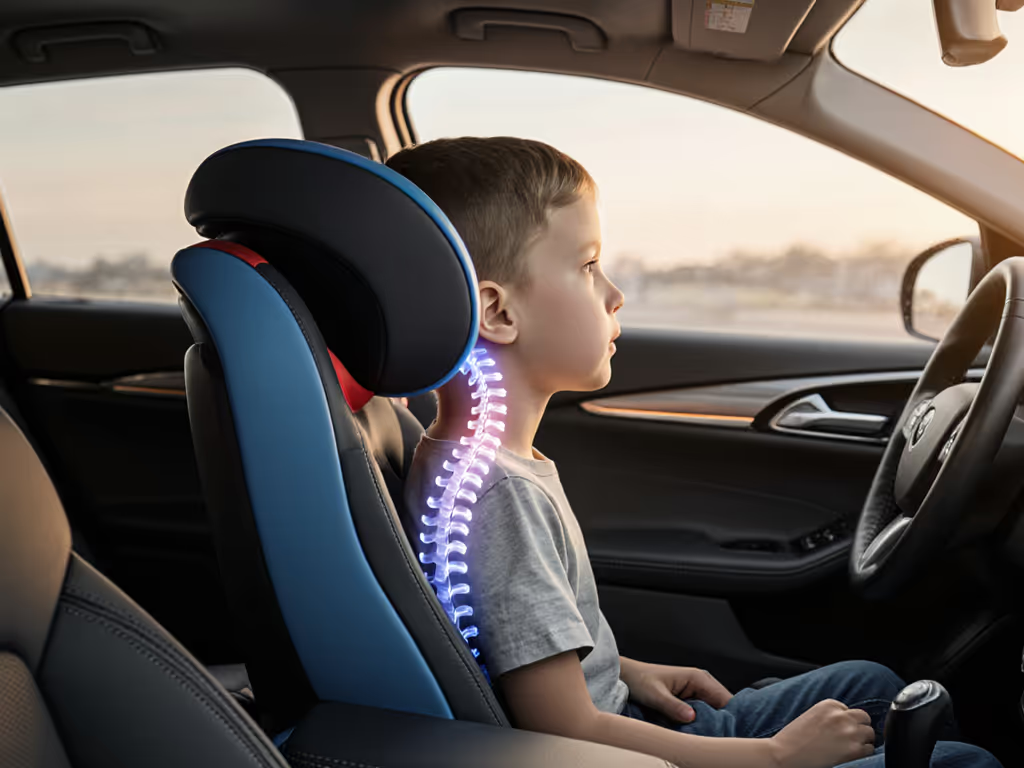
Car Seat Lifespan: Modern Vehicle Safety Impact
By Aisha Khan • 31st Mar
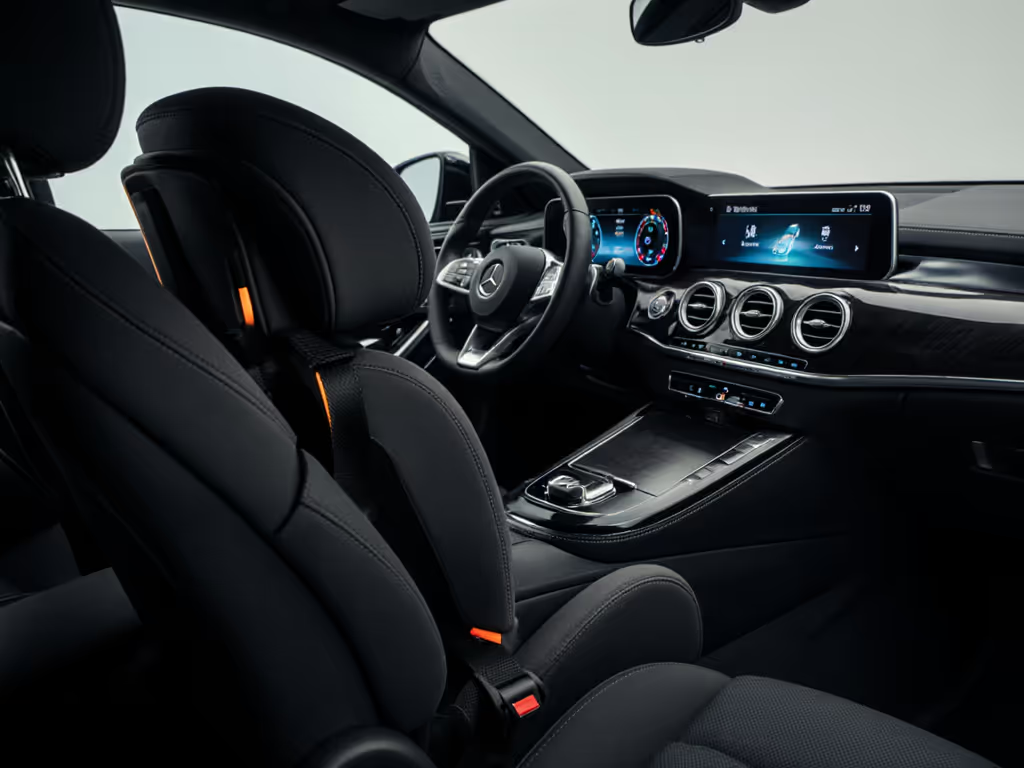
Your new car arrives with lane departure warnings, blind spot monitoring, adaptive cruise control, and automatic emergency braking. Meanwhile, you're installing a car seat designed to protect your child in a collision. What you may not realize is that car seat vehicle safety system integration has become essential to understanding how both protect your family, and how they sometimes compete for space, visibility, and safe performance. For a deeper dive into preventing system conflicts, see vehicle safety tech & car seats. Modern cars aren't simply bigger or faster; they sense, alert, and respond. Car seats must coexist with these systems while maintaining their core function. Understanding this shift is the difference between a decade of confident, secure travel and years of frustration, discomfort, or missed safety benefits.
The Problem: Misaligned Safety Innovations
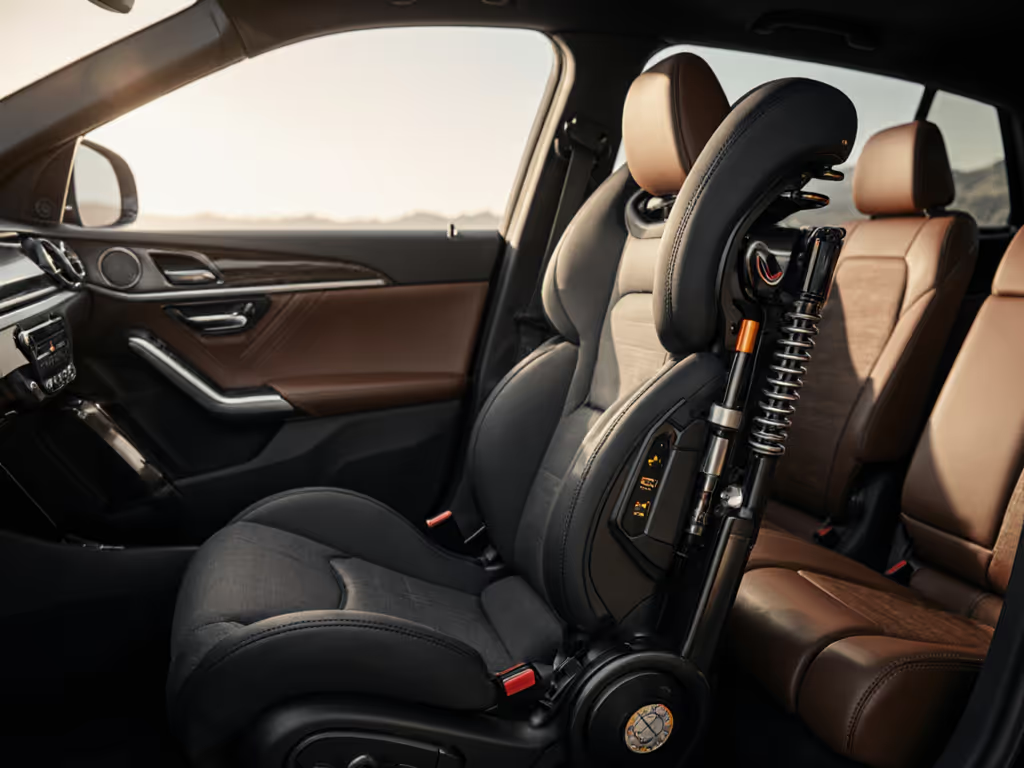
For decades, car seat safety focused on crash performance: harness strength, shell integrity, energy absorption. Installation was mainly a physical puzzle, with belt routing, anchor placement, and recline angle. But contemporary vehicles have layered in a new dimension: active safety systems that use sensors, cameras, and radar embedded in dashboards, door pillars, and bumpers. A blind spot camera mounted on your vehicle's rear pillar? That can be millimeters from where the car seat shell sits. An automatic emergency braking system calibrated to detect obstacles at child-height? It may misread a forward-facing car seat as an object and trigger false alerts or, worse, engage brakes unexpectedly during parking.
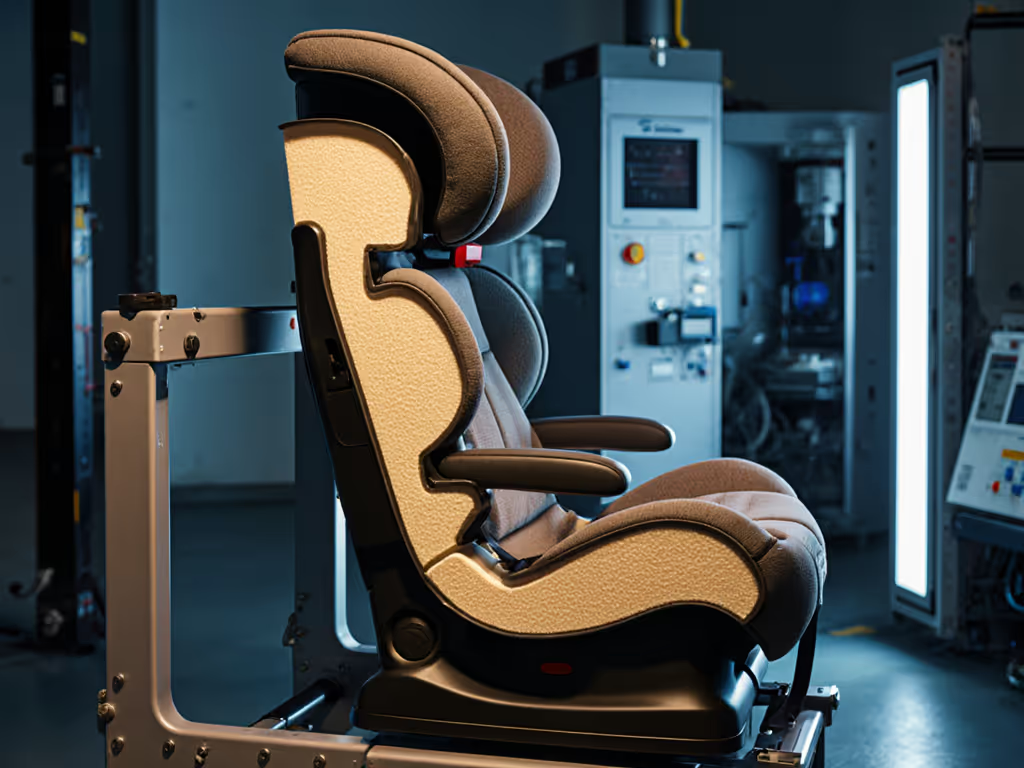
The conflict isn't intentional. Carmakers and car seat manufacturers each optimize for their domain. Modern car technology compatibility with child restraint systems was not originally baked into either industry's design playbook. A 2024 sedan offers integrated safety features that a 1974 testing bench (the baseline used for frontal-impact certification until recently) could never have anticipated. Parents now inherit an integration problem: they must ensure their car's safety systems and their car seat's design work in harmony, not at odds.
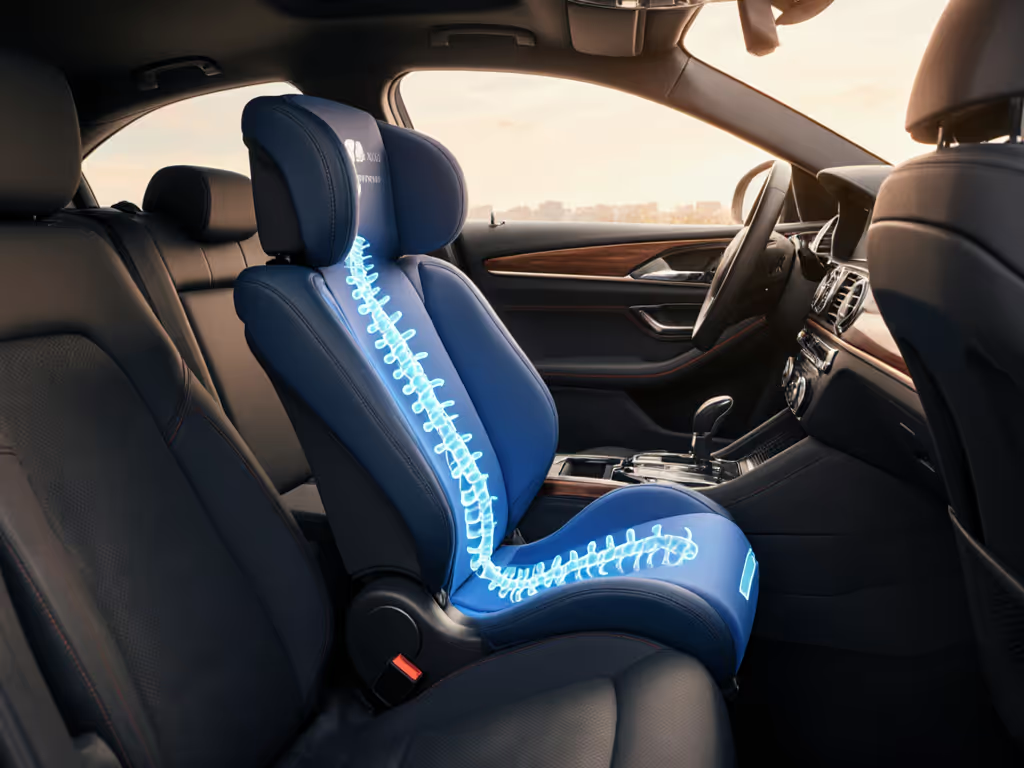
Meanwhile, real-world data shows the stakes are high. If you're unsure how long seats are safe to use, start with our car seat expiration guide. According to the National Highway Traffic Safety Administration (NHTSA), misalignment between vehicle seat geometry and car seat angles occurs in nearly 42 percent of installations. Adding modern vehicle architecture, including nonremovable headrests, deep bucket seats, sloped cushions, and forward-anchored seat belts, amplifies that friction. Comfort, too, becomes entangled: a child sleeping upright in a poorly reclined seat against an inflexible headrest isn't just uncomfortable; they're at higher risk of positional asphyxia during long drives. Comfort grows from breathable fabrics, quiet design, and kinder chemistry, and also from seats that fit your car.
The Agitation: Hidden Conflicts and Daily Friction
Consider a common scenario. Your vehicle has an integrated blind spot camera on the rear pillar. The car seat's shell extends into that sensor's field. During installation, the shell sits flush and level, correct by every traditional standard. But the camera's field is now partially obscured. Your backup safety system is compromised, and you may not know it. Or your adaptive cruise control, calibrated for adult-height objects, occasionally hesitates or disengages when your vehicle approaches a car with a rear-facing infant seat installed (which extends backward and alters the vehicle's perceived profile).
Other conflicts are more immediate. Lane departure warnings may false-trigger if a child shifts in a forward-facing seat and their silhouette crosses the lane-marking threshold visible to the car's cameras. Automatic emergency braking, designed to avoid collisions, might engage unexpectedly in parking if the system mistakes a child's movement inside a car seat for an external obstacle. Parents report confusion, frustration, and, crucially, a loss of trust in features they purchased for safety.
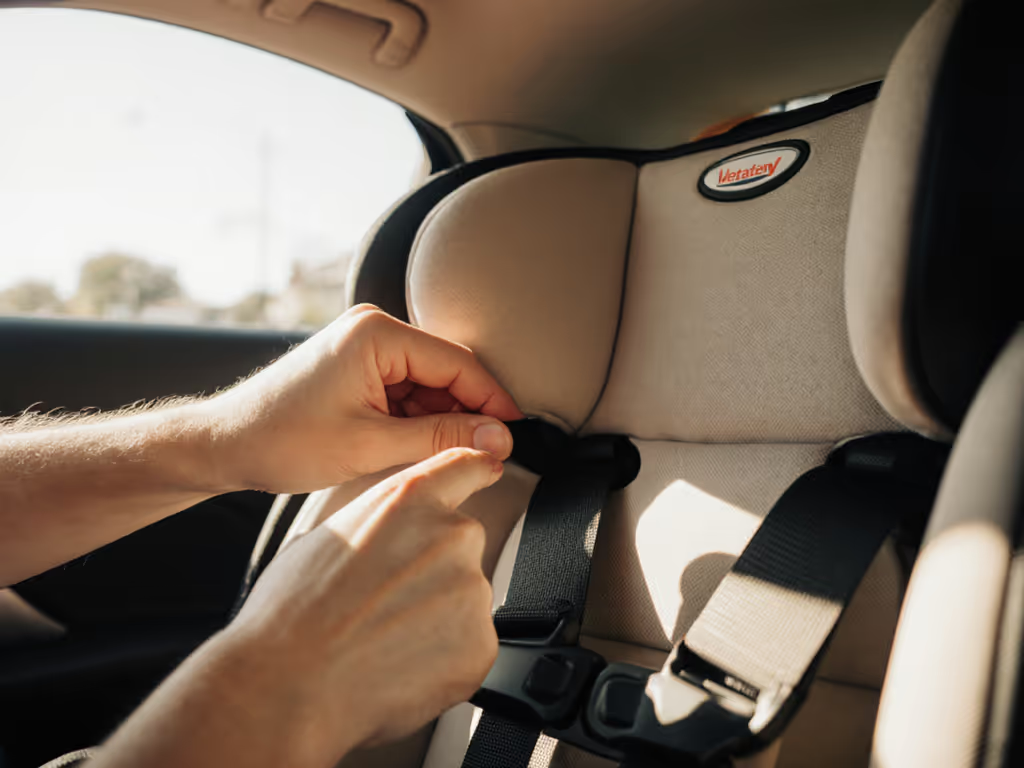
Comfort friction compounds daily stress. You've spent $300-$600 on a highly rated car seat, but it doesn't recline properly in your vehicle's sloped seat, so your child's head slumps to one side during naps. The seat feels too hot in summer because the fabric isn't breathable and traps humidity; your toddler wakes sweaty and irritable, making each car journey a battle. The harness, when threaded to accommodate your car's nonremovable headrest, sits at an awkward angle. You re-thread it daily, or you live with twisted straps. These aren't safety defects; they're ergonomic and material misalignments that manufacturers didn't anticipate for your car.
Children also outgrow seats faster than the marketing promises suggest. A seat promising extended rear-facing to 50 pounds may physically fit your vehicle only until age 2, because your car's seat geometry doesn't support the recline angle required by law. To understand why vehicle angles change what works, read recline mechanics explained. A forward-facing seat with 14 top harness slots sounds versatile, but your child's torso length exceeds usable slots by age 4 due to how your vehicle's headrest interferes. You buy another seat, feeling cheated by promises that didn't account for your specific vehicle-seat-child-growth combination.
The Solution: Modern-First Vehicle-Seat Integration Strategy
Step 1: Understand Your Vehicle's Active Safety Footprint
Before you buy a car seat, map your vehicle's sensor locations. Blind spot cameras, radar modules, forward-facing collision-avoidance sensors, and lane-tracking cameras all have defined ranges and fields. Check your vehicle's manual or contact the dealer to identify where these sensors are positioned. Then follow our vehicle-tuned installation guide to avoid common geometry pitfalls. Ask specifically: Does the rear seat area have any embedded cameras or sensors? Where are backup camera blind zones? Some luxury SUVs have cameras on rear door pillars; many modern sedans have forward radar mounted near the front grille.
Related Articles