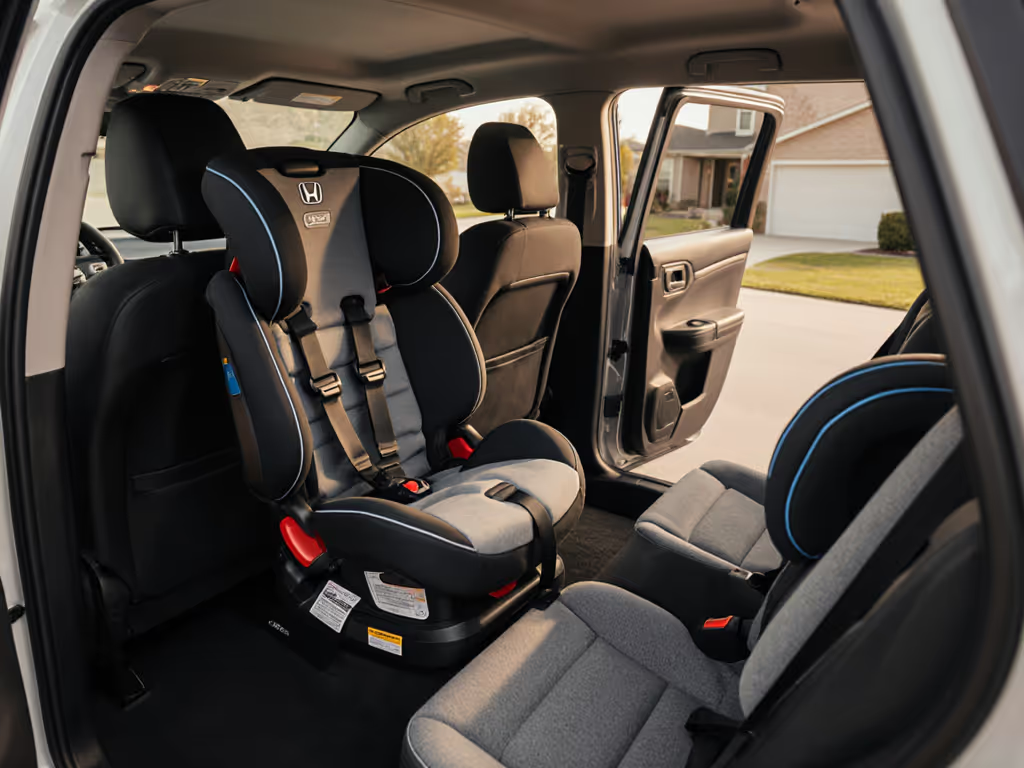
Best Car Seats for Honda CR-V: Fit Guide
By Rafael Ortiz • 27th Mar
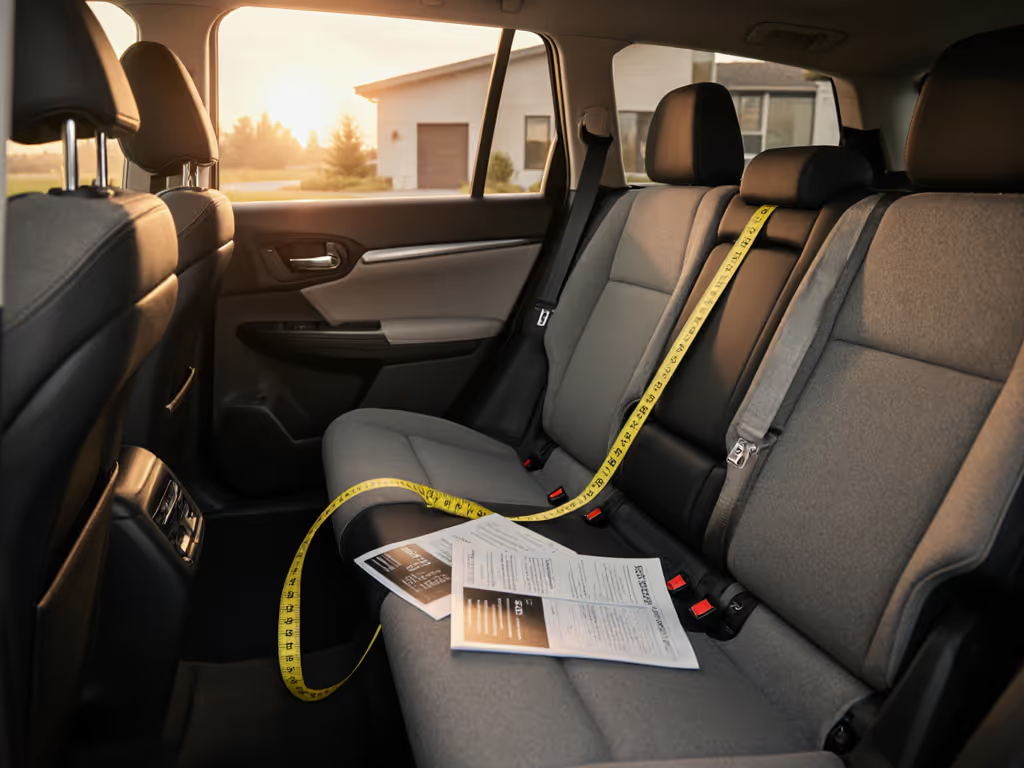
Finding the best car seats for Honda CR-V that truly fit your vehicle and your child's growth pattern requires more than brand names, it demands honest geometry. The CR-V's backseat dimensions are fixed; your child's height, torso length, and developmental stage are not. Understanding how harness height, shell depth, and the CR-V's specific seating architecture interact is how you separate a seat that merely fits from one that serves your family reliably for years.
This guide translates the 2025 Honda CR-V's structural realities into actionable fit criteria, so you can confidently evaluate any Honda CR-V car seat fit scenario, whether you're installing a single convertible, managing three-across, or coordinating multiple vehicles.
What Space Are You Actually Working With?
The CR-V's Backseat Envelope
The 2025 Honda CR-V measures 184.8 inches long overall, with a width of 73.5 inches and a rear headroom of 38.2 inches across most trims. The shoulder room in the rear is 55.9 inches, which is your critical horizontal constraint for multi-seat arrangements. Those numbers matter because they determine how you'll arrange occupants and what "narrow car seats" truly means in context.
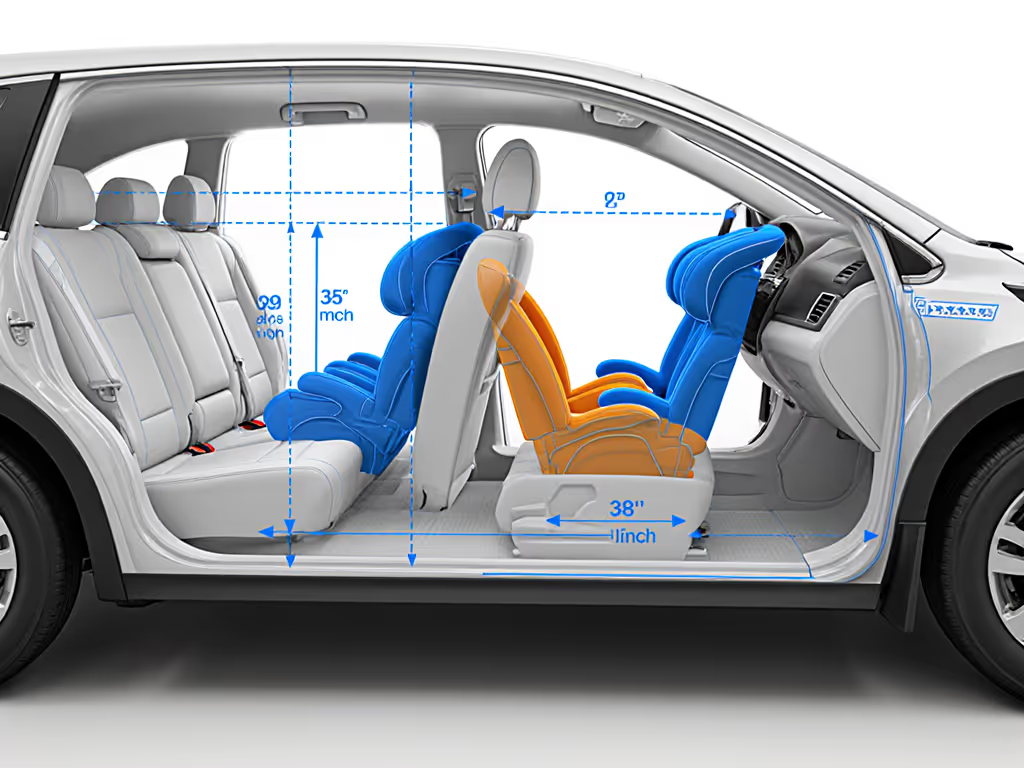
The rear seat length (from the back of the front seat cushion to the rear door) is approximately 35 inches in usable depth (measured from where a forward-facing child's back rests to the front seat). Rear-facing infant seats project backward 27-32 inches depending on the model, which leaves 3-8 inches of clearance to the front seat or door. Forward-facing harness seats typically take 24-28 inches of forward projection. These aren't afterthoughts; they're the geometry that determines whether your first-choice seat actually reclines safely or sits jammed at an unsafe angle.
Rear Headroom and Out-of-Position Risk
With 38.2 inches of rear headroom, the CR-V accommodates most convertible seats and harness seats without the child's head touching the ceiling, provided the seat is installed at the correct recline angle. A seat installed too upright (due to a sloped CR-V cushion or an over-tight installation) can cause the child's head to slump forward during sleep, a recognized out-of-position risk that no amount of marketing claims can fix. Conversely, a seat reclined too far backward may hit the rear window or door panel.
FAQ: Critical Fit Questions for CR-V Owners
Can You Fit Three Seats Across in a CR-V?
Yes, but with significant caveats. For model-specific three-across solutions in larger cabins, see our SUV and minivan 3-across fit guide. The CR-V's 73.5-inch width translates to roughly 55.9 inches of usable shoulder room in the back. A standard convertible seat is 29-31 inches wide at the base. Mathematically, 55.9 ÷ 29.5 = 1.9 seats comfortably. In practice, families achieve three-across by:
- Using narrow car seats for CR-V: models designed to occupy 28 inches or less (width at the widest point).
- Accepting that the middle seat will feel snug and will require a narrow booster or a slim harness seat.
- Confirming that the LATCH anchors on the outer seats don't interfere with the seat belt of the middle seat and that tether anchors are accessible.
Many modern convertibles marketed as "slim" still measure 29-30 inches, which means two across the back with a center booster is more realistic than true three-across harness seats. If you're planning a second or third child, measure your top candidates in your CR-V before purchase. A scenario matrix (width × depth × headroom) beats guesswork every time.
What Installation Challenges Are Unique to the CR-V?
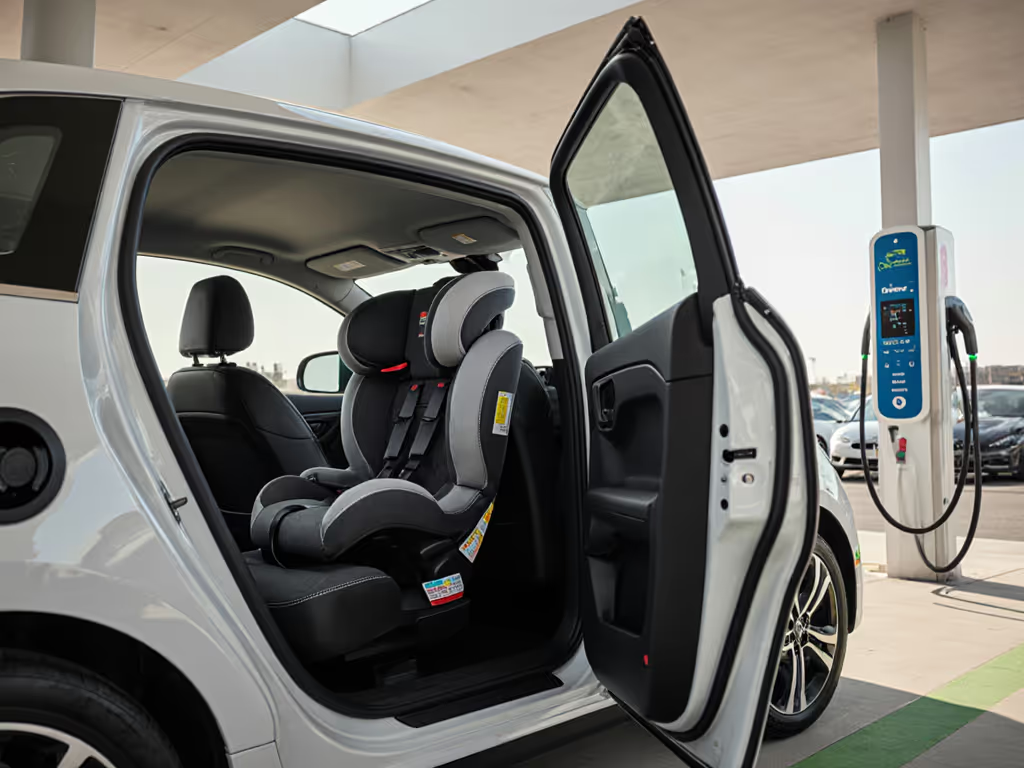
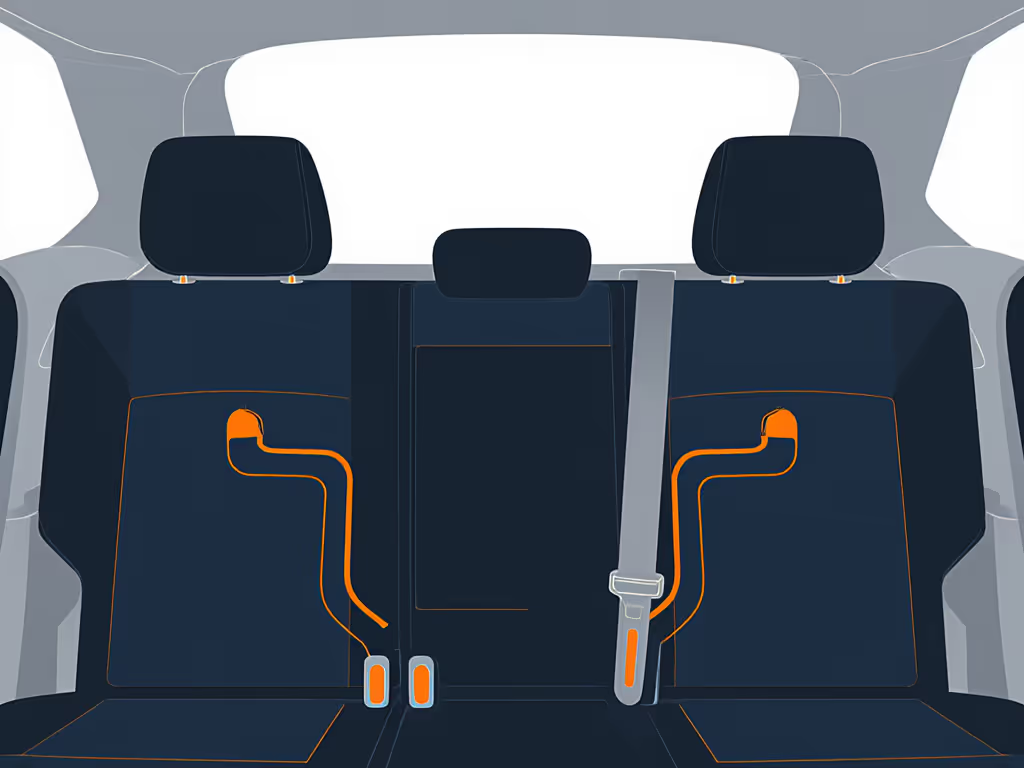
LATCH Anchor Spacing: The CR-V's LATCH anchors (located in the crease between the cushion and seatback) are spaced approximately 10-11 inches apart on the outboard seats and 9 inches on the center. Some harness seats have connectors that are stiff or wide, making it difficult to attach both simultaneously without pushing the seat sideways. Test the Honda CR-V latching system compatibility by attempting to thread both connectors and tighten without the seat rolling or tilting.
Top Tether Anchor Access: The CR-V mounts tether anchors on the rear window deck (behind the rear seat, above the door). If you're using a seat with a rigid or angled load-leg (an anti-rebound feature that extends downward), confirm it doesn't block the tether strap path or rest at an unsafe angle. This is especially critical for forward-facing installations where you're likely to use both tether and a load-leg.
Seat Belt Stalk and Buckle Position: The CR-V's rear seat belt is routed through a seatback-mounted stalk, and the buckle hangs on the outboard side of each seat cushion. Depending on your chosen car seat's belt path channel, the buckle may rest outside the fabric, making it awkward to latch, or the stalk may intrude into the seat's harness slot opening. This is a real-world nuisance that doesn't show up in spec sheets but generates daily friction.
Recline and Sloped Cushion: The CR-V's rear cushion slopes slightly rearward by design, for drainage and comfort. An infant seat installed per the manufacturer's recline guide (typically 40-45 degrees from horizontal) will naturally tilt backward slightly. If you over-tighten the installation, you'll fight the cushion's slope and end up with an angle that's too upright. If you leave it loose to follow the slope, you risk excessive movement. The solution is precise angle measurement (use a recline angle indicator or level) rather than feel.
How Do You Ensure a Convertible Seat Stays Relevant as Your Child Grows?
This is where percentile-aware charts and harness height become non-negotiable. A convertible seat's longevity is determined by two outgrowth thresholds: height (for harness slot alignment) and weight. Most convertibles offer 5-7 harness slot positions, spanning from 18-19 inches of torso height (at the lowest slot) to 33-35 inches (at the highest).
A child at the 50th percentile for height outgrows standard harness slots around age 5-6 years. A child at the 75th percentile may outgrow by age 4-4.5 years. A child at the 25th percentile might use the seat until age 7-8. The difference isn't trivial: it's 3-4 years of usable life, or a second child's entire seat cycle.
To model this for your family:
- Plot your child's height percentile on a growth chart (CDC or WHO).
- Identify the target seat's highest harness slot in inches (e.g., 34 inches).
- Cross-reference your child's projected height at key ages (3, 4, 5, 6 years) using a growth calculator.
- Calculate the likely age of outgrowth by torso height.
- Confirm that your child won't exceed the seat's weight limit before reaching the harness height threshold (usually 65-85 lbs, so rarely the limiting factor).
Longevity lives in harness height, shell depth, and honest geometry. A seat advertising "newborn to booster" sounds future-proof until you realize its highest harness slot is only 32 inches, which your tall child will outgrow in three years. Conversely, a seat with 34-35 inch top slots and a shell depth of 20+ inches (to support extended rear-facing) may span four or more years.
What About Extended Rear-Facing in a CR-V?
The CR-V's rear legroom is sufficient for extended rear-facing (ERF) from birth through age 3-4 for most children. The front-seat-to-rear-seat distance is roughly 35 inches; an ERF convertible projects 27-30 inches backward, leaving adequate clearance without front-seat intrusion. However, comfort matters: your child's feet may rest near or touch the front seat, especially after age 2. This isn't unsafe, but it can prompt early forward-facing requests. To stay rear-facing as long as is safely possible, read our rear-facing height limits guide.
Seats with recline-angle flexibility (offering, say, three rear-facing positions) allow you to find a compromise: slightly more reclined to extend foot clearance, still rear-facing and compliant with guidance that supports ERF until at least age 2 and beyond if the seat's height limit allows.
How Do You Handle Multiple Vehicles or Carpools?
The challenge here is that a single convertible is often heavier (16-20 lbs) and more complex to install than an infant bucket or a compact travel seat. Installing and reinstalling it daily across two vehicles creates fatigue, increases installation error, and may discourage proper use.
Scenario matrices help:
| Scenario | Primary Seat | Secondary/Travel Seat | Notes |
|---|---|---|---|
| One car, one parent | Full-size convertible, CR-V | None | Install once; use until outgrowth. |
| Two cars, one child | Convertible, CR-V (primary) | Lightweight travel seat or bucket, second vehicle | Easier to duplicate a simple bucket installation than a convertible. |
| Three cars or shared custody | Convertible, CR-V | Compact harness seat, secondary car; lightweight booster, rental/taxi | Balance complexity: hardest setup in primary car, simpler solutions in secondary venues. |
| Carpool or nanny transport | Convertible in family car | Convertible in secondary car OR slim-profile harness seat | Dual convertibles are expensive but ensure consistency; alternatively, one convertible + one dedicated harness seat. |
The CR-V's size makes it a natural anchor for a permanent convertible installation. Smaller vehicles (compact sedans, hatchbacks) are better suited to lighter travel seats that install via seat belt in seconds.
CR-V Car Seat Installation Guide: Step-by-Step Principles
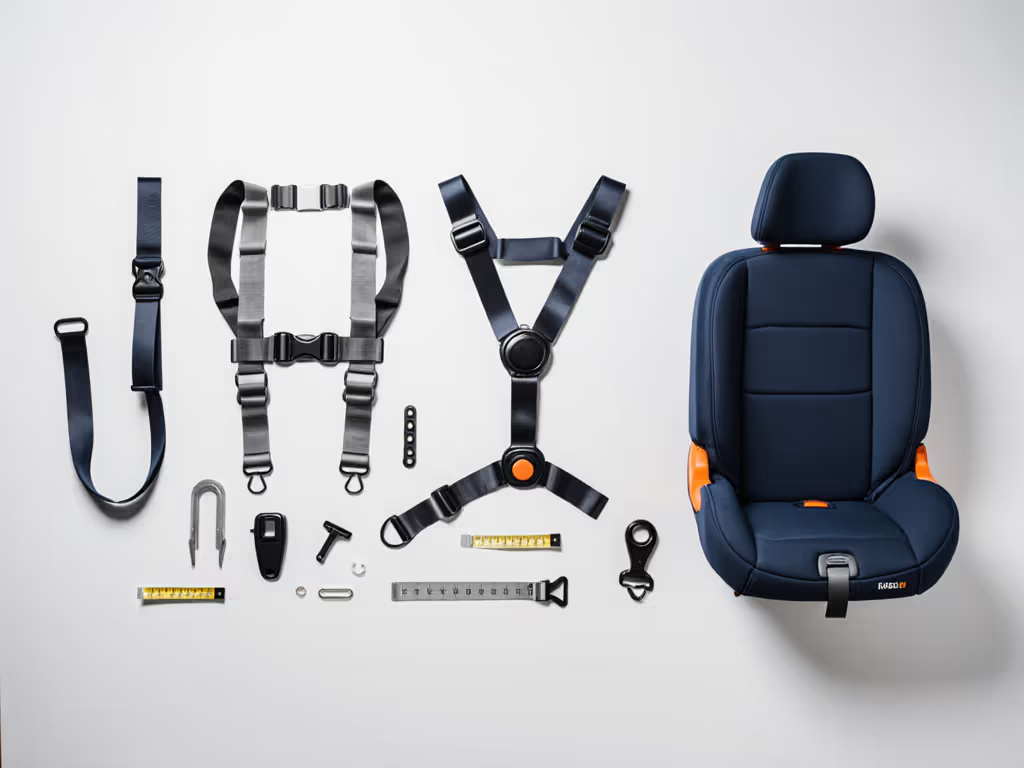
Installation error is the number-one safety risk, more common than defective seats. For a deeper walkthrough with photos and vehicle-specific tips, use our vehicle-tuned installation guide. Here's how to achieve a tight, repeatable install in your CR-V:
-
Select the seating position: Outboard seats are preferred for stability. The center seat is an option for narrower seats but offers less protection in side impacts and may be uncomfortable for longer trips.
-
Measure and test the angle: Use a recline angle indicator (or a smartphone app if you trust its calibration). Aim for the manufacturer's specified angle (typically 40-45 degrees from horizontal for infant positioning, closer to 45-50 degrees for forward-facing). Adjust until the angle is correct, accounting for the CR-V's cushion slope.
-
Install via LATCH or seat belt, not both. LATCH is simpler for repeated installs; seat belt allows tighter leverage if the seat is difficult to install. LATCH is rated for up to 65 lbs combined (seat + child); beyond that, seat belt is mandatory.
-
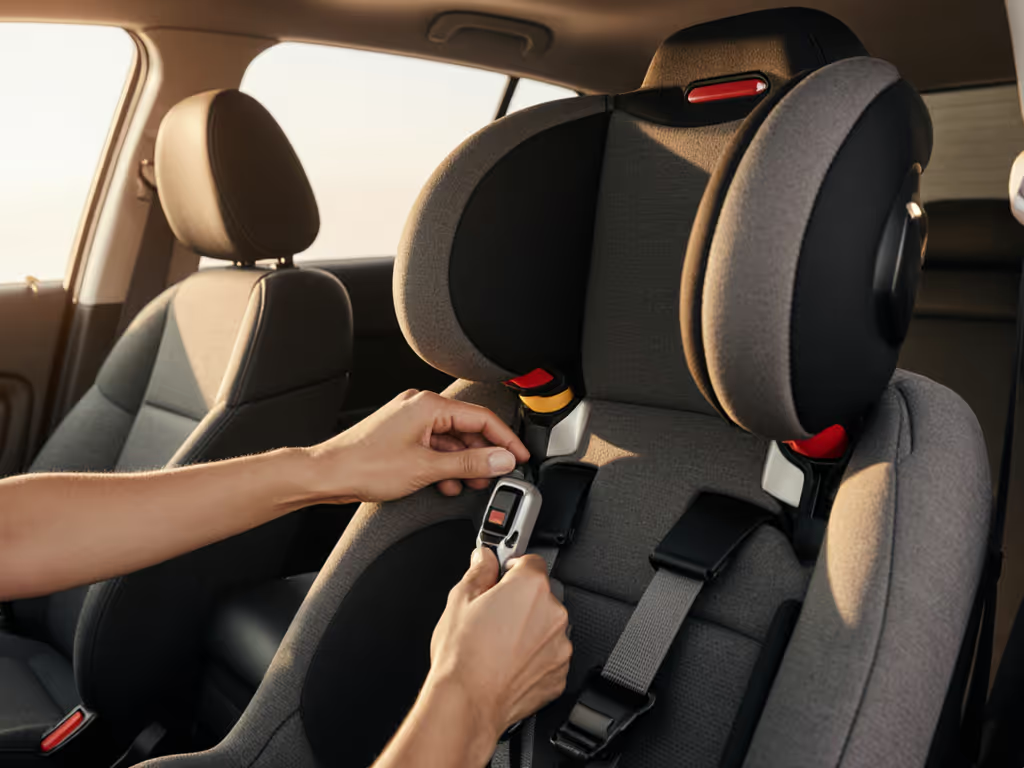
Tighten to immobility: The seat should not slide side to side or rock front to back when you grab it and apply firm pressure. "No movement" is the standard, not "a little wiggle is OK."
-
Route the harness (if forward-facing) at or slightly above the child's shoulders. Ensure harness straps are flat before buckling; twisted straps are a leading source of out-of-position injuries.
-
Confirm tether: Attach the top tether and tighten until snug. The tether doesn't hold the seat in place; it prevents the seat's top from pitching forward in a crash.
-
Document and photograph: Take a photo of your installation (especially the angle, belt path, and tether attachment) so you can replicate it after cleaning, travel, or if the seat is reinstalled by another caregiver.
Real-World Fit Considerations by Growth Stage
Newborn to 12 Months (Rear-Facing Infant Mode)
Most convertible seats accommodate newborns at their lowest harness slot (16-18 inches torso height). The CR-V's headroom and depth are generous at this stage. Comfort priorities: a recline that doesn't induce head slump, padding that distributes pressure evenly, and straps that don't dig into the neck.
12-24 Months (Transition and Extended Rear-Facing)
Your child's torso length grows roughly 1-1.5 inches per year at this age. Harness slot adjustments become more frequent. The CR-V's 35-inch front-seat distance remains adequate; however, your child's feet may begin to rest on or near the front seat. This is normal, not a safety issue. If your child resists rear-facing due to boredom or discomfort, extended rear-facing is still the safer choice, but practical comfort (tray tables, mirror toys, window shades to prevent boredom) helps.
2-4 Years (Forward-Facing Harness)
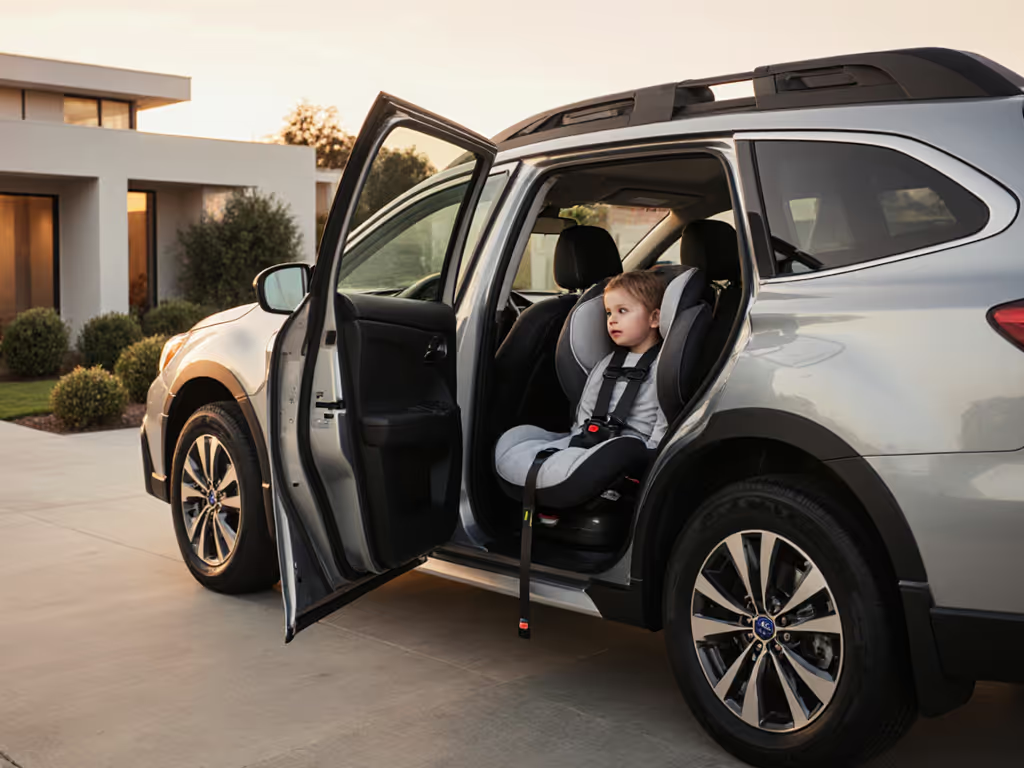
Transition to forward-facing when your child meets the seat's height or weight minimum (usually 35-40 lbs and 38+ inches for most convertibles, though best practice is to stay rear-facing as long as the seat allows). In the CR-V, forward-facing harness seats project 24-28 inches forward from the seat back, leaving 7-11 inches to the front seat. Confirm this clearance in your specific CR-V and with your chosen seat; if you have a long-torso child or a seat with an aggressive forward angle, test the fit beforehand.
Daily usability matters here: your child will buckle in and out multiple times a day. Harnesses that require complete re-threading after each use create frustration; look for seats with a headrest-integrated harness that adjusts with the headrest (one-hand adjustment, no re-threading). See which models excel in daily use in our no-rethread harness roundup. This is where seat selection directly impacts daily peace of mind.
4-6+ Years (Booster Transition)
Your child will outgrow the harness when their torso height exceeds the highest harness slot. For a tall child, this may occur by age 4. For an average or petite child, it may be age 6-7. A seat with high harness slots (34-35 inches) and adequate shell depth delays this transition and maximizes value.
When booster time arrives, the CR-V accommodates both high-back and backless boosters easily. The critical fit issue at this stage is seat belt routing: the CR-V's rear belt must pass through the booster's belt guides and across the child's chest between the shoulder and neck. Confirm that the booster's belt guides are positioned correctly and that a 6-year-old's shoulder height aligns with the belt path (not across the neck or under the arm).
Summary and Final Verdict
The Honda CR-V offers ample backseat space for convertible car seats, extended rear-facing, and multi-seat arrangements, provided you approach the fit with geometric precision rather than brand loyalty or marketing claims.
The CR-V's Fit Strengths:
- Sufficient depth (35 inches usable) for rear-facing infant seats and forward-facing harness seats without excessive clearance compromise.
- Adequate headroom (38.2 inches rear) to accommodate most convertibles installed at safe recline angles.
- Shoulder room (55.9 inches) supports two full-size convertibles side-by-side or three narrower seats across.
- Accessible LATCH anchors and tether points on outboard and center positions.
The CR-V's Fit Challenges:
- Sloped rear cushion requires precise angle measurement to avoid installation errors.
- Seat belt stalk may interfere with harness routing depending on seat design.
- Three-across requires either truly narrow seats or acceptance of a tighter center position.
- Repeated installations across multiple vehicles demand a reproducible methodology, not guesswork.
Your Action Plan:
-
Measure and document: Record the CR-V's rear headroom, shoulder room, and usable seat depth in your specific model year and trim.
-
Plot your child's growth: Use CDC growth data to project outgrowth age for your family's percentile. Select a seat with harness slots that accommodate your projected height range with a 1-2 inch buffer.
-
Test before buying: If possible, visit a retailer with display vehicles or borrow a seat to test-install in your CR-V. Verify angle, tether access, and lateral stability. A 15-minute in-vehicle test prevents months of frustration.
-
Choose depth and harness height as primary specs: Don't prioritize weight limit, fancy fabrics, or "booster-ready" features. Longevity lives in harness height, shell depth, and honest geometry. A seat with 34-inch top slots and 20+ inches of shell depth will serve your family longer than one optimized for lightweight portability.
-
Install once, document always: Achieve a tight, immobile installation using LATCH or seat belt (never both). Photograph the setup for consistency. Re-test after cleaning or travel.
-
Plan for multi-vehicle reality: If you have two cars, consider a convertible in the CR-V (permanent or near-permanent installation) and a simpler travel seat for secondary vehicles. This reduces daily reinstallation friction and lowers installation error risk.
-
Revisit fit at major milestones: At 18 months, 2 years, 3 years, and 4 years, re-measure your child's torso height against the seat's harness slots. Early awareness of approaching outgrowth allows you to plan a transition rather than react in crisis mode.
The CR-V is a forgiving platform for extended harness use and multi-seat households. Your primary responsibility is translating the vehicle's geometry and your child's growth trajectory into informed, repeatable installations. When you do, you'll move from uncertainty into the confidence that comes from knowing your setup is safe, correct, and built to last.
Related Articles