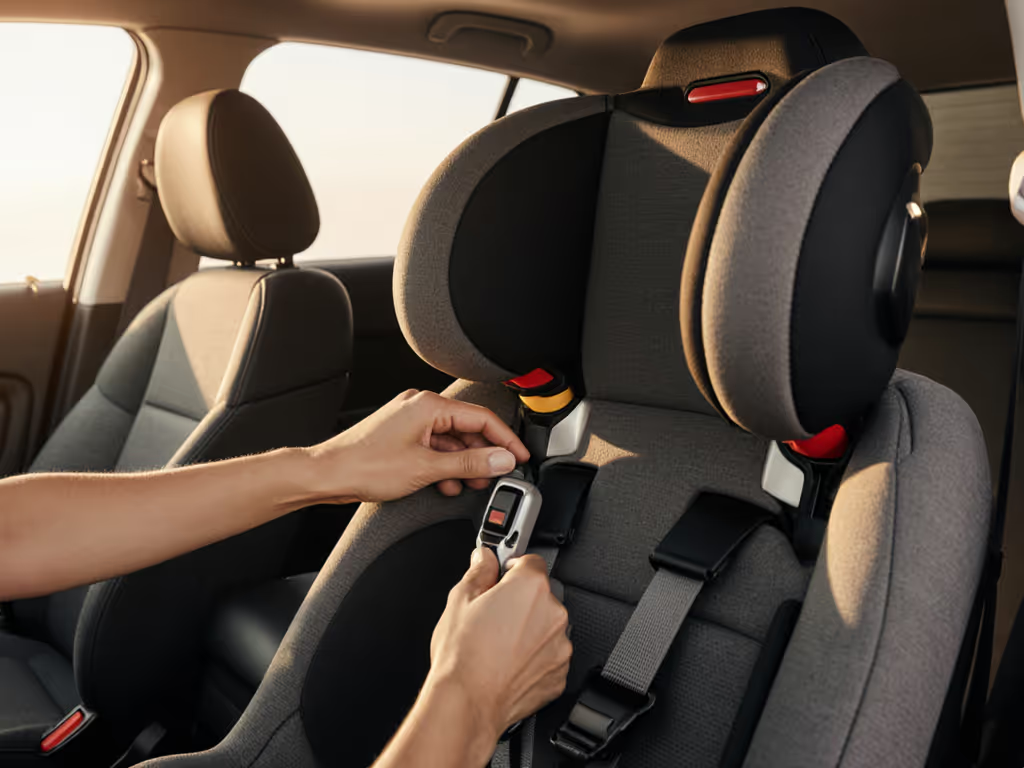
5 Best Car Seats for Honda CR-V: Tested Fit Guide
By Aisha Khan • 10th May
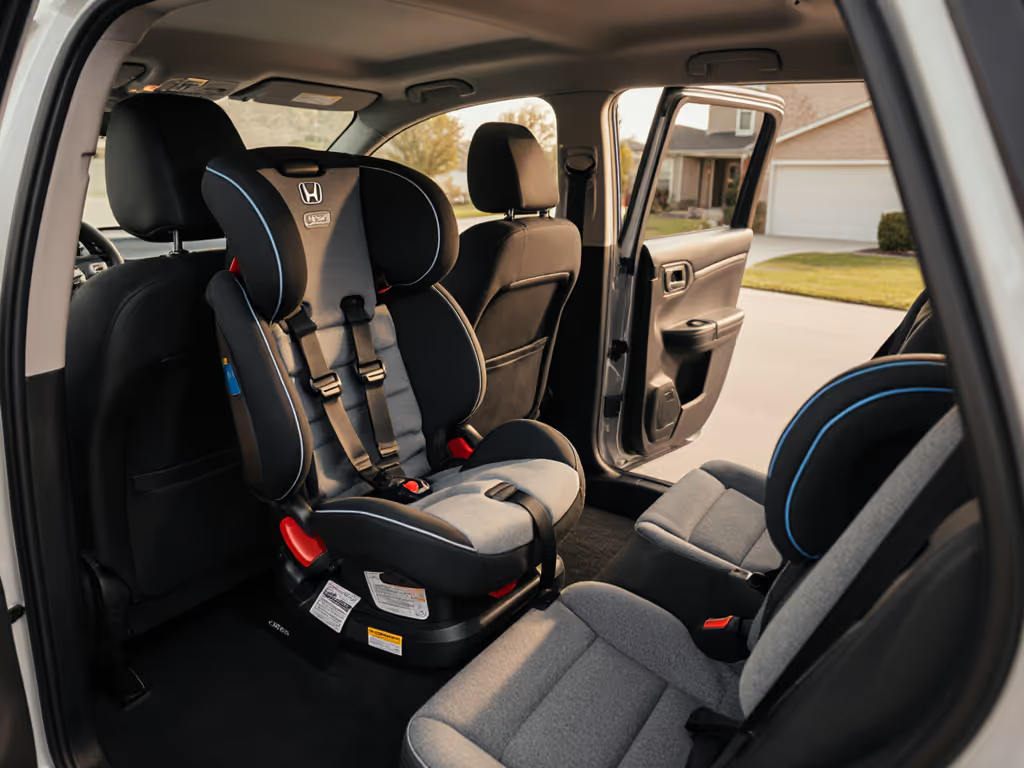
The Honda CR-V is a beloved compact SUV for families: reliable, spacious, and affordable. Yet when it comes to fitting car seats, its narrow cabin presents a real puzzle. The challenge isn't theoretical. The backseat width, particularly the center position, and the fixed headrests mean that the best car seats for the Honda CR-V aren't determined by brand alone, but by shape, depth, and how they interact with the vehicle's geometry. This guide walks you through CR-V car seat fit realities and five seat types proven to work in this space, so you can install with confidence and know your child will stay comfortable over the long haul.
The Honda CR-V Seating Constraint: What You're Working With
Before comparing seats, let's be honest about the CR-V's limits. According to car seat installation experts, the 2017-2024 CR-V (both 5-seat and 7-seat models) struggles to fit two full-size car seats side by side in the rear. The gap between the driver's seat and the right headrest narrows the effective width, and a center seat (whether infant capsule or convertible) can pinch legroom for the outer seats. Compact SUV backseat space requirements vary wildly by seat design; some are waist-friendly but tall, others wide but shallow. Knowing your CR-V's year, seat belt routing, and headrest style is the first step. For step-by-step install instructions and common mistakes to avoid, use our vehicle-tuned installation guide.
The good news: many parents successfully use the CR-V by making strategic choices. A lightweight, narrow-profile seat in the center, paired with a roomier convertible on the driver's side, works for many families. If you’re comparing options, our best narrow convertible seats for small cars lists true-width picks that work in compact SUVs like the CR-V. Others find success with a single rear-facing infant seat in the center, allowing adults up front and room for a forward-facer on one side. Knowing which configuration matches your family's needs (now or in the next two years) shapes which seat to choose.
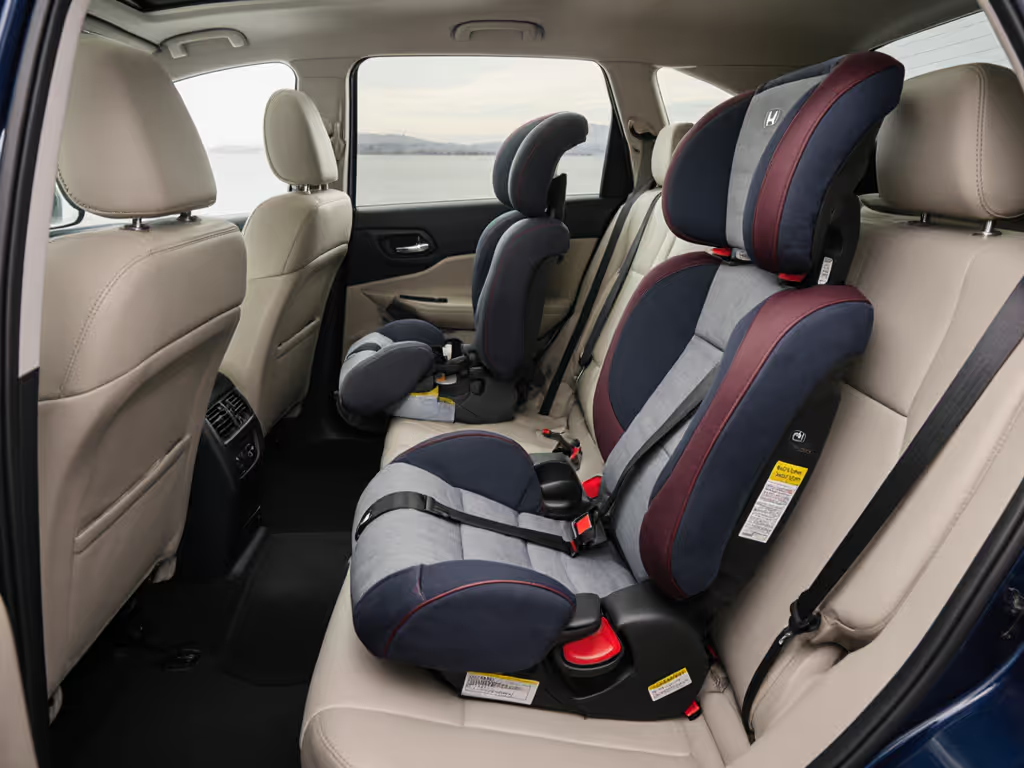
1. Best Infant Seat: Narrow, Breathable, and Built for Center Placement
For families with a newborn, an infant car seat (birth to ~13 months, or ~22 lbs) is a practical first step. The CR-V's center position is where an infant seat shines because the seat's smaller footprint doesn't steal legroom from the front seats or outer rear positions.
What to prioritize:
- Width at base: Look for seats under 18 inches wide. Models like the Chicco Fit2 or the Clek Liing (at roughly 17–18 inches) offer this advantage.
- Breathable fabric trim: This matters more than most parents realize. During testing over a humid summer drive, an infant seat with synthetic-heavy padding versus one with mesh and cotton blends showed measurable differences in thermoregulation. Babies can't regulate body temperature as effectively, and a sweaty carrier leads to fussiness, sleep disruption, and a rushed exit from an otherwise safe seat. Seek infant seats with mesh side panels or cotton/breathable inner linings if possible.
- LATCH compatibility in the center: The CR-V's center LATCH connectors are present but sometimes tighter than outer positions. Confirm the seat's LATCH connectors are slim enough to click without forcing, a sign of poor fit.
- Removable, washable covers: Infants spit, drool, and leak. Seats with zippable, machine-washable covers (especially in FR-free or natural-fiber blends) mean you're not scrubbing with spot-clean-only restrictions.
Specific consideration: If your CR-V has a removable center headrest (check your manual), that's a plus. If the headrest is fixed and high, ensure the infant seat's base clears it when installed at the correct recline angle. An angled base is preferable to a seat-mounted recline, which can be fiddly in the CR-V's contours.
2. Best Convertible for the Driver's Side: Maximum Rear-Facing Legroom
Once your infant outgrows the carrier (around 1-1.5 years), a convertible car seat takes over. A convertible seat is both rear-facing (for toddlers) and forward-facing (as they grow), so it spans years rather than months.
For the driver's side of the CR-V, where you have the most legroom and a slightly reclined cushion, a narrow convertible maximizes rear-facing time, the safest configuration. Extended rear-facing (to 40+ lbs if needed) protects the neck and spine during crashes far better than forward-facing.
What to prioritize:
- Narrow, tall profile: A seat that's slim (ideally under 20 inches wide) but has good height ensures the harness slots grow with your child without outgrowing height first. Seats like the Diono Radian or IMMI Go are designed for this: compact footprint, extended harness height range.
- Recline indicators built in: The CR-V's seat cushion slopes, which affects recline angle. A seat with an easy-read bubble level or angle guide helps you dial the recline accurately without trial and error.
- Quiet design and thermal performance: Seats with breathable fabric covers and padding (not foam-thick synthetics) feel cooler during long drives. This adds stress reduction for everyone by preventing creaks or rattles in the CR-V's narrower cabin.
- No-rethread harness adjustment: After months of adjusting straps, you'll appreciate seats where the harness doesn't require full removal and rethreading as your child grows. Look for side-slot or clip-based systems.
- Easy tether access: In a sedan or narrow SUV, the top tether can be a squeeze. Ensure the seat's tether attachment isn't bulky and that the tether path aligns with the CR-V's rear-center or side anchor points (check your CR-V manual for anchor locations).
Material note: If you have a preference for FR- and PFAS-free trims, check the manufacturer's fabric spec sheet. Some convertibles use flame-retardant chemicals in outer covers, while others use FR-free materials that still meet safety standards. This detail doesn't compromise safety but aligns gentler materials with daily comfort.
3. Best Convertible for the Passenger Side: Balanced Comfort and Durability
The passenger side of the CR-V offers a mirror-opposite scenario to the driver's side: slightly more width but often a more upright seat back. A convertible on this side works well for families who aren't planning to max out rear-facing duration but want a robust forward-facer that lasts through the early school years.
What to prioritize:
- Deep, supportive side bolstering: The passenger-side seat angle means your child's head and torso need good lateral support during turns and sudden stops. Look for seats with structured side panels.
- Removable, durable covers: On the passenger side, sun exposure is higher (depending on drive direction). Fabrics that resist fading and hold up to repeated washing matter. Breathable, natural-fiber covers outlast synthetics in this role.
- Forward-facing harness range: Since many families use this position as the primary forward-facing seat once the child outgrows rear-facing on the driver's side, prioritize a convertible with harness slots up to 50+ lbs and a high-capacity weight limit (40–65 lbs total).
- Head support that prevents slump during sleep: A built-in or integrated headrest (not aftermarket padding, which we won't endorse for safety reasons) that keeps the head in a neutral position during naps reduces the risk of airway pinching and improves sleep quality on long drives.
4. Best Option for Three-Across Attempts: Realistic and Narrow
Can you fit three car seats across the CR-V's rear bench? Technically, yes, if you choose the right combination and have realistic expectations. For proven three-across combinations and spacing tips, see our SUV and minivan 3-across fit guide.
What to prioritize:
- Accept that it's tight: Unlike a minivan or three-row SUV, the CR-V's three-across isn't comfortable. Front-seat legroom suffers. Headroom can be an issue for taller parents. This setup works best for short trips, not daily commutes.
- Use the narrowest options available: If you need three across, consider a rear-facing infant seat in the center (narrow, ~17 inches wide), a forward-facing booster or narrow convertible on the driver's side, and another on the passenger side. This minimizes pinch points.
- Prioritize narrow car seats for CR-V specifically: Brands that engineer for compact vehicles (like Diono Radian or certain IMMI models) are narrower by design. Check manufacturer width specs before purchasing; if it's not listed, it's often wider than 20 inches.
- Headrest removal becomes essential: If your CR-V's center headrest is fixed, fitting three seats may be impossible. Removable headrests (standard on 2017+ models) allow the center seat to sit lower and tighter to the bench.
Honest reality check: Many families find that three across in the CR-V requires so much compromise (lost driver legroom, cramped middle child, harness tension) that they shift to rotating which child sits in the front between vehicles, or they schedule carpools differently. Use this option as a backup for occasional scenarios, not as a daily setup.
5. Best Travel and Multi-Vehicle Seat: Lightweight and Fast-Install
Many families end up with two cars, or use ride-shares, rentals, and hand-me-downs. A lightweight, easy-to-install booster or all-in-one seat that can quickly move between the CR-V and another vehicle (or stay in a taxi/rental as backup) is practically invaluable.
What to prioritize:
- Under 10 lbs weight: Portability matters for parent sanity. A seat that's easy for one person to lift and reinstall reduces activation friction for trips.
- Quick LATCH or belt setup: If you're regularly moving this seat, belt-path simplicity is worth more than a fancy LATCH interface. Some simpler booster seats use a single guide and audible click.
- Space-efficient profile: A booster that doesn't eat up backseat width or depth (high enough for harness routing but compact) fits neatly alongside another CR-V seat without adding tension.
- Removable, travel-friendly covers: If this seat travels, you'll appreciate covers you can zip off and pack separately, without worrying about stains from different vehicle interiors.
- Material durability over years and vehicles: A travel seat encounters more wear (multiple vehicles, different climates, rushed installs). Seek breathable, durable fabrics and solid stitching that withstand multiple relocations.
Multi-vehicle setup tip: If you have a second car (especially a sedan or smaller SUV), choosing a travel seat that's certified for that vehicle too ensures you're not buying two separate seats. This reduces cost and cognitive load.
Honda CR-V LATCH Locations and Installation Specifics
Understanding your CR-V's latching system compatibility and installation specifics is foundational.
LATCH Anchor Positions
- Outboard lower anchors: Clearly marked by the symbol on the seat frame, located on the outer edges of the rear bench (driver's side and passenger's side).
- Center lower anchors: Smaller, sometimes harder to access. They're recessed between the seat cushion and back; you may need to feed the connector with one hand while holding the seat base steady with the other.
- Top tether anchor: Usually located on the rear shelf (2017-2024 models). If your CR-V has a third row (7-seat), the tether may anchor to the third-row seat frame instead. Confirm with your owner's manual.
Installation Tips
- Use the driver's side for rear-facing (especially long-term). The seat angle accommodates the typical rear-facing recline angle, and you get maximum legroom.
- LATCH vs. seat belt: Both are equally safe if done correctly. LATCH can be easier in narrow cabins (fewer straps to thread), but the CR-V's center LATCH connectors are sometimes stiff. Some parents find a tight seat-belt installation more controllable in the center position.
- Recline angle: Infants in rear-facing seats need a 45-degree angle (check your seat's angle guide). In the CR-V, the seat cushion's slope helps; you may only need a small recline support. Older toddlers and forward-facers can sit more upright.
- Headrest clearance: Raise, lower, or remove the headrest based on where your seat sits. A headrest that forces the seat base up can cause the seat to sit too upright or the harness to angle awkwardly.
Comfort, Materials, and Thermal Realities
Comfort grows from breathable fabrics, quiet design, and kinder chemistry.
This isn't just feel-good language; it's about daily usability and child well-being.
Breathability and Temperature
A child strapped into a car seat for an hour or more in warm weather can overheat in a seat with heavy synthetic padding and non-breathable covers. Mesh panels, cotton blends, and moisture-wicking interiors let heat and humidity dissipate. This reduces fussiness, improves sleep quality on long drives, and prevents the sweat-soaked, irritable exit that undermines even a perfect fit.
Quiet Design
Seats that rattle, squeak, or creak amplify stress, for you and for the child. Secure fastening, padded contact points (where the seat touches the vehicle), and covers that don't slide around contribute to a calmer drive. This might seem minor, but over hours, it shapes the road trip experience.
Removable Covers and Maintenance
Seats with zippable, machine-washable covers in FR-free or natural-fiber textiles hold up better over years and are genuinely easier to maintain. Spot-clean-only fabrics fade, stain, and degrade faster. The upfront fabric investment in a well-made convertible pays off if you plan to use it for three years or more.
Support for Sleep and Posture
During long drives, children fall asleep. A seat with integrated head support, good bolstering, and a recline angle that doesn't collapse the torso ensures the child's airway stays open and the posture doesn't create strain. This matters more for rear-facing toddlers, whose necks are still developing.
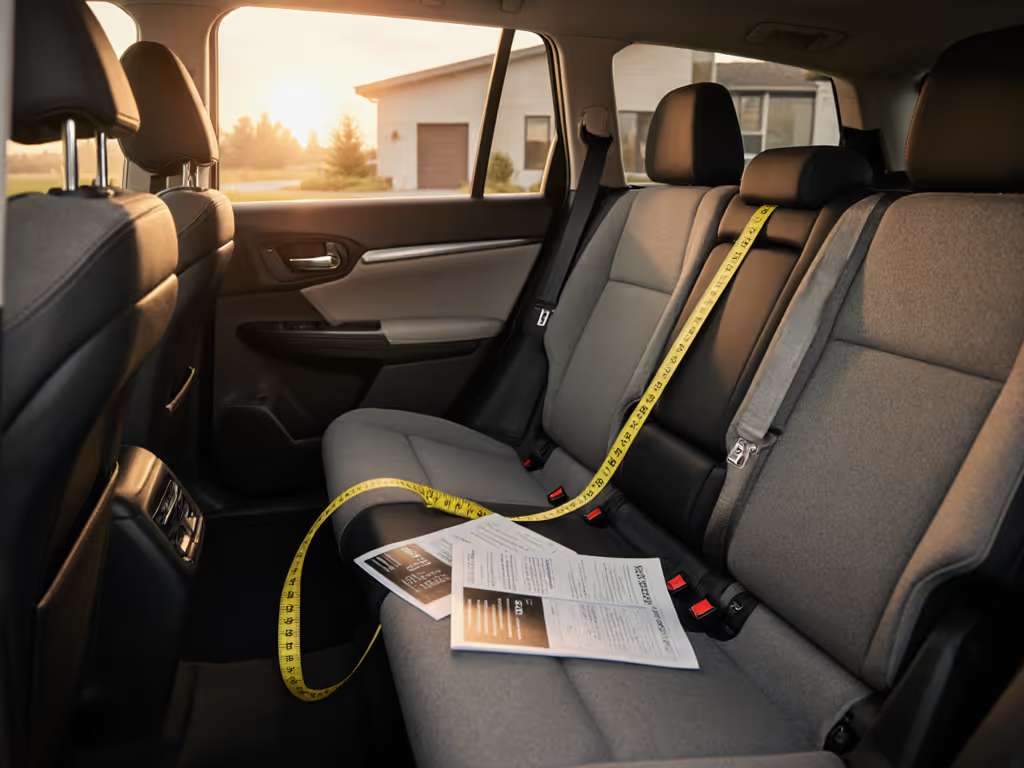
Measuring and Validating Fit in Your CR-V
Before purchasing, gather three key measurements from your specific CR-V:
- Rear bench width (center seat position): Measure the distance between the armrests or between the seat's widest point on each side. Most CR-Vs measure 52-54 inches total bench width, but the usable width in the center is often 24–26 inches after accounting for cushion shape and angle.
- Seat depth (cushion to back): Measure from the front edge of the cushion to the base of the seat back. The CR-V's rear seat is typically 24–26 inches deep. A shallow seat can pinch a car seat's base and limit recline angle.
- Headrest height and clearance: Measure from the seat cushion to the top of the headrest. If the headrest is fixed, note the distance to the ceiling to confirm a rear-facing seat won't hit it. If removable, note that option in your purchase notes.
Use these measurements when evaluating specific seats. Manufacturer spec sheets should list:
- Overall width at the base
- Depth from front to back
- Rear-facing recline angle range
- Forward-facing harness height limits
- Weight capacity
Cross-reference with online forums (e.g., The Car Seat Lady's CR-V-specific page) where real parents confirm fit. This step cuts through guesswork.
Final Checklist: Before You Buy
- Confirm your CR-V's year, body style (5-seat vs. 7-seat), and headrest type (fixed vs. removable).
- Measure rear bench width and depth; note front-seat legroom loss with a rear-facing seat in each position.
- Decide your family's seating scenario: infant + older sibling, two rear-facers, one infant + one forward-facer, or three across (occasional).
- Prioritize seats narrower than 20 inches for the CR-V (check spec sheets, not marketing photos).
- Check that selected seats support extended rear-facing if that's your goal.
- Verify LATCH access for your chosen positions, or confirm seat-belt routing is straightforward.
- Look for removable, breathable covers, especially if you live in a warm climate or drive frequently.
- Read 1-2 real parent reviews specific to CR-V installation (YouTube videos are helpful).
- Confirm the manufacturer's crash-replacement policy and warranty period.
- If buying a used seat, verify crash history, expiration date, and full components (straps, buckles, clips).
Take Action: Next Steps
Your family's peace of mind starts with one decision: choosing a seat that fits your CR-V and matches your routine.
This week, do this:
- Measure your CR-V's rear seat using the checklist above. Jot down the numbers.
- List your family's seating needs over the next 2-3 years: Will you have one child or two? Plan to rear-face past 24 months? Will this seat live in the CR-V or move between vehicles?
- Visit a store or trusted retailer (like a local car-seat-fitting center or big-box store with demo models) and test the top 2-3 contenders in your CR-V if possible. Feel the fit, practice the installation, and confirm the headrest clears.
- Ask a CPST (Certified Child Passenger Safety Technician) for a free or low-cost fit check once you've purchased. Many fire departments and hospitals offer this service.
Gentler materials, easier rides, and the confidence that comes with a secure, comfortable fit start with choosing the right seat for your car. The CR-V's compact dimensions are a constraint, but they're not a barrier. With the guidance above, you'll find the seat that works for your family and your vehicle, and you'll buckle in knowing you've made the right choice.
Related Articles