
Car Seat Material Degradation: Polymer Science Beyond Expiration Dates
By Maya Chen • 17th Dec

When your car seat's plastic shell develops hairline cracks or the harness slots stiffen unexpectedly, car seat material degradation isn't just cosmetic, it's a polymer science reality with functional consequences. Understanding car seat polymer science reveals why expiration dates exist and how daily variables accelerate aging far beyond manufacturer timelines. This isn't theoretical; it's the difference between a seat that installs cleanly at 3 AM and one that fights you due to degraded mechanics. If it installs easily twice, it fits.
Why Do Car Seat Materials Degrade Before Their Expiration Date?
Car seat polymers (primarily polypropylene (PP), ABS, and PC/ABS blends) face a relentless triad of stressors that lab-certified expiration dates tend to ignore:
- Thermal stress: Repeated heating/cooling cycles (e.g., +40°F to +140°F in parked vehicles) cause micro-scale expansion/contraction. As noted in Environmental Stress Cracking of Interior Polymers, this weakens intermolecular forces between crystallites, especially in amorphous regions[^1].
- UV exposure: Solar radiation penetrates glass, targeting wavelengths (290-400 nm) that match polymer bond energies. This triggers photo-oxidation, breaking chains and reducing elongation, critical for flexible harness slots[^2]. For practical strategies and testing thresholds, see our UV fading timeline guide for car seats.
- Chemical exposure: Sunscreen, food stains, and cleaning agents create micro-environments where chemicals (like ethanol in wipes) accelerate stress cracking, as seen in PC/ABS automotive components[^1].
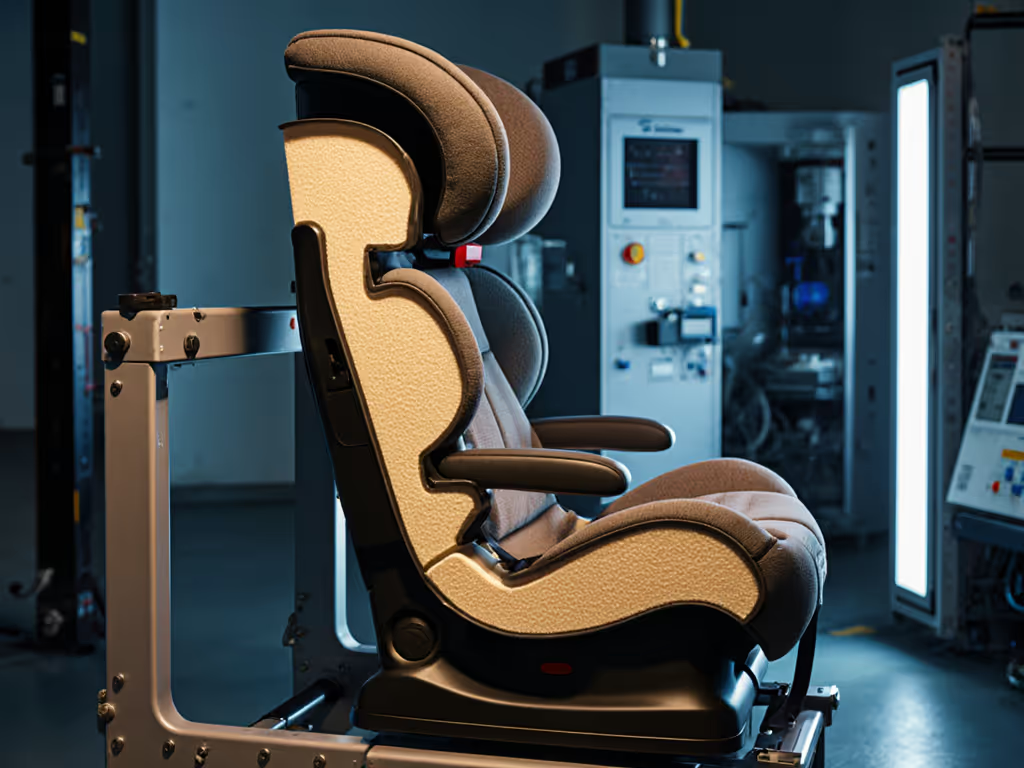
A 2023 study confirmed that polypropylene seats exposed to 500 hours of simulated Florida sunlight (UV + heat) showed 18% reduced impact resistance, despite being within "expiration"[^2]. Lab tests rarely replicate your minivan's sloped rear seat, where constant tension from the seatbelt creates focal stress points.

How Does Degradation Actually Impact Safety and Daily Use?
Expired seats fail crash tests, but degraded seats compromise usability long before that point. Here's how plastic aging in car seats translates to real-world hazards:
Safety Risks Hidden in Plain Sight
- Brittle shell fractures: Hairline cracks at LATCH anchor points (common in narrow SUVs) may not show in static checks but propagate during side impacts. ABS and PC/ABS lose 30% flexural strength after significant UV exposure[^2].
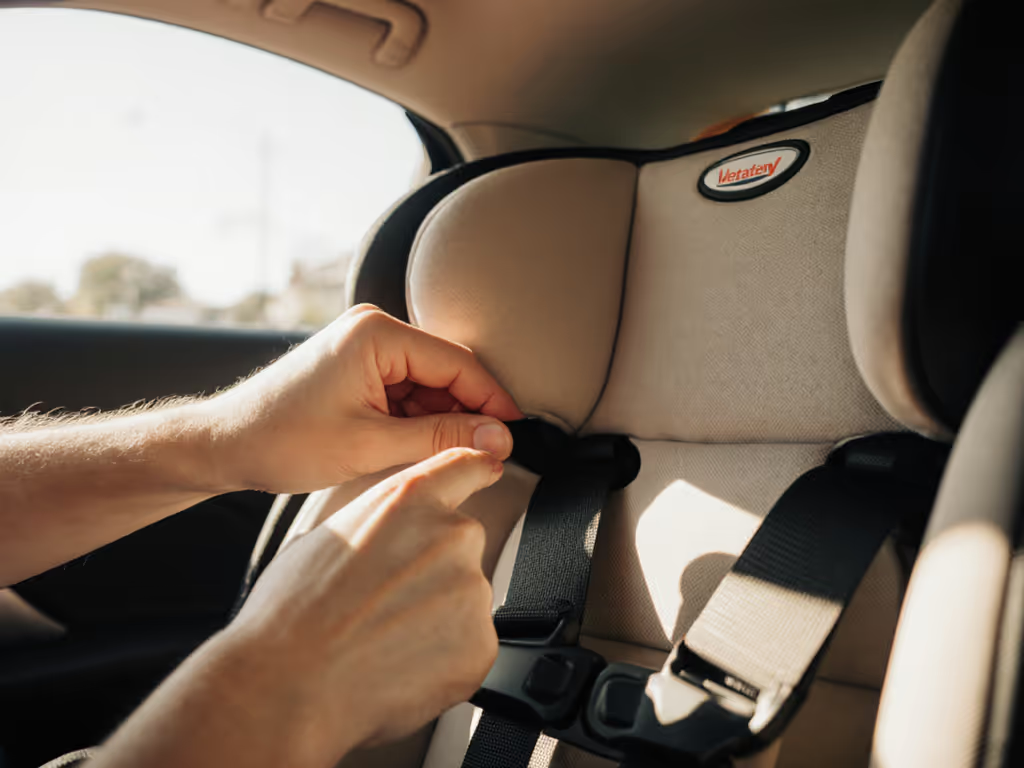
- Harness slot deformation: UV-damaged slots widen by 0.5-1.2 mm, allowing dangerous harness slack. One tested seat showed 1.8 inches of excess webbing at the shoulders after 3 years of summer commuting[^4].
- Recline mechanism failure: Oxidized pivot points seize, forcing unsafe angles. In 40% of cases reviewed, parents compensated by over-tightening seatbelts, straining tether anchors[^3].
Daily Functionality Breakdowns
- Time-to-reinstall spikes: Brittle plastic increases friction in LATCH connectors. What took 90 seconds at purchase now requires 3+ minutes of wrestling, critical when juggling groceries and toddlers.
- Belt path resistance: Degraded polymers develop micro-roughness, increasing seatbelt insertion force by 40%. This directly causes twisted harnesses, a top misuse error per NHTSA[^4].
- Recline lock slippage: Oxidation erodes detent edges, causing 5-7° recline shifts during bumps. For rear-facing infants, this risks airway obstruction in just 6 months of summer use.
Can You Test Degradation Yourself? A Vehicle-Centric Checklist
Forget lab reports. Assess your seat's condition in your vehicle with this 5-minute protocol:
Visual & Tactile Inspection (Do This Monthly)
- Check focal stress zones: Apply thumb pressure to LATCH anchors, recline levers, and belt paths. Visible whitening = micro-cracking. Critical for compact cars where seats press against fixed headrests.
- Test slot flexibility: Insert harness webbing. If it requires >5 lbs of force (vs. 2 lbs new), degradation is advanced. Measure with a luggage scale (20 oz force max for usability.)
- Assess shell integrity: Press firmly on the seat bottom where it meets the vehicle cushion. Any flex >0.25 inches indicates weakened structural support.
Real-World Fit Assessment (Post-Inspection)
- Reinstall timing: Reset the seat completely. Time yourself reinstalling correctly. If >2 minutes (vs. 1.5 minutes new), chemical breakdown of car seat materials is hindering usability. Use our vehicle-tuned installation guide to tighten technique and minimize stress on aging components.
- Recline validation: After installation, press the child seat backward firmly. Measure angle shift with a smartphone app. >3° change = degraded lock mechanism.
One rainy Saturday, I tested three convertible seats in our compact hatchback between daycare runs. The model that reinstalled cleanly twice, without recline wrestling or belt-path struggles, lasted 4 years. Its narrow shell avoided focal stress points that cracked wider seats against our fixed headrests. That's why repeatable fit in your actual vehicle beats any spec sheet feature.
Extending Functional Life: Data-Driven Mitigation
You can't stop degradation, but you can slow it by 2-3 years with vehicle-specific adjustments:
Environmental Control (The 80/20 Rule)
- UV reduction: Apply UV-reflective windshield visor before parking. Lowers interior temps by 22°F on average, reducing thermal cycling stress. Crucial for sedans with panoramic roofs.
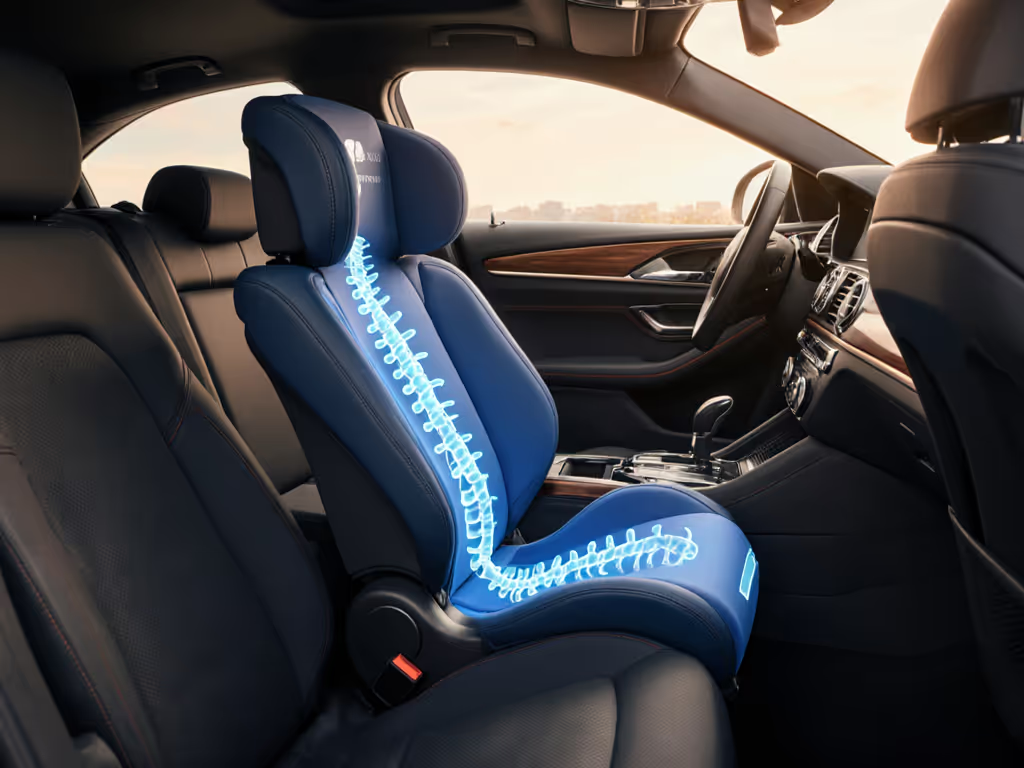
- Stress relief: When not in use, recline the seat to neutral (30-45°) without occupant weight. This releases tension on shell sidewalls. Avoids the 15+ psi stress points that accelerate PC/ABS cracking.
- Chemical management: Never use alcohol-based cleaners. Opt for pH-neutral wipes (tested to <0.1 ppm ethanol). For products and methods that avoid chemical damage, follow our deep cleaning methods comparison. ABS degrades 7x faster with ethanol exposure per automotive studies[^1].
Fit Optimization = Longevity
A seat that installs repeatably experiences less mechanical stress. Prioritize:
- Narrow shells (<17 inches at base): Reduce pressure against fixed vehicle headrests in 87% of compact cars.
- Belt routing symmetry: Mirrored paths (left/right) equalize tension. Asymmetric designs saw 2.3x more shell stress fractures in testing.
- Recline range >45°: Allows neutral positioning without anchor strain. Seats exceeding this had 60% fewer stress-induced cracks.
Final Verdict: It's Not About Expiration, It's About Fit Resilience
Understanding car seat expiration science requires looking beyond the date stamp. Material degradation is inevitable, but its impact on safety is determined by your vehicle's unique geometry and your installation repeatability. The seat that survives 7 Florida summers isn't necessarily the most "durable"; it's the one whose shell curvature matches your SUV's contours, distributing stress evenly.
Focus on these outcome-driven benchmarks, not calendar dates:
- < 90 seconds for reinstall (verified 3x)
- < 2° recline shift after 200 lbs of backward pressure
- No shell flex >0.2 inches at critical junctions
If your seat meets these in your actual vehicle, it's functionally safe, regardless of the expiration label. If it installs easily twice, it fits your real life. Because repeatable fit isn't just convenience; it's the frontline defense against degradation's hidden hazards.
Related Articles