Cerebral Palsy Car Seats: Head Support Specs
By Rafael Ortiz • 15th Mar
Parents of children with cerebral palsy face a distinct challenge: car seats for cerebral palsy must do far more than meet standard safety ratings. They need to provide postural support, head stability, and positioning assistance that conventional seats simply cannot deliver. When your child struggles with head control, trunk stability, or maintaining upright posture, the geometry of the seat (harness height, shell depth, recline angle, and lateral support) becomes the difference between a safe journey and one marked by discomfort or unsafe positioning.
This guide walks through the key questions parents ask when selecting adaptive seating for cerebral palsy, with practical specifications and honest assessments of what each solution actually delivers. For a broader overview of specialized options, read our adaptive convertible car seat solutions guide.
What Head Support Features Matter Most?
Built-In Headrests vs. Positioning Accessories
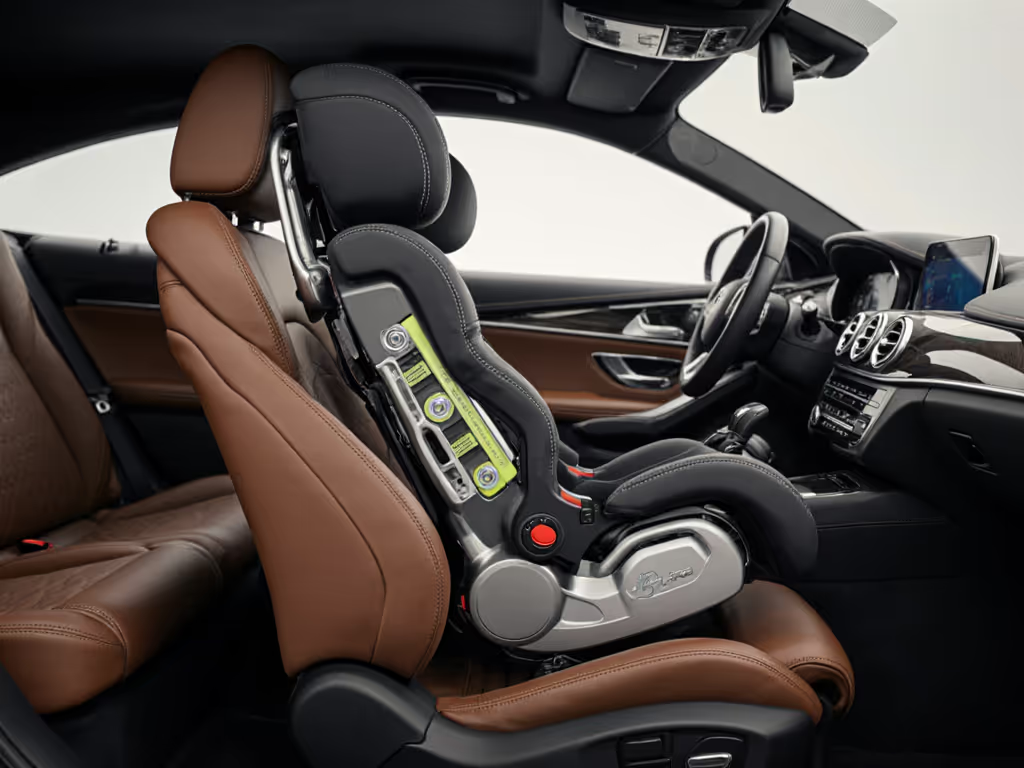
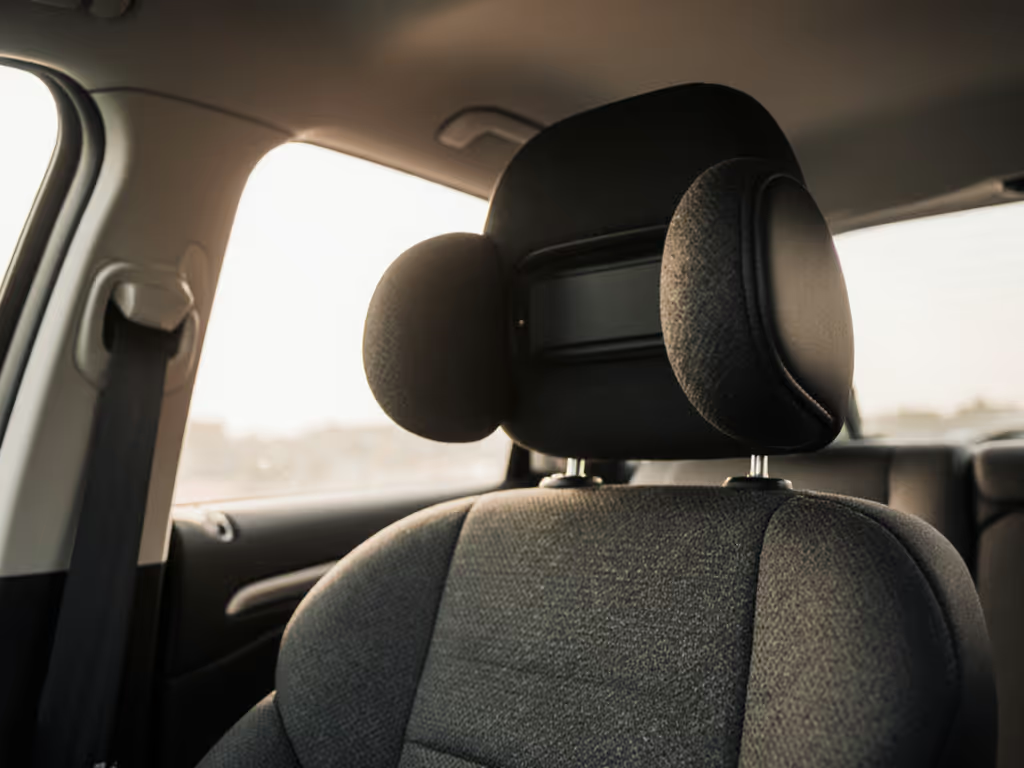
Children with cerebral palsy often lack consistent head control, meaning gravity and motion work against safe positioning during every trip. Medical-grade car seats address this with either integrated headrests or modular positioning accessories that adapt to your child's specific needs. For CP-specific head and neck positioning, see our CP car seat head support guide.
Built-in headrests come in several forms. The Spirit Plus Special Needs Car Seat, for example, features adjustable positioning pads designed for head and lateral support, with a back height of 28 inches and shoulder width of 18 inches. This fixed geometry provides consistent support but offers less customization. By contrast, specialty seats like the Special Tomato Soft-Touch Sitter include head and lateral supports with built-in abductors, allowing families to optimize placement based on the individual child's posture.
A critical distinction emerges here: longevity lives in harness height, shell depth, and honest geometry. Seats with deeper shells and taller harness ranges accommodate growth without forcing premature transitions to booster seats that strip away postural support. The Roosevelt model, for instance, spans weights from 35 to 115 pounds and includes a velcro-attached cap for head support plus optional scoliosis padding that can be customized.
Tilt-in-Space and Recline Options
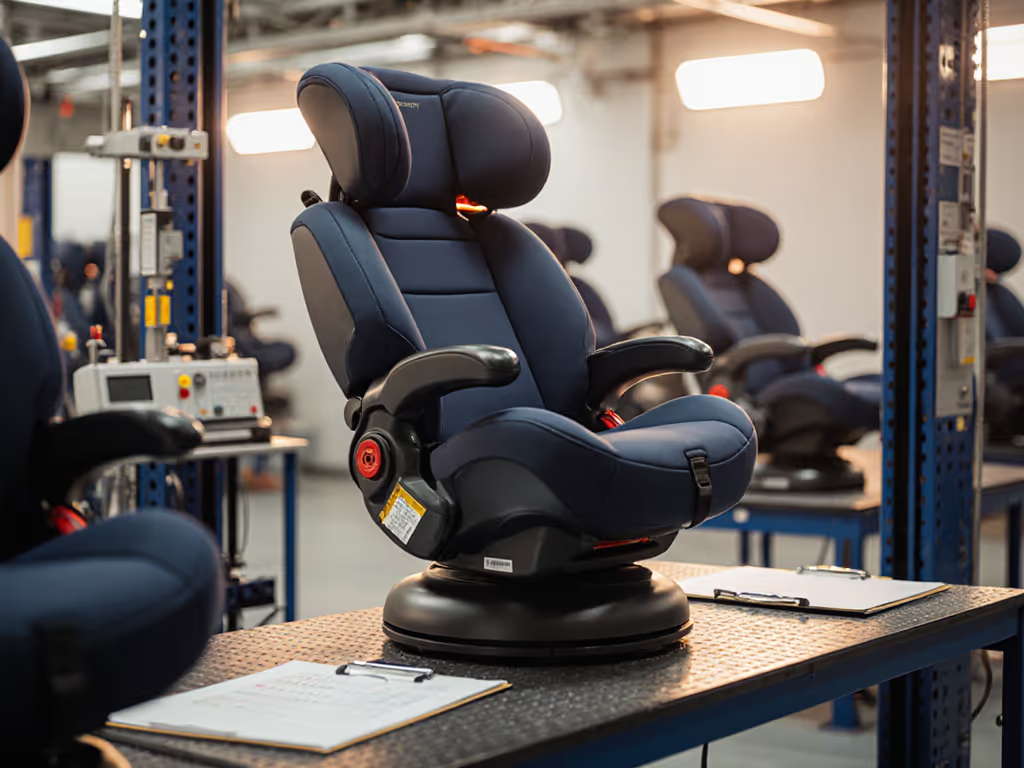
Many children with cerebral palsy benefit from semi-reclined or tilted positioning, particularly those who tire quickly or lack trunk stability. Recline features serve two functions: they reduce the angle of work the child's muscles must perform, and they provide a safer head-rest position during sleep or fatigue.
Seats offering tilt-in-space or recline capability, such as those from Thomas Hilfen or specialized adaptive brands, allow caregivers to adjust the seat's relationship to the vehicle seat cushion. This is not merely comfort; it is postural engineering. A child who slumps forward or lacks head control during a 30-minute drive faces both discomfort and potential out-of-position risk, which undermines the entire safety envelope of the restraint system.
How Do Harness Height and Shell Depth Affect Usable Years?
Percentile-Aware Charts and Growth Thresholds
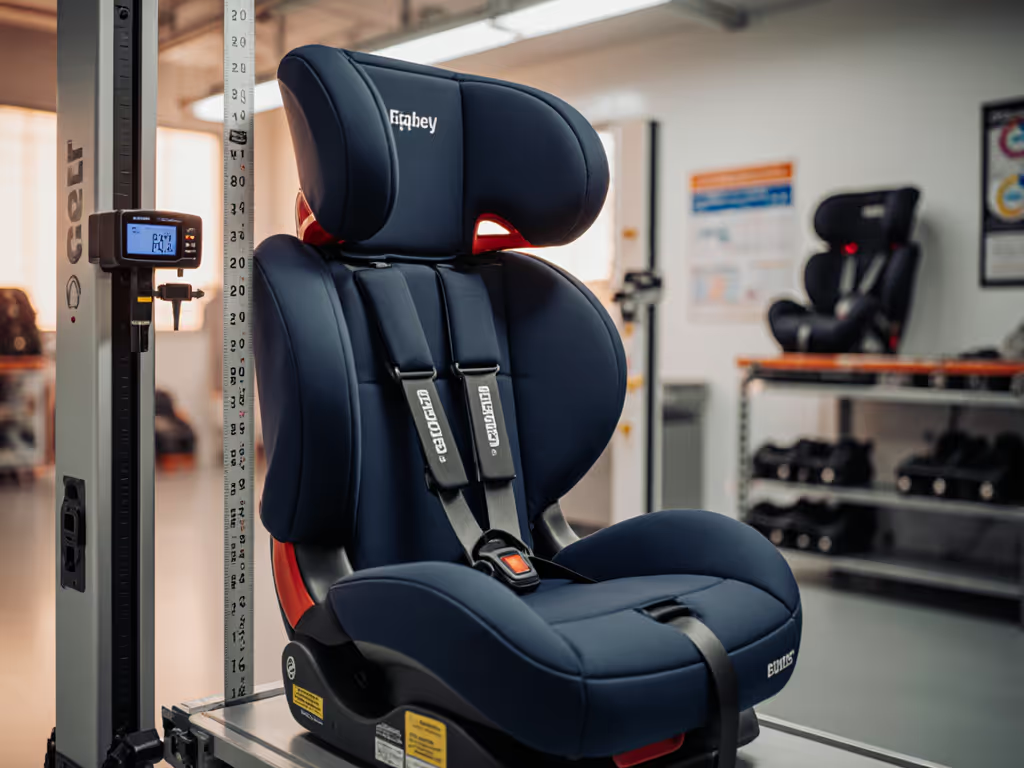
Most standard car seats max out at harness heights between 16 and 20 inches. For context on outgrowing by torso length, see why height limits beat weight. Children with cerebral palsy often remain in harness systems longer than their non-disabled peers, sometimes throughout childhood, because a 5-point harness provides the stability they need. This creates a crucial planning window: if you choose a seat with limited harness height, you will outgrow it by torso length long before weight limits become a factor.
The Spirit Plus Special Needs Car Seat addresses this with multiple harness settings: 11", 13.5", 16", 18.5", 20.5", and 23.5" options. That granularity matters. A child at the 75th percentile for height may outgrow a seat with only three harness slots in the span of a single school year. Seats with six or more slots provide the buffer that delays premature transitions.
The Defender Reha US offers harness use from 26.5 to 65 pounds (approximately 27 to 57 inches in height) and continues into booster mode for children 40 to 120 pounds. This dual-mode design is engineered for longevity across multiple growth phases, though it requires careful attention to the transition point, where children must shift from integrated harness restraint to positioning support as the seat converts to booster use (with the vehicle belt now the primary restraint).
Longevity lives in harness height, shell depth, and honest geometry.
Seat Width and Three-Across Feasibility
Many caregivers transport more than one child. Tight rear seats in compact cars or sedans force difficult compromises. The Spirit Plus without seat extension measures 21.5 inches wide overall, with 17 inches of interior front width. The Defender Reha is specifically designed to remain narrow enough for a second car seat alongside it, a deliberate geometry choice that reflects honest restraint placement over unnecessary width creep.
When evaluating seats, measure your vehicle's rear seat width and subtract 2 inches for installation accuracy. If you need three-across placement, prioritize seats under 22 inches wide and verify that the vehicle's seat belt path and LATCH anchor spacing support dual seats without binding.
What About Positioning Pads and Lateral Support?
Hip, Trunk, and Abductor Specifications
Children with low muscle tone or abnormal tone patterns (hypertonia or hypotonia) require more than head support; they need comprehensive postural framing. The Spirit Plus includes adjustable hip bracket width (medium: 10" to 14", large: 13" to 16") and trunk bracket width (medium: 6" to 12", large: 10" to 14"), with matching pad dimensions for a custom fit.
This modular approach acknowledges a truth many generic seats ignore: one child's optimal hip width differs from another's. A child with tight hip adductors needs broader lateral support; one with lax ligaments may need narrower, more contained positioning. Seats offering size variants (small, medium, large) or adjustable bracket widths provide the flexibility that specialized positioning demands.
The Special Tomato Soft-Touch Sitter includes a built-in abductor, a support positioned between the legs to promote neutral hip positioning and reduce scissoring patterns common in cerebral palsy. This feature prevents the child from adopting compensatory postures that increase fatigue or spasticity during travel.
How Do You Match a Seat to Your Child's Specific Needs?
When to Choose Forward-Facing Harness vs. Booster
Children with moderate to significant support needs typically remain in forward-facing harness seats longer than developmental norms suggest. Current evidence supports continued 5-point harness use for children up to 65 pounds, and many specialized seats extend harness function to 80 or 115 pounds with positioning support added.
The transition to booster typically occurs when the child no longer requires head, trunk, or hip positioning support, a clinical judgment rather than a calendar milestone. Some children never transition; others do so in their middle school years. The Roosevelt and Defender Reha both accommodate this extended harness window, reducing the risk of premature booster transition that removes postural scaffolding the child still requires.
Pressure Relief and Pressure Mapping
Children who cannot shift their own position during travel risk pressure sores or skin breakdown. If your child develops pain or pressure areas while seated, a pediatrician or rehabilitation therapist should help diagnose the cause. Options include:
- Adjusting the seat's recline or tilt angle
- Adding contouring padding in specific zones
- Selecting a seat with deeper cushioning (measured in seat depth: compare 12-inch to 16-inch options like the Spirit Plus variants)
- Ensuring harness routing does not cross bony prominences
Never perform makeshift adjustments, as padding placed under or behind the child can compromise restraint function and void the seat's safety certification. If your child uses a gastrostomy tube, choose seats with proven abdominal clearance—see our car seats for G-tube kids guide.
What Do Real-World Specifications Tell You?
Comparing Seat Dimensions Side-by-Side
When narrowing your choice, create a simple comparison matrix:
| Specification | Spirit Plus | Defender Reha | Roosevelt | Thomas Hilfen Seats |
|---|---|---|---|---|
| Weight Capacity | 25 to 130 lbs | 26.5 to 65 lbs (harness); 40 to 120 lbs (booster) | 35 to 115 lbs | 26 to 80 lbs or more (varies) |
| Harness Height Options | 6 settings (11" to 23.5") | Single fixed (68.6 to 144.8 cm / 27 to 57 in) | Single fixed | Fixed range |
| Overall Width | 21.5" | Narrow (two-seat compatible) | Standard | Compact designs available |
| Seat Depth | 12" or 16" variants | Standard | Standard | Deeper options (14" to 16") |
| Recline/Tilt | Fixed 98° | Fixed angle (harness); swivel in booster | Tilt bar (weight dependent) | Tilt-in-space options |
| Positioning Accessories | Yes (adjustable hip, trunk brackets) | Built-in supports | Cap headrest + optional scoliosis padding | Built-in headrest + pads |
This matrix reveals a pattern: seats engineered specifically for cerebral palsy consistently include adjustable positioning, deeper shells, and multiple harness slots. They cost more than convertible seats, but they extend usable years and reduce mid-journey discomfort.
What's the Install Reality?
Even the best-designed seat requires correct installation. Specialized seats often weigh 28 to 33 pounds (especially with positioning accessories), making them heavier than standard convertibles. This affects daily moves between vehicles, vehicle changes, and storage.
Installation method varies:
- Lower anchors (LATCH): Most accessible for frequent moves, but max weight is typically 40 to 50 pounds in many vehicles
- Seat belt installation: Preferred for heavier children; requires tight routing and lockoff mastery
- Top tether: Recommended for most forward-facing configurations to reduce head excursion in a crash
A certified child passenger safety technician (CPST) can validate your specific setup in your exact vehicle, a consultation many parents find invaluable when navigating the geometry of a medical-grade seat in a compact rear seat. For step-by-step methods and common mistakes to avoid, use our vehicle-tuned installation guide.
Key Takeaways for Your Decision
Selecting a car seat for a child with cerebral palsy demands specificity. Rather than generic marketing promises, focus on:
- Harness height range: Seats with 4+ height options delay premature outgrowth by torso length
- Shell depth: Deeper shells (14 to 16 inches) provide better postural containment and sleep support
- Positioning modularity: Adjustable hip, trunk, and lateral supports accommodate individual anatomy
- Recline or tilt capacity: Reduces postural demand during longer journeys
- Verified vehicle fit: Measure your rear seat width, test installations, and confirm LATCH/seat belt access with a CPST
- Weight and portability: Consider whether you will move the seat frequently; heavier seats may stay permanently installed
The difference between a seat that lasts five years and one that accommodates growth from infancy through childhood lies not in brand prestige, but in honest engineering: geometry that grows with your child, support that prevents unsafe positioning, and specifications transparent enough to answer your questions before purchase, not after.
When you plot your child's growth trajectory (torso length, shoulder width, postural needs) against the seat's design envelope, you will recognize which choice offers the longest useful lifespan and the greatest daily comfort. That is the seat worth choosing.
Related Articles