Car Seat Mechanism Maintenance: Easy-Care Comparison
By Aisha Khan • 2nd Dec

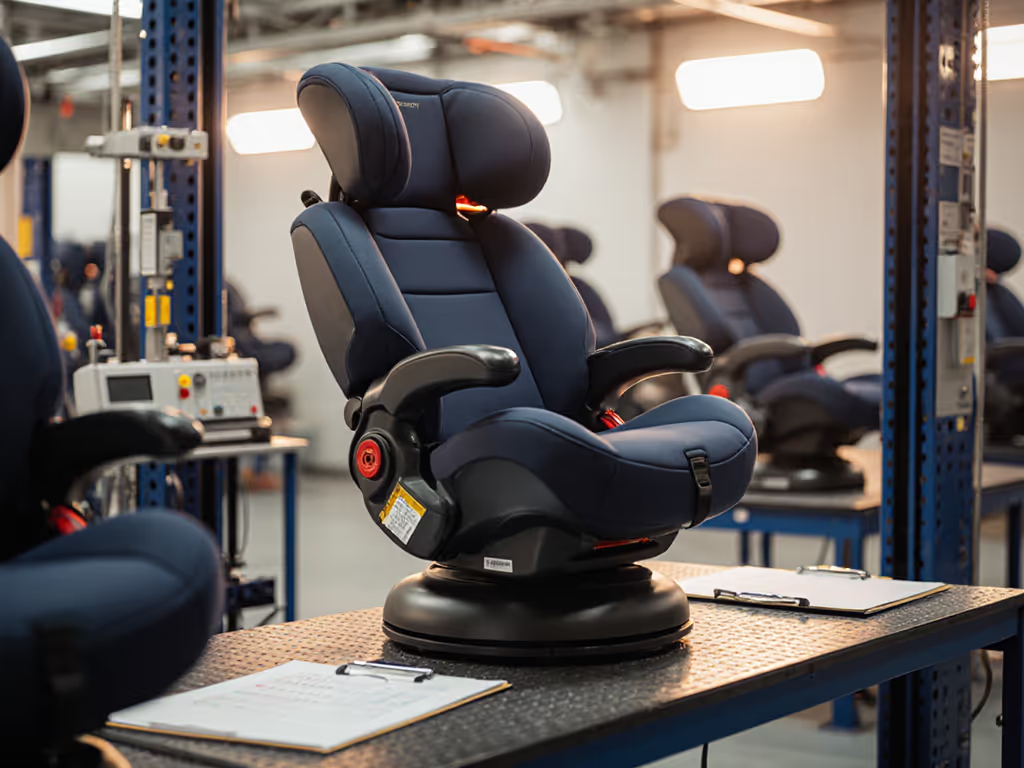
When your child's safety depends on flawless performance, a thoughtful car seat mechanical maintenance comparison becomes essential. Understanding how to maintain serviceable car seat mechanisms isn't just about longevity, it is about preserving the integrity of your child's primary safety system during every journey. Many parents don't realize that mechanical components degrade over time, potentially compromising safety without visible warning signs. As I learned during a sweltering summer trip when our toddler's discomfort revealed gaps in our seat's design, sometimes the smallest mechanical details make the biggest difference in daily comfort and safety.
Comfort grows from breathable fabrics, quiet design, and kinder chemistry, principles that extend to mechanical reliability too. When mechanisms function smoothly without added stress points, everyone benefits from calmer, safer rides. This guide walks you through the often-overlooked mechanical aspects of car seat care, focusing on what really matters for long-term reliability and child comfort.
1. Understanding Your Seat's Mechanical System: Beyond the Basics
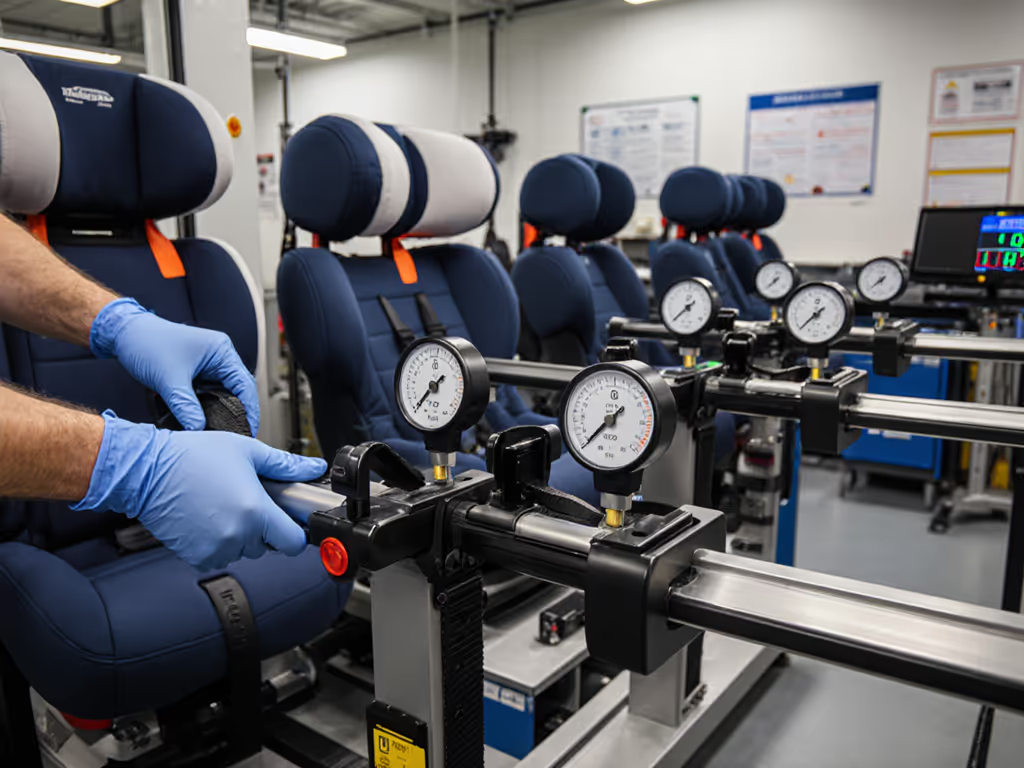
Car seats contain often-invisible components that directly impact safety and usability. Rotating mechanisms, harness adjustment systems, and recline positions all rely on precise engineering that requires proper maintenance. Unlike vehicle engines with scheduled service intervals, car seats don't come with mechanical maintenance checklists, yet their components endure similar stress.
Temperature and humidity notes matter more than you might think. Metal components can expand in heat and contract in cold, potentially creating micro-gaps in hinge assemblies. Plastic components become brittle with age, especially when exposed to repeated UV exposure through car windows. These subtle changes affect how smoothly mechanisms operate and how securely components lock into place.
For rotating seats specifically, the mechanism must withstand constant stress during installation, rotation, and daily use. A well-designed rotation system balances ease of movement with secure locking (a delicate engineering feat that requires understanding what maintenance it actually needs). The wear inspection guide provided by manufacturers often misses key trouble spots that develop over time.
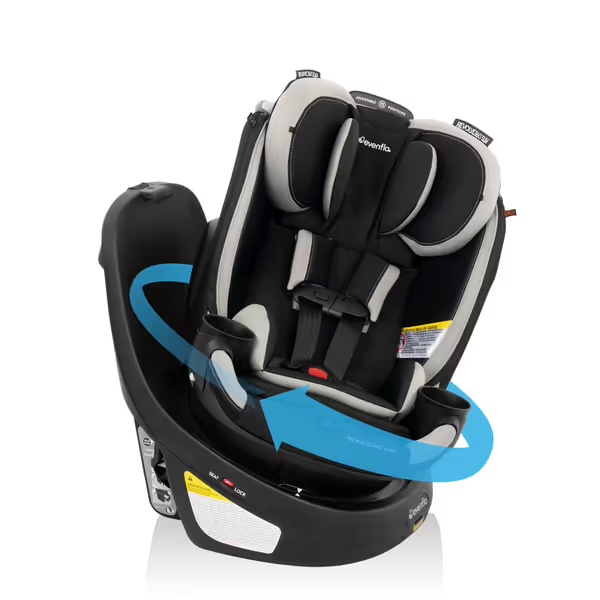
Evenflo Revolve360 Slim 2-in-1 Rotational Car Seat
Effortless one-hand 360° rotation for easy in and out.
$399.99
Rotation360° one-hand
Rotation360° one-hand
Pros
One-hand 360° rotation simplifies child loading.
Easy to use with clear instructions and quality build.
Quick Clean Cover for maintenance.
Cons
Installation feedback is mixed; can be tricky.
Customers find the car seat easy to use with clear instructions and appreciate its 360-degree rotation feature, build quality, and comfort. The installation process receives mixed feedback, with some finding it very easy to install and move around while others find it tricky to set up. Customers disagree on the fit, stability, and value for money.
Customers find the car seat easy to use with clear instructions and appreciate its 360-degree rotation feature, build quality, and comfort. The installation process receives mixed feedback, with some finding it very easy to install and move around while others find it tricky to set up. Customers disagree on the fit, stability, and value for money.
2. Rotating Seat Maintenance Requirements: The 360° Reality Check
Rotating seats have transformed installation convenience but introduce additional mechanical considerations. That satisfying "click" when your seat locks into position? That's a mechanical component doing its job, but it is also the first place to degrade with frequent use.
Regular maintenance of these seats should include:
- Weekly: Check all rotation positions for secure locking (no movement once set)
- Monthly: Wipe mechanism access points with dry cloth to prevent dust buildup
- Quarterly: Verify harness routing paths haven't developed friction points from rotation
- Biannually: Inspect base for stress fractures near rotation axis
The Evenflo Revolve360 Slim demonstrates thoughtful mechanical design with its Sure360 Safety Installation System. For a hands-on comparison of daily mechanics, see our Revolve360 Slim vs Fit360 analysis. Its LockStrong technology minimizes the number of moving parts that could fail, reducing long-term maintenance needs while maintaining smooth rotation. Unlike some competitors that use complex gear systems vulnerable to grit accumulation, this design focuses on reliability through simplicity.
Car seat hinge durability varies significantly between models. Seats with exposed hinge mechanisms tend to collect debris faster than those with protected designs. When comparing options, look for seats that minimize exposed mechanical components while maintaining necessary functionality.
3. The Wear Inspection Guide: What to Check and When
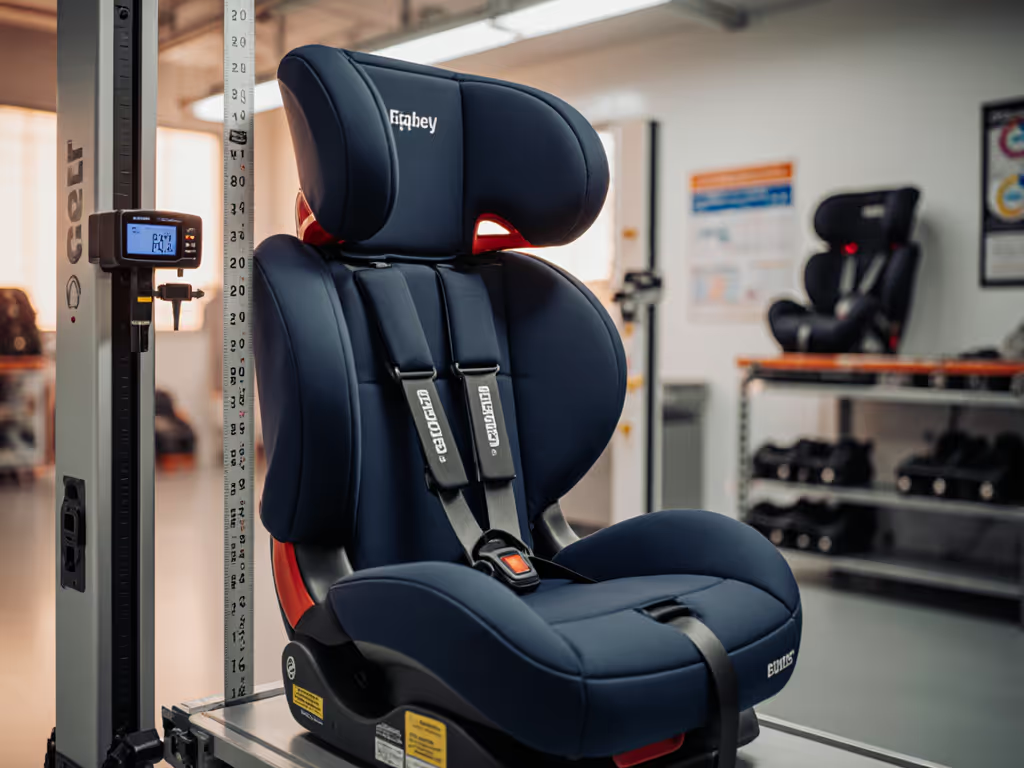
Most parents focus on fabric cleanliness while overlooking mechanical integrity. Your car seat's "health" depends on regular mechanical checks as much as visual cleanliness. Create a simple maintenance calendar that includes these often-missed inspections:
Critical mechanical inspection points:
- Recline mechanism: Does it hold position firmly without slippage?
- Harness routing: Are straps moving smoothly without catching or binding?
- Adjustment mechanisms: Do headrest and harness height adjustments move evenly?
- Base stability: Does the seat wobble when properly installed?
- Latching systems: Do all locking mechanisms engage with clear audible feedback?
Materials callouts (FR/PFAS-free) matter here too, chemical treatments can sometimes affect nearby plastics over time. If you discover instability during these checks, follow our vehicle-tuned installation guide to correct common mistakes. Seats using cleaner material formulations often show less degradation of adjacent mechanical components. The Chicco Fit360 ClearTex takes this seriously with its GREENGUARD Gold certification, minimizing chemical interactions that could affect long-term mechanical performance.
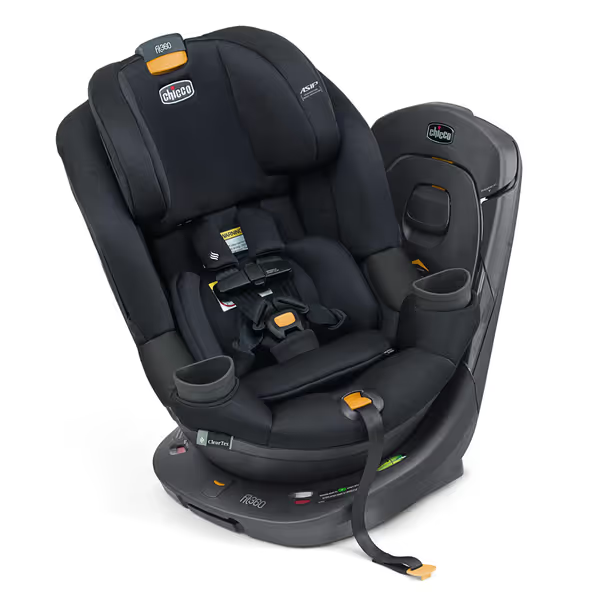
Chicco Fit360 ClearTex Rotating Convertible Car Seat
Effortless 360° rotation for easy loading, secure install, and lasting comfort.
$439.99
Weight CapacityRear-Facing: 4-40 lbs | Forward-Facing: 26.5-65 lbs
Weight CapacityRear-Facing: 4-40 lbs | Forward-Facing: 26.5-65 lbs
Pros
360° rotation simplifies child loading & unloading.
LeverLock system ensures quick, self-tensioning, secure installation.
Flame-retardant-free fabrics with excellent ventilation.
Cons
May be bulkier than non-rotating options.
Customers find this car seat to be of excellent quality, easy to install in any car, and appreciate its 360-degree rotation feature. The magnetic security system attaches securely to the base, and customers like the extra comfort padding. They consider it well worth the money, and one customer notes the intuitive locking and releasing mechanism. Customers value its safety features, with one mentioning the green indicators for rides.
Customers find this car seat to be of excellent quality, easy to install in any car, and appreciate its 360-degree rotation feature. The magnetic security system attaches securely to the base, and customers like the extra comfort padding. They consider it well worth the money, and one customer notes the intuitive locking and releasing mechanism. Customers value its safety features, with one mentioning the green indicators for rides.
4. Cleaning Without Compromising Mechanics
One of the most common maintenance mistakes is using inappropriate cleaning methods that damage mechanical components. Many parents unknowingly introduce moisture into areas that should remain dry, accelerating corrosion or component degradation. For step-by-step techniques and time-saving tips, see our deep cleaning methods comparison.
Safe cleaning practices for mechanical components:
- Never spray cleaners directly onto mechanisms
- Use dry microfiber cloths for accessible parts
- For stubborn debris, use compressed air (not canned air which contains moisture)
- Avoid lubricants unless explicitly recommended by the manufacturer
- Remove seat covers completely before cleaning according to care instructions
The Quick Clean Cover system on the Evenflo Revolve360 Slim exemplifies thoughtful design for maintenance. By creating a cover that removes easily without disturbing harness routing, it minimizes the risk of misalignment during reinstallation (a common issue that affects mechanical reliability). When covers require complex removal procedures, parents often skip thorough cleaning, leading to accelerated wear from trapped debris.
Convertible seat longevity maintenance depends significantly on how well you protect moving parts from contamination. Dust, food particles, and moisture become abrasive compounds inside mechanisms, causing premature wear. Regular preventive maintenance extends mechanical life dramatically. Small habits add up.
5. Long-Term Care for Maximum Seat Lifespan
Comfort grows from breathable fabrics, quiet design, and kinder chemistry, this principle extends to mechanical reliability too.
Most car seats have expiration dates between 6 and 10 years, but mechanical components often degrade before the overall seat expires. Track these mechanical lifespan indicators:
- Increased resistance when adjusting components
- Unusual noises during position changes
- Visible play or movement in previously secure components
- Difficulty achieving proper installation tension
- Visual cracks in plastic housing around mechanisms
Temperature extremes particularly affect mechanical components. During summer months, check for expansion that might prevent proper locking; in winter, verify mechanisms aren't binding from contraction. Materials behave differently across temperature ranges, and recognizing these patterns helps anticipate maintenance needs.
When choosing seats, prioritize those with serviceable components. Some manufacturers design seats with sealed mechanisms that cannot be maintained. Once they fail, the entire seat must be replaced. Look for designs that allow access to critical components for basic maintenance without compromising safety certifications.
6. Selecting Seats with Serviceable Mechanisms Upfront
Your smartest maintenance decision happens before purchase. Focus on these mechanical features when comparing options:
- Minimal exposed moving parts: Fewer exposed components mean less contamination risk
- Tool-free adjustments: Mechanisms that require insertion of tools for basic adjustments often develop maintenance issues faster
- Clear maintenance guidelines: Brands that provide specific mechanical care instructions demonstrate confidence in their engineering
- Accessible component design: Can you easily inspect critical mechanisms without disassembly?
- Material compatibility: Metal components should match corrosion resistance with environmental exposure
Ergonomic cues for sleep and posture connect directly to mechanical reliability. Seats that maintain proper positioning without constant adjustment reduce mechanical stress. When a seat requires frequent recline changes or harness adjustments, those mechanisms wear out faster. The best designs support natural sleeping positions while minimizing the need for constant tinkering.
Your Actionable Maintenance Checklist
To transform theory into practice, download or screenshot this quick-reference maintenance checklist:
- Daily: Check that all locked positions remain secure after driving
- Weekly: Wipe accessible mechanism areas with dry cloth
- Monthly: Verify smooth operation of all adjustment systems
- Quarterly: Inspect for visual signs of wear near moving components
- Biannually: Check for unusual noises or resistance during operation
- Before long trips: Perform full mechanical inspection including base stability
When maintenance concerns arise, consult your manufacturer before attempting repairs, since some modifications void safety certifications. Seats showing significant mechanical wear should be replaced regardless of expiration dates.
True safety isn't just about passing crash tests, it is about maintaining performance through years of daily use. By understanding and caring for your car seat's mechanical heart, you ensure that every journey remains as safe as the day you installed it. Start with one simple action today: inspect your seat's primary adjustment mechanisms and note any changes in how they operate. That small step builds the habit of proactive maintenance that keeps your child protected through every stage of their car seat journey.
Related Articles