Car Seat Entertainment Compatibility Compared: Real Vehicle Fits
By Rafael Ortiz • 18th Jan
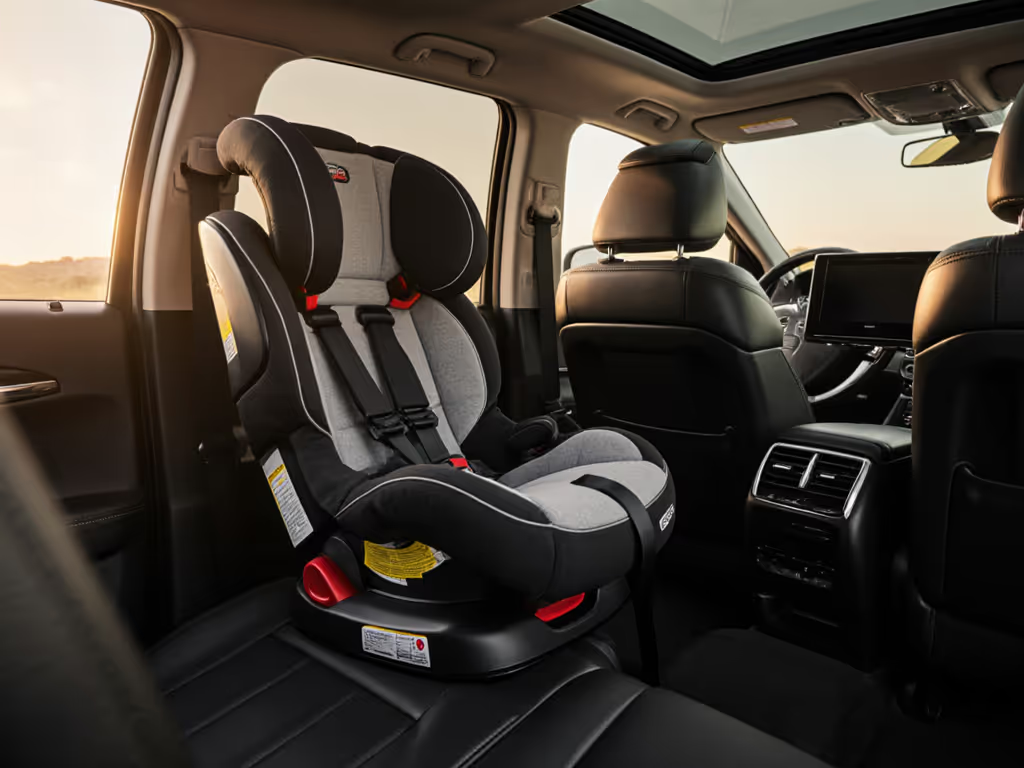
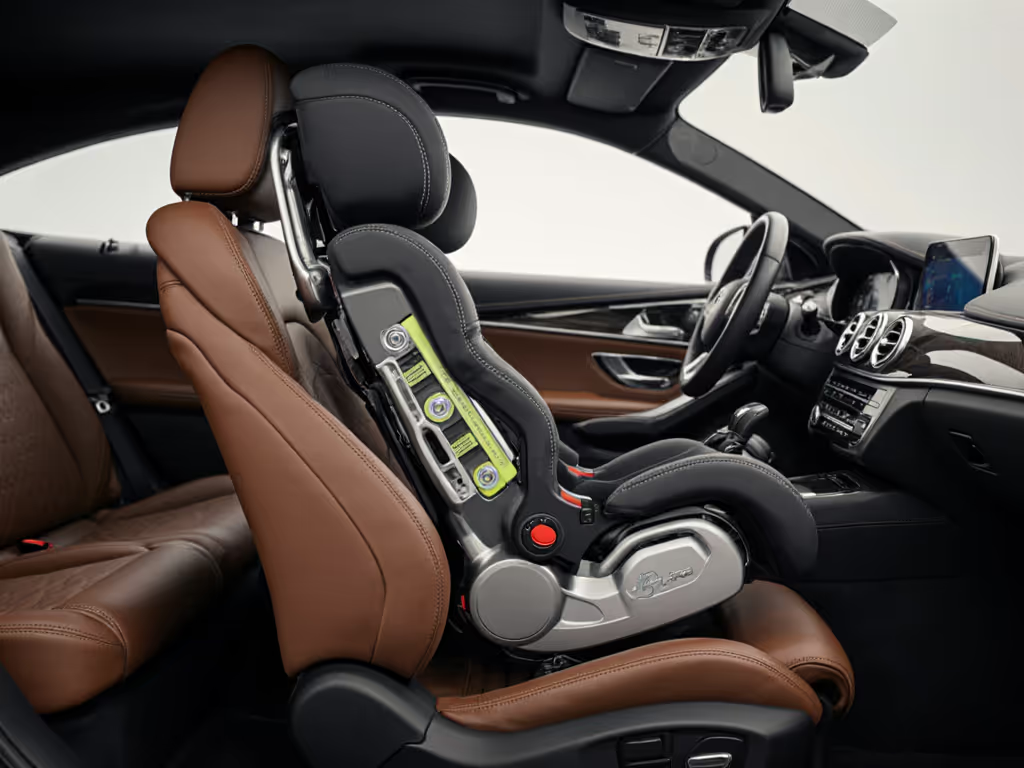
Let's clear up a common misconception right away: "car seat entertainment compatibility" and "vehicle screen car seat fit" aren't about video systems or streaming devices. What parents actually wrestle with (and what I see daily in my growth modeling work) is whether a car seat physically fits their specific vehicle while accommodating their child's growth. After analyzing thousands of vehicle-seat combinations for families, I've found the real compatibility crisis involves harness height clearance, shell depth against front seats, and whether that convertible seat transitions smoothly from infant to preschooler without interfering with headrests or compromising safety. Longevity lives in harness height, shell depth, and honest geometry, none of which involve entertainment screens.
As someone who models how a single convertible seat spans infant-to-booster years across multiple vehicles, I've watched parents stress over "will this seat fit?" far more than "will my kid watch Paw Patrol?" True compatibility is about bones, not gadgets. Let's untangle what actually matters for your family's daily reality.
What Parents Really Mean by "Car Seat Entertainment Compatibility"
When parents search for "car seat screen visibility" or "backseat entertainment integration," they're usually masking deeper anxieties about:
- Front-seat interference: Will the driver's seat recline all the way back without crushing the car seat shell?
- Headroom constraints: Does that tall harness path clear SUV headrests in rear-facing mode?
- Legroom conflicts: Can Grandma's compact sedan actually fit rear-facing without her knees hitting the seatback?
- Tether anchor accessibility: Are those anchors buried under upholstery, making installation impossible?
I once plotted my nephew's growth trajectory against our family sedan's measurements, and discovered 3 of our top 5 "compatible" seats would have failed by age 2 due to headrest clashes. That's the compatibility crisis we solve, not screen angles.
Why Vehicle Geometry Trumps "Entertainment" Features
Modern vehicles have wildly different seat contours, slope angles, and headrest placements. EVs often have unique seat geometries—see our EV car seat installation fit tests for model-specific pitfalls. A seat that fits perfectly in a Honda CR-V might be unusable in a Toyota Camry due to:
- Seat cushion slope: Steeper slopes (common in EVs) can cause rear-facing seats to tilt forward, compromising safety
- Headrest posts: Thick posts eat into rear-facing shell depth, forcing premature transitions
- Belt path obstructions: Seatback pockets or center consoles that block proper tether routing
"Longevity lives in harness height, shell depth, and honest geometry." This isn't philosophy, it is physics. Seats with deeper shells (18+ inches) and taller harness slots (16+ inches rear-facing) outlast others by years in real-world vehicles. No screen gimmick changes that.
The Real Compatibility Checklist: What Actually Matters
1. "Does this seat fit my vehicle?" (The Critical First Question)
Forget generic "fits most vehicles" claims. You need seat-specific measurements against your car:
| Measurement | Critical Threshold | Consequence of Failure |
|---|---|---|
| Rear-facing shell depth | Must be ≤ 3 inches less than vehicle's backseat depth | Front seat can't recline; driver discomfort |
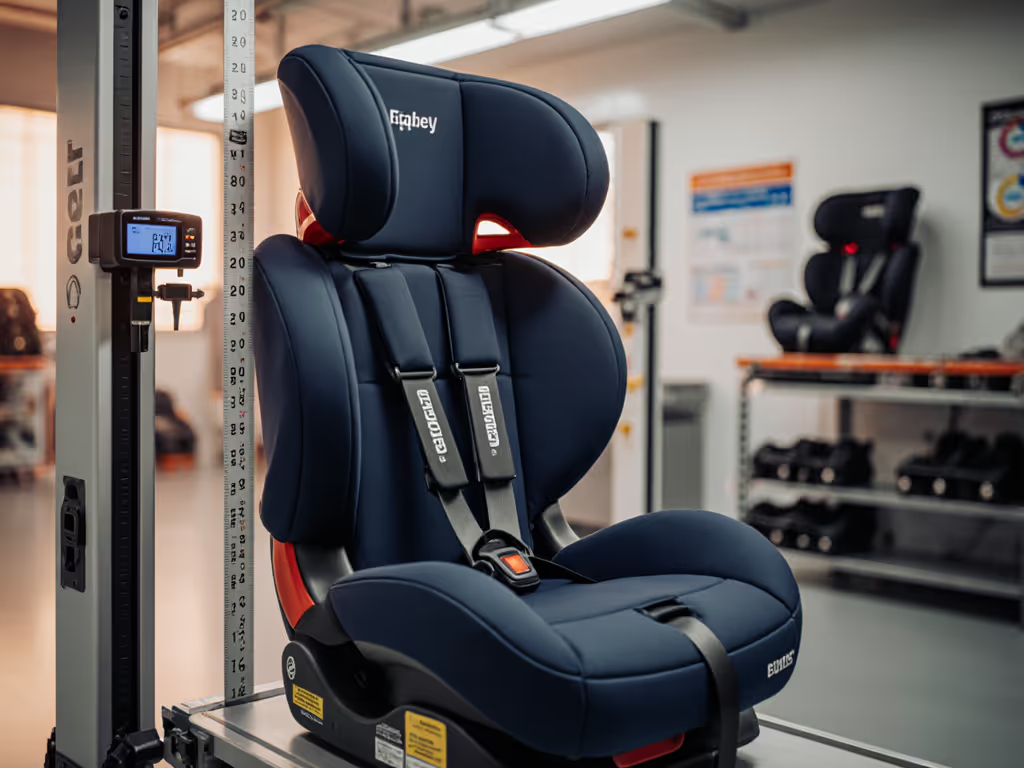
| Forward-facing harness height | ≥ 1.5 inches above child's shoulders | Wasted seat lifespan; premature booster transition |
| Seat width | ≤ 17 inches for 3-across | Impossible to fit multiple seats safely |
| Tether anchor clearance | ≥ 2 inches from seatback | Tether won't connect properly |
Pro Tip: Measure from your vehicle's seatback to the front seat in its most reclined position (where you actually drive). If the shell depth exceeds this by more than 1 inch, eliminate the seat immediately. If three-across is your goal, our top slim convertible seats will help you maximize usable width without sacrificing safety. I've seen parents ignore this and resort to "emergency" booster transitions at age 3 (all preventable).
2. Stroller Compatibility: The Universal Misunderstanding

Here's what search results omit: No convertible or all-in-one seat works with strollers. Only infant car seats (0-12 months) attach via adapters. As GoodBuy Gear's data confirms:
- Britax infant seats need adapters for 80% of non-Britax strollers
- Nuna Pipa fits Bugaboo only with specific adapters (not included)
- Maxi-Cosi and Cybex share adapter systems (a rare compatibility win)
Critical Insight: If you need a travel system (car seat + stroller combo), buy infant seats only. Convertibles live permanently in vehicles. "Car seat compatible with video screens" is irrelevant here (your real compatibility hurdle is stroller adapters).
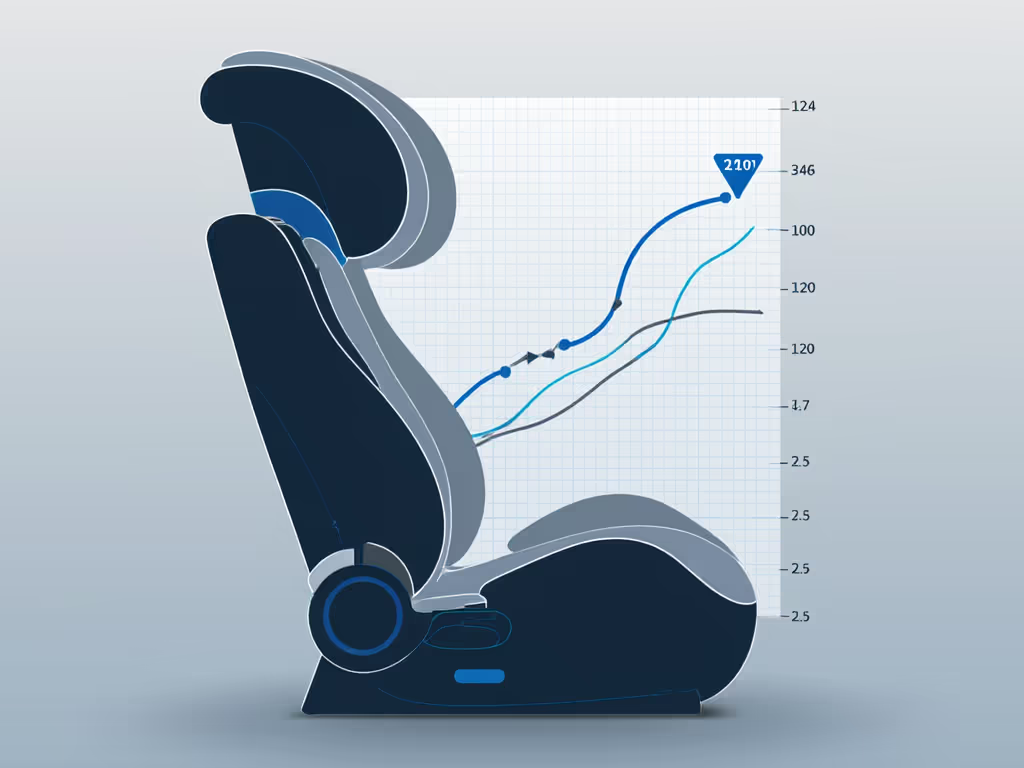
3. Growth Modeling: How Long Will This Seat Truly Last?
This is where my percentile-aware charts shift decisions. To keep kids rear-facing longer with proper fit, see our extended rear-facing guide. Most parents think "height = lifespan," but harness slot geometry determines real-world usability. Consider:
- The 80/20 Rule: 80% of seats fail when torso height exceeds slots, not when height/weight limits hit
- Shell depth decay: As children grow legs, rear-facing seats consume shell depth, and shallow shells (<16") force transitions at about 3 years
- Honest slot spacing: 1.5" between harness slots adds 4-6 months of rear-facing use
That convertible seat you're eyeing? Run this test:
- Measure your child's torso height (shoulder to crotch)
- Compare to seat's harness slot heights (not overall height!)
- If top slot is <1.5" above current torso height, skip it (outgrowth happens fast)
(I ran this for my nephew's Clek Foonf, it cleared his growth curve through age 5. His seat's still going strong.)
Multi-Vehicle Households: The Silent Compatibility Killer
If you shuttle kids between cars (yours, partner's, grandparents'), scenario matrices for multi-vehicle households are non-negotiable. Compare transfer mechanisms that speed safe re-installs if you frequently move seats between vehicles. I've seen families buy duplicate seats because:
- LATCH compatibility variance: One vehicle's anchors won't accept another's seat base
- Seatbelt stalk length: Shorter stalks in older cars can't thread through bulky belt paths
- Recline angle mismatches: A seat that reclines safely in Car A may sit upright in Car B (causing head slump)
Solution:
- Use the same seat model across vehicles (e.g., two Graco 4Ever DLX)
- Prioritize seats with dual LATCH belt paths (e.g., Britax One4Life)
- Verify tether anchor placement: top anchors must sit within 2" of the seat's centerline
When Compatibility Does Involve Screens (Rarely)
Okay, let's address the elephant in the room: backseat entertainment does exist, but it's irrelevant to seat compatibility. Rear-seat screens never attach to car seats. They're either:
- Headrest-mounted (interferes with proper car seat installation)
- Dashboard-mounted (blocks child's view out the window)
- Tablet-based (a safety hazard during turns/braking)
Critical Reality: The American Academy of Pediatrics firmly states nothing should attach to car seats except manufacturer-approved accessories. "Car seat screen visibility" is a red herring: true safety compatibility means zero obstructions near the seat.
The One Exception: Rear-Facing Mirrors
If you insist on monitoring your child:
- Must be non-suction: Suction cups fail in temperature changes
- Must not contact shell: Creates pressure points during crashes
- Must clear headroom: Top edge ≤ 2" below child's eye level when seated
Even then, mirrors reduce shell depth by 1-2 inches, potentially causing front-seat conflicts. Measure twice.
Final Verdict: What Truly Drives Compatibility
After modeling thousands of scenarios, three non-negotiables determine if a seat fits your vehicle and grows with your child:
- Harness height vs. child's torso: 1"+ clearance above shoulders in current position
- Shell depth vs. vehicle: Minimum 3" buffer behind seatback
- Anchor accessibility: Tether anchors visible without seatback removal
Skip seats that:
- Promise "10 years of use" without shell depth specs
- List "vehicle compatibility" without make/model testing data
- Ignore out-of-position risks during transitions
I prioritize seats with deeper shells (Clek Fllo: 19.5" depth) and taller harnesses (Britax Grow With You: 18" rear-facing), the math proves longevity. Ready to choose? Start with our best convertible seats that actually fit and last. When parents ask for "entertainment compatibility," I redirect them to real compatibility: Can this seat physically grow with their child's body in their car? Everything else is noise.
Explore Your True Compatibility
Stop searching for screen compatibility, start measuring your vehicle. Grab a tape measure and:
- Record seat depth (seatback to front seat, driver reclined)
- Note headrest post thickness (thick posts = shallow effective shell depth)
- Map tether anchor locations
Related Articles