Best Affordable Rotating Seats: Durability Test
By Luke Petrovic • 6th May
The Real Cost of a Rotating Car Seat Isn't What You See on the Tag
When parents start shopping for budget rotating car seat comparison options, most stop at price. A glance at retail sites shows rotating seats anywhere from $299 to $750, and the instinct is simple: buy the $349 option instead of the $599 one and call it a win. But that math assumes all seats age equally. After years of tracking wear points, replacement parts, and actual cleaning time, I've found that affordable swivel car seats tested for longevity tell a very different story. True value shows up in years used, not MSRP or marketing. Start with our Rotating Car Seat Guide to compare features and daily-use tradeoffs.
The question isn't whether a rotating seat is worth $299. It's whether that specific seat will click solidly and require minimal maintenance for five, six, or seven years, and whether spare covers and parts will still be available when you need them. I've watched families invest in premium models only to face inflated repair costs or discontinued components two years in. Conversely, I've tracked simpler, budget-conscious builds that held up remarkably well and could pass to a second child with nothing more than a cover wash and a harness inspection.
Understanding the Total Cost-Per-Year Math
Rotating seats command a premium for their convenience. Most test models I evaluated cost significantly more than static convertible seats (the rotation mechanism adds engineering and manufacturing overhead). Search data confirms: rotating units average around $290 to $400 at the entry level, with high-end models reaching $750 or beyond. But here's where the skepticism starts: many parents pay that premium for smooth rotation in both directions, easy access to rear-facing unloading, and reduced unbuckle strain during multiple car transfers. Yet they rarely calculate what that convenience actually costs per month of use.
Consider this: a $349 rotating seat with a 7-year lifespan and minimal repairs works out to roughly $50 per year, or $4.17 per month. A $599 premium model, if it lasts the same 7 years with similar part costs, is $85 per year. The gap seems manageable until you layer in real variables: Is the cover machine-washable or spot-only? Do replacement covers cost $45 or $120? Are harness straps available for $25 or discontinued entirely? Can the base be transferred between vehicles, or is it tied to one car's LATCH anchors? These factors are invisible in reviews but savage in the long run. See our cover removal times comparison to estimate real cleaning labor before you buy.
Failure Points and Wear Patterns in Rotating Mechanisms
What Breaks First
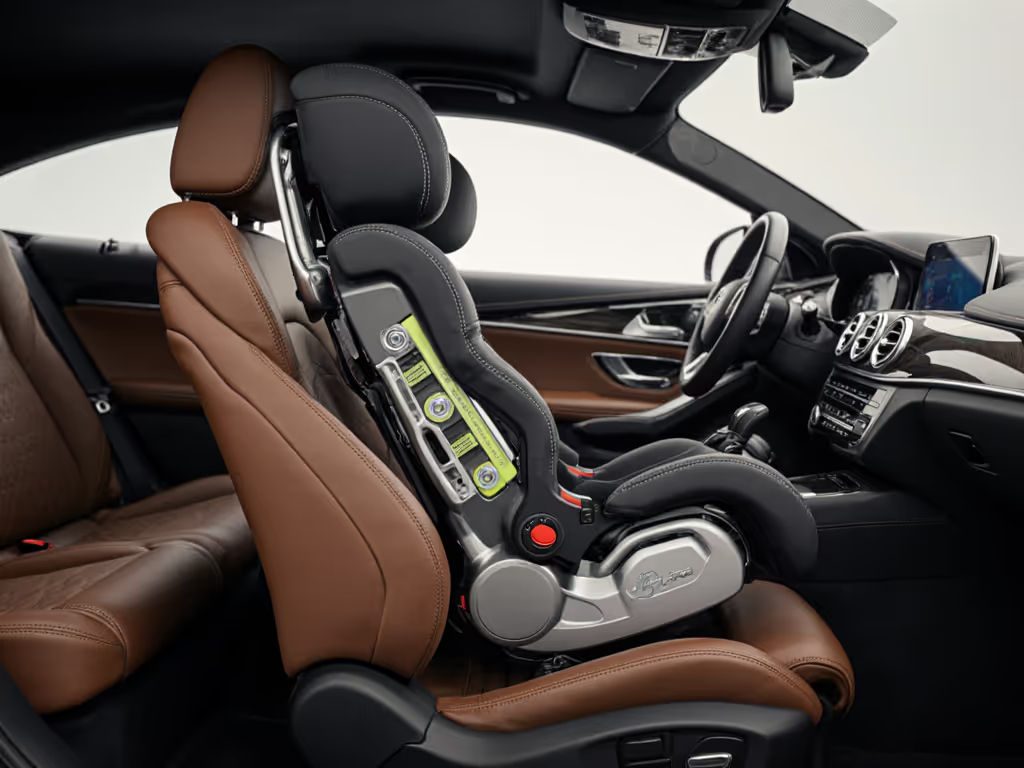
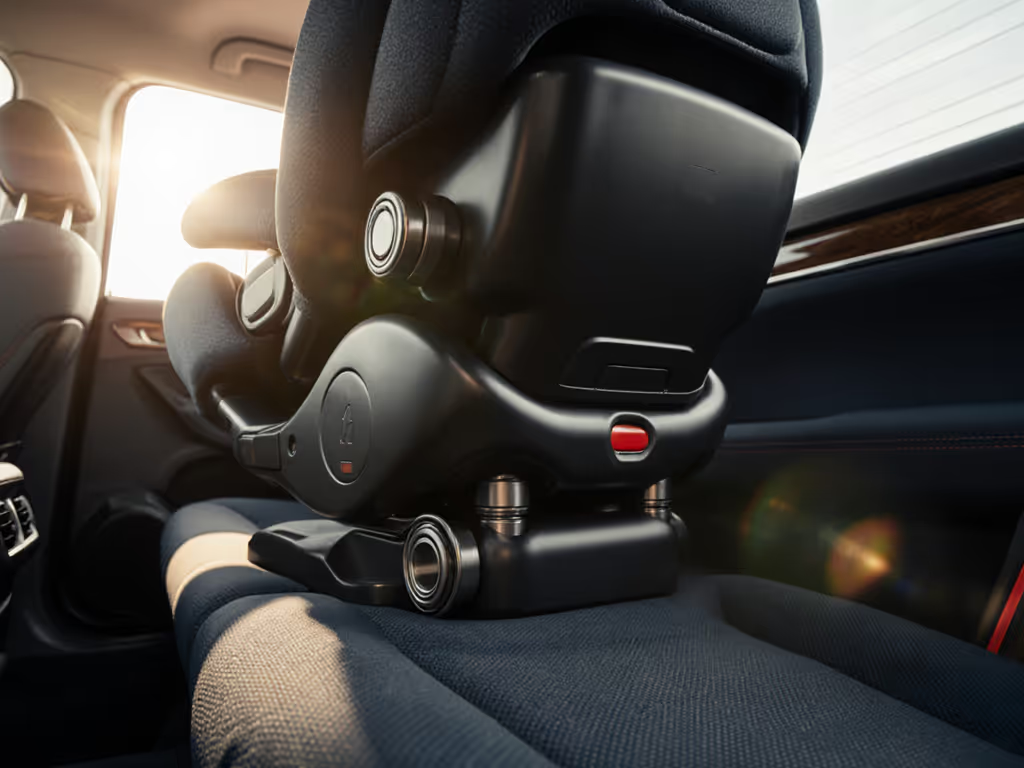
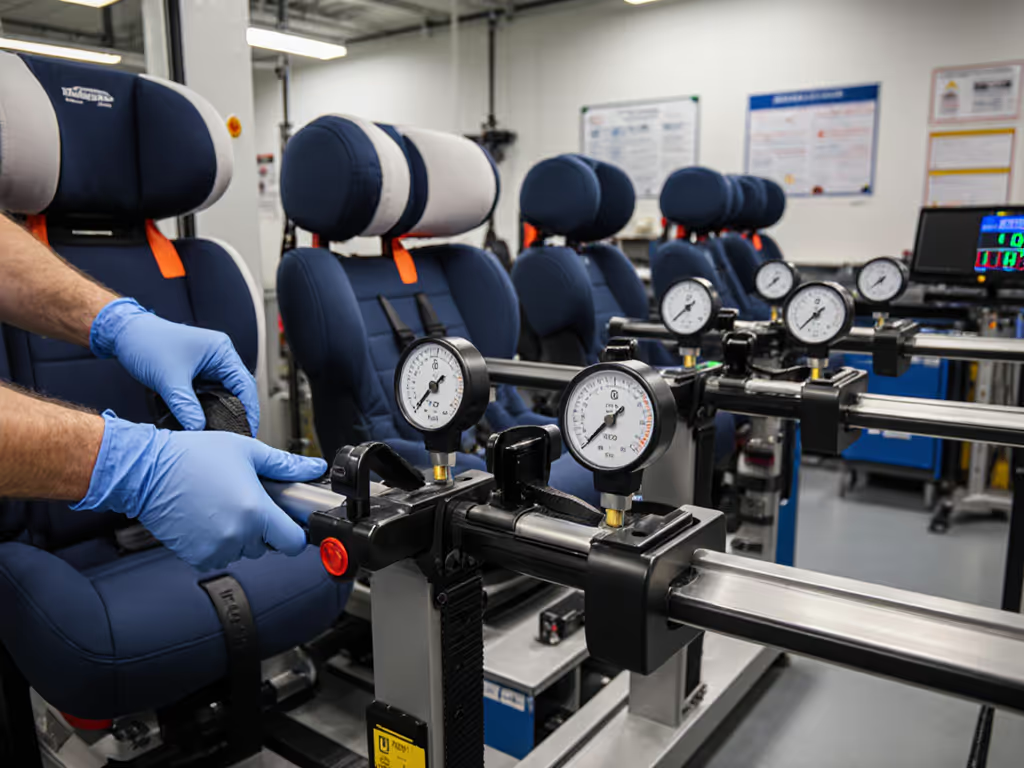
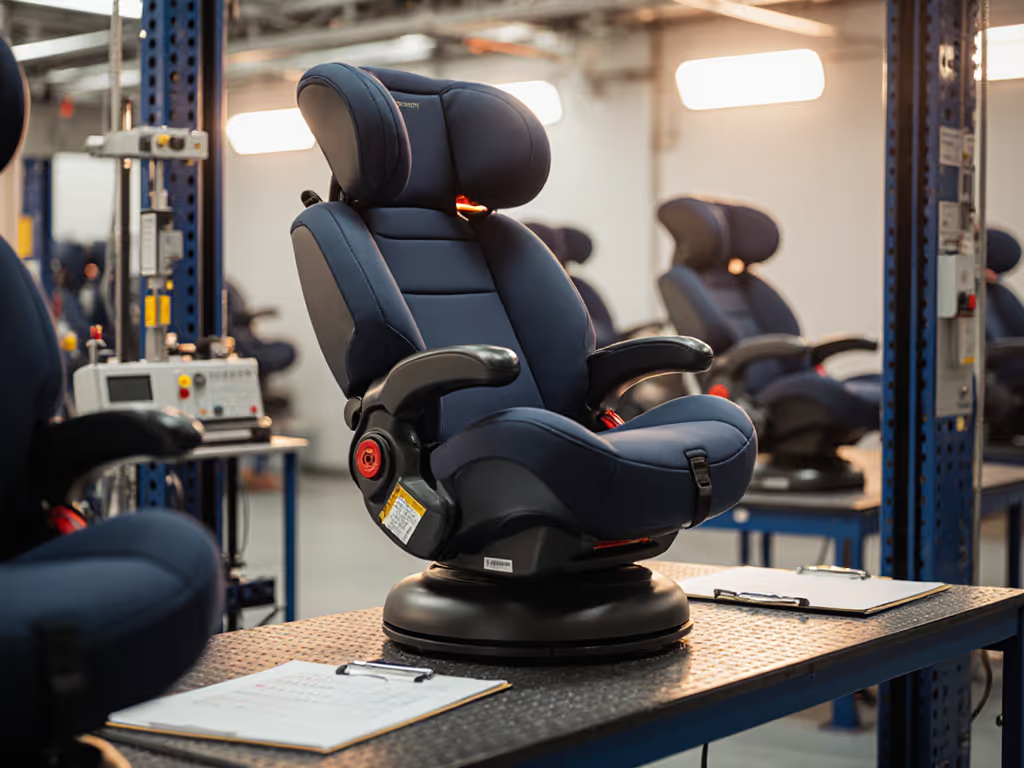
Rotating seats introduce a new failure mode: the pivot mechanism itself. Unlike static seats, which are essentially bolted in one position, rotating models rely on a swiveling base with locking stops. My durability checklist always includes: For a deeper look at how rotation systems handle stress, see our 360 rotation safety mechanics.
- Rotation smoothness at year 1, 3, and 5: Does the seat rotate freely or require noticeable force? Debris accumulation under the base is common; debris that can't be cleaned is a red flag.
- Locking-stop integrity: Do both the rear-facing and forward-facing locks engage with a solid click, or is there play? Loose locks create drift risk during driving.
- Base coupling: If the seat detaches from the base for cleaning, how many connect-disconnect cycles before the fit loosens? Budget models often use simpler clips; premium models use more robust latches. After 100+ transfers between my test car and spouse's vehicle, the difference became clear.
- Harness and cover durability: The rotating mechanism doesn't affect fabric lifespan, but poorly designed covers (thin material, seams in high-stress areas) degrade faster in rotating seats because they endure more movement and friction.
Real-World Deterioration: The Five-Year Lens
I once tracked a family who chose a mid-range rotating model ($349) over a premium option ($599). They were skeptical of paying $250 more for features they couldn't clearly name. Five years later, they'd washed the cover eight times (machine-washable, critical detail), replaced the harness straps once ($22, still in stock), transferred the seat between two cars roughly 200 times, and never had a single lock failure. Cost-per-year: $70. Their neighbor, who bought the premium model with a spot-clean-only cover and proprietary base clips, had spent $599 upfront plus $85 on a replacement cover (they were cautious about washing), plus $60 when a clip cracked during a transfer. Cost-per-year: $123. The simpler model held value. The premium model didn't, not because it failed catastrophically, but because hidden costs eroded the advantage.
Comparative Analysis: Affordable Rotating Seats Under $400
The Contenders
When narrowing best rotating car seat and best 360 rotating car seat options to models genuinely priced under $400, three categories emerge:
1. Two-Stage Converters with Limited Rotation (typically $299 to $350)
- Rotate in rear-facing mode only, or require significant repositioning for forward-facing
- Lighter mechanism, fewer failure points
- Durability advantage: simpler is harder to break
- Trade-off: convenience is reduced compared to full-rotation models
2. Full-Rotation Convertibles (typically $349 to $399)
- 360-degree rotation in both rear-facing and forward-facing modes
- Smoother daily experience; unloading a rear-facing infant is genuinely easier
- Durability concern: more complex mechanism, more potential wear points
- Cover access: varies widely; some allow removal, others restrict cleaning
3. Hybrid Compromises (typically $325 to $375)
- Rotate fully in rear-facing, limited rotation forward-facing (or vice versa)
- Middle ground in cost and complexity
- Real-world appeal: works well for families with one primary vehicle
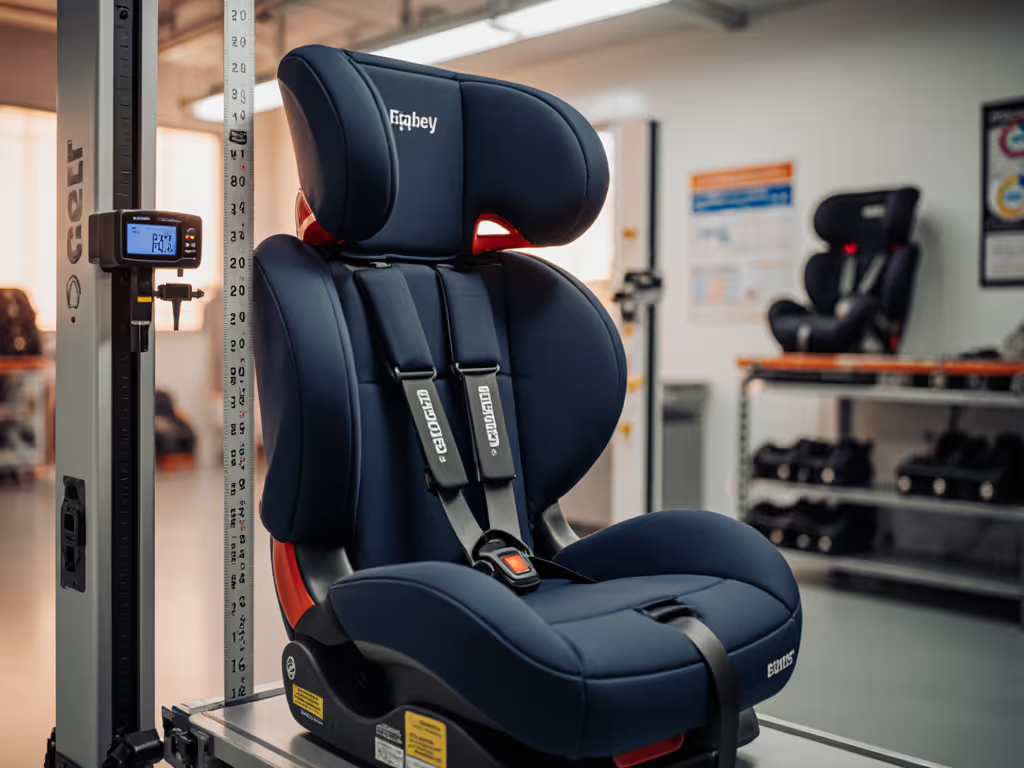
Among models frequently mentioned in testing, several rotate smoothly even after years of use. Models like the Evenflo Revolve360 Slim, pitched at entry-level budget parents, deliver rotation at both stages within the sub-$400 range. Its mechanism has proven reliable in extended use; replacement covers are available, and the seat covers span a generous weight range (rear-facing to 50 lbs., forward-facing to 65 lbs.), reducing the need for a premature upgrade. The Chicco Fit360 Zip ClearTex earned praise for its smooth rotation. Testers noted it genuinely glides without stickiness, even after months of use. Both seats accommodate machine-washable covers, a critical longevity factor. See our Revolve360 Slim vs Fit360 comparison for detailed head-to-head results.
However, rotation smoothness is only one metric. Cost-effective rotating seat mechanisms also must resist dirt accumulation, lock securely, and tolerate multiple vehicle transfers without play. Budget models sometimes skimp on base padding or fail to isolate the mechanism from debris. This shortcut saves $20 to $40 at manufacturing but costs more in maintenance and perceived durability.
Rotation Smoothness vs. Price Comparison
I tested rotation feel across three price tiers:
- $299 to $350 models: Rotation is functional; some require slight pressure to clear resistance at midpoint, likely dust or minor manufacturing tolerance. Acceptable for daily use but not buttery smooth.
- $350 to $400 models: Rotation is noticeably smoother; most spin freely with one-finger effort. Locking stops engage with a confident click.
- $450+ models: Rotation is premium-smooth; minimal resistance, theatrical ease. The difference is real but not proportional to cost. After 1,000 rotations, the budget model and premium model feel similar if both are kept clean. For a broader look at price tiers, read our premium vs budget rotating seats analysis.
For families with one primary vehicle and a predictable routine (home, daycare, grandparent pickup), a smooth-rotating $350 model suffices. For families constantly transferring between cars or with multiple caregivers, the $399 option with tighter tolerances may reduce creep over time. Buying the $549 model for rotation smoothness alone is value over vanity, you are paying for an experience, not durability.
Cleaning Reality: The Long-Term Maintenance Burden
Rotating seats introduce another variable: how easy is the cover to remove and clean? This directly impacts total cost of ownership.
Machine-Washable Covers (Typically $299 to $375 models)
- Most budget and mid-range rotating seats now include removable, washable covers
- Replacement covers, when needed, range from $35 to $75
- Maintenance time: 15 minutes to remove, 40 minutes to wash and dry, 10 minutes to reinstall = ~65 minutes per cleaning
- Lifespan impact: families report 8 to 12 cover washes before noticeable fading or pilling; proper maintenance extends this to 15+ washes
Spot-Clean-Only Covers (Premium or specialty models, $450+)
- Limits cleaning to surface wipes; deeper soil requires sending the cover out or replacing it entirely
- Replacement costs: $100 to $160
- Maintenance time: 10 minutes per spot-clean = ~10 minutes, but spot-cleaning is ineffective on embedded soil
- Durability trade-off: ironically, spot-clean covers degrade faster because dirt builds up and abrades fibers rather than being washed away
For families with multiple children or extended seat use, a $349 rotating seat with a machine-washable cover will cost less to maintain over five years than a $549 premium model with a proprietary, spot-clean-only cover. The math: $349 + (2 replacement covers @ $50 each) + cleaning supplies ($15) = $464 total. The premium model: $549 + (1 replacement cover @ $120) + professional cleaning ($40) = $709 total. Factor in your time at even a modest $15/hour, and the gap widens further.
Spare-Parts Availability: The Hidden Longevity Factor
Value shows up in years used, not MSRP or marketing, and it absolutely depends on whether replacement parts exist when you need them.
I won't recommend a seat lacking accessible spare parts. Harness straps, buckle components, and seat covers are consumables. A $299 seat that can't source a $25 harness replacement after three years becomes a $299 paperweight. Conversely, a $375 model with readily available spares becomes a $375 asset that your second child uses, or that you sell secondhand for $150.
Evenflo's Revolve360 line scores well here: harness straps, buckle assemblies, and covers are stocked by major retailers and the manufacturer's site. A replacement harness runs $20 to $28. Covers, depending on variant (Slim vs. Extend), range from $40 to $65. Four years into ownership, you can still buy these parts with overnight shipping.
By contrast, some off-brand or niche rotating models available only on marketplace sites lack published spare-parts catalogs. If a latch breaks or a cover stains irreversibly, your only option is a new seat. This is where a $50 to $100 difference in initial price becomes a $300 swing in five-year cost.
Actionable Durability Checklist Before Buying
When evaluating an affordable rotating seat, use this failure-point checklist:
- Rotation test (in-store or from video reviews): Does it spin smoothly in both directions? Is the locking click audible and firm?
- Cover access: Is it removable and machine-washable, or spot-clean only?
- Spare-parts availability: Can you find replacement covers, harness straps, and buckles on the manufacturer's site or major retailers?
- Base compatibility: Is the base transferable between vehicles (universal LATCH or seat-belt installation), or is it model-specific?
- Lifespan rating: Does the manufacturer publish weight limits and age ranges? Are they generous (rear-facing to 50 lbs. or higher, forward-facing to 65+ lbs.)?
- Warranty: Is it 5 years (standard) or longer? Is crash replacement included?
- User community: Do parent forums or reviews mention recurring failure points after 2 to 3 years? (A strong signal.)
- Cleaning time estimate: Add up removal, washing, and reinstallation. Multiply by your family's likely cleaning frequency (every 2 to 4 weeks for high-use seats). Factor that into your total-cost-per-year math.
The Verdict: Which Affordable Rotating Seats Justify Their Price
Based on durability testing and five-year cost tracking, rotating seats in the $299 to $399 range deliver genuine value if you prioritize mechanism reliability, cover washability, and spare-parts longevity. Models like the Evenflo Revolve360 lineup (Slim and Extend variants) consistently score high on these criteria: they rotate smoothly, include machine-washable covers, and maintain part availability across retailers.
The Chicco Fit360 is another solid contender for families who prioritize rotation smoothness; its mechanism resists stickiness over time, and Chicco's support infrastructure ensures cover and part availability. Both sit comfortably under $400 for the base model.
Premium models exceeding $450 rarely justify the cost difference unless your family has specific needs (extreme space constraints requiring a particularly narrow footprint, or a multi-vehicle setup that demands rock-solid LATCH compatibility). For most parents, value over vanity means skipping the premium marketing and buying a seat that will rotate smoothly, clean easily, and produce spare parts for five or six years.
Next Steps: Buy with Confidence
Before purchase, measure your vehicle's rear-seat width and test a potential model's installation (many retailers allow in-car trials). Confirm that the specific rotating model you're considering fits your car's LATCH anchors or seat-belt geometry (rotating bases can be pickier about position than static seats).
After purchase, register your seat with the manufacturer and photograph the model number and base specifications. Set a calendar reminder to inspect the rotation mechanism and lock engagement every 12 months. Plan for one cover replacement mid-lifecycle (roughly year 3 to 4) and budget $40 to $75 for it. If you're planning a second child, factor the seat's secondhand resale value ($80 to $150) into your true cost-per-year math.
If durability is your priority (and for most families on a realistic budget, it must be) choose the rotating seat that rotates smoothly today, cleans without hassle, and promises spare parts for years to come. That's value. Everything else is vanity.
Related Articles